EDITORIAL
ESPAÑOL
=================
Hola amigos DERMAGICOS, de nuevo con ustedes, en esta ocasión con un tema bien
caliente que le esta recorriendo el mundo dermatológico hoy en día. Las
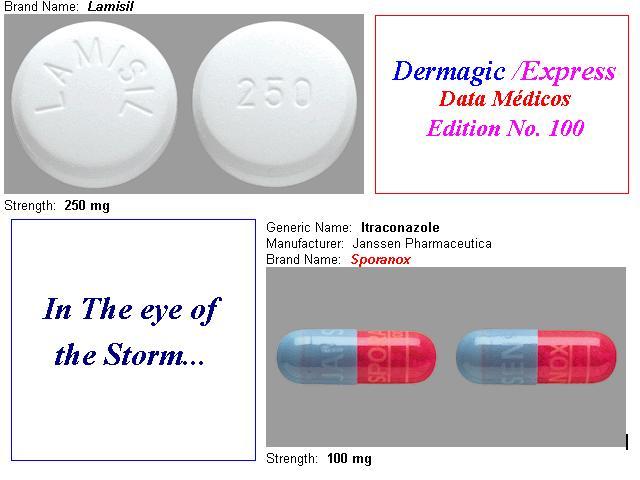
famosas medicinas ITACONAZOLE (SPORANOX-JANSSEN) Y TERBINAFINA (NOVARTIS-LAMISIL),
lanzadas al mercado como las nuevas promesas y grandes esperanzas para los
tratamientos antimicóticos hoy día TIENEN LOS DÍAS CONTADOS.
La FDA recientemente lanzo a la red un aviso publico del cuidado que hay que
tener con estas dos drogas por sus efectos desbastadores sobre el hígado y
además de ello sobre el corazón al estar involucradas una de ellas (itraconazole)
en la producción de insuficiencia cardiaca congestiva.
LOS HECHOS:
EL ITRACONAZOLE: (Janssen-Cilag
Pharmaceutica)
Lanzado al mercado en 1.992, como un nuevo
anti fúngico del grupo de los azoles, la DROGA que SUPERABA EN EFECTIVIDAD y
menos efectos HEPATOTÓXICOS que el KETOCONAZOLE (años 80) del mismo
laboratorio JANSSEN PHARMACEUTICA. Ha sido utilizado en el mundo por unas 50
millones de personas. Desde su aprobación en septiembre de ese año comenzaron
a reportarse efectos adversos entre los que destacan:
1.) Colestasis severa
2.) Daño hepático y muerte.
3.) sincopes durante uso simultaneo con terbinafina.
4.) Sincope y arritmias cardiacas uso simultaneo con terfenadina
5. )Incremento de riesgo de taquicardia ventricular uso con terfenadina.
6.) Colitis Pseudomembranosa
7.) Retardo del sangramiento menstrual por uso con anticonceptivos.
8.) Hipocalemia.
9.) Reacción del suero-like.
10.) Toxicidad severa uso con vincristina y muerte.
11.) Disturbios del ciclo menstrual uso con anticonceptivos.
12.) Erupción purpurica.
13.) Hepatitis aguda
14.) Muerte asociada a uso con vinorelbine tartrato.
15.) Anormalidades de la enzimas hepáticas.
16.) Erupción medicamentosa confirmada por test.
17.) Insuficiencia cardiaca congestiva y muerte.
La gota que
rebaso el vaso:
-------------------------------------------
Desde su aprobación en Septiembre de 1.992
hasta Abril del 2.001
Durante este periodo la FDA
recibió 94 casos que recibiendo SPORANOX
desarrollaron insuficiencia cardiaca congestiva. En 58 de los 94 casos la FDA
cree que el SPORANOX contribuyo o fue el causal de la ICC. En 28 de estos 58
casos Sporanox fue administrado para el tratamiento de infección nicótica
ungueal. De estos 58 pacientes, 28 fueron hospitalizados. 13 murieron.
Resultados de recientes estudios sobre el Sporanox revelaron un potencial
efecto de la droga de producir un efecto inotrópico negativo en el musculo
cardiaco, el cual es observado después de inyectar intravenosamente en perros
anestesiados, y voluntarios humanos sanos. Es estos estudios el efecto adverso
sobre el musculo cardiaco se resolvió una vez la droga fue descontinuada.
Para Marzo del 2.001 La FDA recibió y reviso 24 casos de FALLA
HEPÁTICA, posiblemente asociadas al Sporanox, incluyendo 11
muertes. Aproximadamente la mitad de estos casos (50%) estaba recibiendo
Itraconazole para infecciones micóticas ungueales y otras infecciones
dermatológicas.
LA TERBINAFINA: (Novartis
Pharmaceutical)
Lanzada al mercado en Mayo de 1.996 como UN
ANTI FÚNGICO perteneciente al grupo de las alilaminas por el laboratorio
NOVARTIS PHARMACEUTICAL, rápidamente ocupo un lugar importante como terapia
antimicótica, siendo utilizado por mas de 7 millones de personas en el mundo y
con un reporte de efectos adversos del 47%, entre ellos destacan:
1.) Fulminante daño hepático ocasionando muerte y o
trasplante hepático.
2.) Hepatitis aguda.
3.) Colestasis con reducción de los ductos biliares.
4.) Pustulosis exantematosa aguda.
5.) trastornos persistentes del gusto.
6.) Precipitación de psoriasis de novo y empeoramiento de psoriasis
pre-existente.
7.) Precipitación de Psoriasis pustulosa
8.) Eritema multiforme severo.
9.) Gloso pirosis.
10.) Trombocitopenia.
11.) Agranulocitosis.
12.) Trastornos oculares (visión verdosa)
13.) Reacciones de Hipersensibilidad.
14.) Inflamación de las Parótidas.
15.) Eritema fijo medicamentoso
16.) deterioro de la función renal.
17.) Lupus eritematoso.
La gota que rebaso el vaso:
---------------------------------------
Para abril del 2.0001 la FDA americana, reviso 16 posibles casos de falla y
daño hepático asociado al uso de LAMISIL, incluyendo 11 muertes y 2
trasplantes de Hígado.
EL CISAPRIDE: (Janssen-Cilag
Pharmaceutica)
----------------------
Otra droga del laboratorio Janssen Pharmaceutica, lanzada al mercado en 1.993
para el tratamiento del reflujo gástrico con grandes expectativas. Para el 31
de diciembre de 1.999 se habían reportado 341 casos de arritmias cardiacas
asociadas al uso de esta droga, incluyendo 80 muertes. Para enero del año
2.000 Janssen hace un esfuerzo para informar sobre los riesgos del manejo de
la droga.
La Agencia de Control de Medicinas del Reino
Unido decide suspender la la licencia para la venta y comercialización del
CISAPRIDE en JULIO del 2.000, producto para tratar desordenes gástricos
y digestivos en niños y adultos, después del reporte de 5 MUERTES, en el REINO
UNIDO Y 125 MUERTES REPORTADAS EN EL MUNDO, asociadas al uso de esta droga.
Para el 12 de Abril de 2.001
Janssen Pharmaceutica decide retirar del mercado la droga para evitar mayores
problemas.
EL FUTURO DE TERBINAFINA E ITRACONAZOLE :
------------------------------------------------------------------------
La danza de los millones
comenzó a moverse, Janssen -Cilag esta distribuyendo
cartas a todos los países advirtiendo los potenciales peligros del USO DEL
ITRACONAZOLE, alegando que ha sido usada en mas de 50 millones de personas, y
que tuvo 8 años previos de estudio. Probablemente NOVARTIS con LA TERBINAFINA
haga lo mismo, pero la evidencia del efecto desbastador sobre el HÍGADO de
estas DOS DROGAS ES prácticamente IMPREDECIBLE E IMBATIBLE, Y el efecto
inotrópico NEGATIVO sobre el musculo cardiaco producido por el ITRACONAZOLE
también es un hecho indiscutible. Quizá por un tiempo permanezcan en el
mercado, pero si siguen presentándose casos de FALLA HEPÁTICA e INSUFICIENCIA
CARDIACA seguidas de MUERTE, muy probablemente pronto SERÁN retiradas del
mercado, como ha ocurrido con el FAMOSO CISAPRIDE(PREPULSID). Ese es el futuro
que les espera a estas medicinas.
Una posible solución seria hacerle firmar al paciente una
autorización para su
uso como se hace con el isotretinoin de ROCHE.
LA AUTORIZACIÓN PODRÍA DECIR:
" Estoy consciente que con estas drogas puedo curarme, pero también
morir"...
En las referencias los hechos:
Saludos a todos.
Dr. José Lapenta R.
EDITORIAL ENGLISH
==================
Hello DERMAGIC'S friends , again with you, in this occasion with a very hot
topic that it's traveling around the dermatologic world today in day. The
famous medicines ITRACONAZOLE(SPORANOX-JANSSEN) AND
TERBINAFINE(NOVARTIS-LAMISIL), rushed to the market as the new promises and
big hopes for the fungus treatments nowadays HAVE THE COUNTED DAYS.
The FDA recently throws to the net a warning I publish of the care that it is
necessary to have with these Two drugs for its disastrous effects on the liver
and besides its negative effects on the heart when being involved one of them
(itraconazole) in the production of real risk of developing congestive heart
failure (CHF).
THE FACTS:
THE ITRACONAZOLE: (Janssen-Cilag
Pharmaceutica)
Thrown to the market in 1.992, as a new antifungal of the group of the
"azoles", the DRUG that OVERCAME IN EFFECTIVENESS and less HEPATOTOXIC effects
than the KETOCONAZOLE (eighties) of the same laboratory JANSSEN-CILAG
PHARMACEUTICA. It has been used in the world by some 50 million people. From
its approval in September of that year began to be reported adverse effects
among those that highlight:
1.) Severe cholestasis.
2.) [Liver damage and death.
3.) [Syncopes during simultaneous uses of terfenadine and itraconazole].
4.) Syncope and cardiac arrhythmia due to an interaction between itraconazole
and terfenadine.
5. )Itraconazole prevents terfenadine metabolism and increases risk of
torsades of pointes ventricular tachycardia.
6.) Pseudomembranous colitis.
7.) Delay of withdrawal bleeding during concomitant uses of oral
contraceptives and itraconazole.
8.) Hypokalemia.
9.) Serum sickness-like reaction.
10.) Severe vincristine toxicity in combination with itraconazole.
11.) [Pill cycle disturbance.
12.) Purpuric drug eruption.
13.) Acute hepatitis.
14.) Interaction between itraconazole and vinorelbine tartrate leading to
death.
15.) Abnormalities in liver enzymes.
16.) Drug eruption confirmed by challenge test.
17.) Congestive heart failure and death (CHF)
The drop that I surpass the glass:
-------------------------------------
From its approval in September 1992 and April 2001.
During this period, FDA received 94 cases in which patients receiving
Sporanox® developed CHF (congestive heart failure). In 58 of the 94 cases, FDA
believes Sporanox® contributed to or may have been the cause of CHF. In 26 of
these 58 cases, Sporanox® was being administered to treat fungal nail
infections. Of these 58 patients, 28 were hospitalized. Death was reported in
13 cases.
Results of recent studies of Sporanox® revealed a potential for the drug to
weaken the force of the heart muscle's contractions. This so-called "negative
inotropic effect" was observed when intravenous Sporanox® was injected into
anesthetized dogs and healthy human volunteers. In these studies, the adverse
effect on the heart muscle resolved once the drug was stopped.
As of March 2001, FDA has received and reviewed 24 cases of liver failure
possibly associated with Sporanox®, including 11 deaths. Approximately half of
the liver failure cases received Sporanox® for fungal nail infections or other
dermatological infections.
THE TERBINAFINE: (Novartis
Pharmaceutical)
-------------------------------
Rushed to the market in May of 1.996 as an ANTIFUNGAL belonging to the group
of the allylamines for the laboratory NOVARTIS PHARMACEUTICAL, quickly I
occupy an important place as antifungal therapy, being used for but of 7
million people in the world and with a report of adverse effects of 47%, among
them they highlight:
1.) Fulminant Hepatic Failure and death.
2.) [Acute hepatitis associated with terbinafine].
3.) Cholestasis with reduction of interlobular bile ducts.
4.) Acute generalized exanthematous pustulosis.
5.) Persistent impairment of taste.
6.) Severe pustular psoriasis.
7.) Severe erythema anulare centrifugum-like psoriatic drug eruption.
8.) Serious interaction between warfarin.
9.) Fixed drug eruption.
10.) Glossopyrosis.
11.) Thrombocytopenia.
12.) Agranulocytosis.
13.) The development of green vision.
14.) Parotid swelling.
15.) Hypersensitivity reaction.
16.) Lupus erythematosus.
17.) Renal impairment.
The drop that I surpass the glass:
-------------------------------------------------
As of April 2001, FDA has received and reviewed 16 possible
Lamisil®-associated cases of liver failure, including 11 deaths and two liver
transplantations.
THE CISAPRIDE: (Janssen-Cilag
Pharmaceutica)
-------------------------
Another drug of the laboratory Janssen Pharmaceutica, thrown to the market in
1.993 for the treatment of the gastric reflux with big hopes. For December 31
1.999, 341 cases of heart arrhythmias had been reported, including 80 deaths.
For January of year 2.000 Janssen makes an effort to inform on the risk of the
handling of the drug.
For JULY 2.000, The product licence for cisapride (Prepulsid),
a drug used to treat gastric and digestive disorders in adults and children,
has been suspended by the Medicines Control Agency after five (5) DEATHS in
the United Kingdom and 125 DEATHS WORLDWIDE that are thought to be
associated with the drug.
For April 12- 2.001
Janssen Pharmaceutica decides to retire of the market the drug
to avoid bigger problems.
THE FUTURE OF TERBINAFINE AND ITRACONAZOLE:
------------------------------------------------------------------------------------
The dance of the millions began to move, Janssen -Cilag are distributing
letters to all the countries noticing the potential dangers of the USE OF THE
ITRACONAZOLE, alleging that it has been used in but of 50 million people, and
that he was 8 previous years of study old. Probably NOVARTIS with THE
TERBINAFINE makes the same thing, but the evidence of the big "bad " effects
on the LIVER of these TWO DRUGS it is practically without prediction AND
UNBEATABLE, AND the NEGATIVE inotropic effect on the heart muscle taken place
by the ITRACONAZOLE is also an unquestionable fact.
They maybe for a while remain in the market, but if they continue being
presented cases of HEPATIC FAILURE and CONGESTIVE HEART FAILURE followed by
DEATH, they will very probably soon be retired of the market, like it has
happened with the FAMOUS CISAPRIDE (PROPULSID). That is the future that waits
to these medicines.
A possible serious solution could be to make him sign the patient an
authorization for their use like the isotretinoin of ROCHE.
THE AUTHORIZATION COULD SAY:
" I am conscious that with these drugs I can be treated, but also to
die"...
In the references the facts
greetings to all
Dr Jose Lapenta R.
============================================================
TERBINAFINE (Novartis Pharmaceuticals) LAMISIL
============================================================
============================================================
1.)Terbinafine and Fulminant Hepatic Failure
2.) [Acute hepatitis associated with terbinafine].
3.) [Hepatitis attributed to the use of terbinafine].
4.) Hepatitis associated with terbinafine therapy: three case reports and a
review of the literature.
5.) Terbinafine-associated hepatic injury.
6.) Terbinafine-induced prolonged cholestasis with reduction of interlobular
bile ducts.
7.) Terbinafine hepatotoxicity: case report and review of the literature.
8.) Acute generalized exanthematous pustulosis associated with oral
terbinafine.
9.) Acute generalized exanthematous pustulosis induced by terbinafine.
10.) Persistent impairment of taste associated with terbinafine.
11.) Oral terbinafine and erythema multiforme.
12.) Terbinafine and erythema multiforme.
13.) [Severe erythema multiforme during terbinafine therapy].
14.) Terbinafine therapy may be associated with the development of psoriasis
de novo or its exacerbation: four case reports and a review of drug-induced
psoriasis.
15.) Severe pustular psoriasis provoked by oral terbinafine.
16.) Severe erythema anulare centrifugum-like psoriatic drug eruption induced
by terbinafine.
17.) Serious interaction between warfarin and oral terbinafine.
18.) Terbinafine and fixed drug eruption.
19.)[Glossopyrosis and terbinafine].
20.) Thrombocytopenia associated with oral terbinafine.
21.) [Agranulocytosis during a treatment with terbinafine].
22.) Terbinafine-induced neutropenia.
23.) The development of green vision in association with terbinafine therapy.
24.) Parotid swelling and terbinafine.
25.) [Parotiditis and terbinafin].
26.) Hypersensitivity reaction to terbinafine.
27.) [Terbinafine and lupus erythematosus (1st published case)].
28.) Persistent impairment of taste resulting from terbinafine.
29.) [Ageusia caused by terbinafine].
30.) Renal impairment associated with oral terbinafine.
============================================================
ITRACONAZOLE (Janssen-Cilag Pharmaceutica) SPORANOX, TRISPORAL
============================================================
31.) Severe cholestasis related to intraconazole for the treatment of
onychomycosis.
32.) [Liver damage during administration of itraconazole (Trisporal)].
33.) [Syncopes during simultaneous use of terfenadine and itraconazole].
34.) Syncope and cardiac arrhythmia due to an interaction between itraconazole
and terfenadine.
35.)Itraconazole prevents terfenadine metabolism and increases risk of
torsades de pointes ventricular tachycardia.
36.) Interaction of itraconazole and digoxin.
37.) Severe cholestasis related to intraconazole for the treatment of
onychomycosis.
38.) Potential interaction between itraconazole and clarithromycin.
39.) Drug interactions with itraconazole, fluconazole, and terbinafine and
their management.
40.) Pseudomembranous colitis after itraconazole therapy.
41.) Signalling possible drug-drug interactions in a spontaneous reporting
system: delay of withdrawal bleeding during concomitant use of oral
contraceptives and itraconazole.
42.) [Itraconazole-induced hypokalemia in a patient with pulmonary
aspergilloma].
43.) Serum sickness-like reaction to itraconazole.
44.) Plasma concentration of itraconazole in patients receiving chemotherapy
for hematological malignancies: the effect of famotidine on the absorption of
itraconazole.
45.) Severe vincristine toxicity in combination with itraconazole.
46.) [Pill cycle disturbance in simultaneous use of itraconazole and oral
contraceptives].
47.) Purpuric drug eruption secondary to itraconazole.
48.) Itraconazole-induced acute hepatitis.
49.) [Liver damage during administration of itraconazole (Trisporal)].
50.) Hepatic injury associated with itraconazole.
51.) Possible drug interaction between itraconazole and vinorelbine tartrate
leading to death after one dose of chemotherapy.
52.) Abnormalities in liver enzymes during simultaneous therapy with
itraconazole and amphotericin B in leukaemic patients.
53.) Itraconazole-induced drug eruption confirmed by challenge test.
54.) ITRACONAZOLE AND TERBINAFINE FDA HEALTH ADVISORY
55.) FDA PUBLIC HEALTH ADVISORY ABOUT SPORANOX AND LAMISIL
============================================================
CISAPRIRIDE (Janssen -Cilag Pharmaceutica) PROPULSID, PREPULSID
============================================================
56.) [Cisapride and risk of cardiac complications].
57.) FDA, Janssen bolster cardiac risk warnings for cisapride.
58.) [The proarrhythmogenic activity of non-anti-arrhythmia drugs. Is
treatment with antihistamines and cisapride safe]?
59.) News/ UK licence for cisapride suspended
60.) (In)Efficacy of cisapride
61.) Should cisapride have been "blacklisted"?
62.) Effects of cisapride on QT interval in infants: A prospective study
63.) [Long QT interval and malignant ventricular arrhythmia during treatment
with cisapride. Report of a clinical case].
64.) Cisapride and Fatal Arrhythmia
65.) Media: 301-827-6242/ FDA UPDATES WARNINGS FOR CISAPRIDE
66.) New Safety Recommendations for Use of Cisapride (Propulsid)
67.)JANSSEN PHARMACEUTICA STOPS MARKETING CISAPRIDE IN THE US
============================================================
TERBINAFINE (Novartis-Pharmaceutical) LAMISIL
============================================================
============================================================
1.)Terbinafine and Fulminant Hepatic Failure
============================================================
The New England Journal of Medicine -- April 22, 1999 -- Vol. 340, No. 16
To the Editor:
Terbinafine is an antifungal agent that is widely prescribed for common skin
infections. (1) We describe a patient who had taken terbinafine and in whom
fulminant hepatic failure developed, requiring orthotopic liver
transplantation.
A 48-year-old woman took 250 mg of terbinafine daily for five days for a
fungal nail infection. Over the next four weeks, fulminant hepatic failure
developed. The patient had been taking dothiepin (75 mg per day), which is a
tricyclic antidepressant, and propranolol (40 mg twice daily) for more than 18
months. She had no risk factors for liver disease, a minimal intake of alcohol
(<40 g per week), and no history of ingestion of acetaminophen or other
analgesics. Serum acetaminophen levels were undetectable. Autoantibody
screening and screening for serologic hepatitis A, B, and C viruses were
negative; abdominal ultrasonography revealed a normal-sized liver with no
evidence of splenomegaly or ascites. The patient's condition deteriorated;
encephalopathy increased, requiring ventilation and intensive care. She
subsequently underwent uncomplicated orthotopic liver transplantation. She
remains well 18 months after transplantation.
Histologic examination of the explanted liver revealed panacinar submassive
necrosis and nearly complete disappearance of hepatocytes, with no evidence of
chronic liver disease. These findings are compatible with a drug-related cause
of disease.
In our patient, a presumed idiosyncratic (type B) drug reaction to terbinafine
may have been an important factor in the development of fulminant hepatic
failure. The two other prescribed medications that she was taking have a low
reported potential for hepatotoxicity, and she had been taking them for many
months. Minor abnormalities in the results of liver-function tests have been
reported in up to 4 percent of patients during oral treatment with
terbinafine, (2) with two reports of predominantly cholestatic, reversible,
terbinafine-associated hepatic injury. (3,4,5)
Kosh Agarwal, M.R.C.P.
Derek M. Manas, F.C.S.(S.A.)
Mark Hudson, F.R.C.P.
Freeman Hospital
Newcastle upon Tyne NE7 7DN, United Kingdom
References
1. Gupta AK, Scher RK. Oral antifungal agents for onychomycosis. Lancet
1998;351:541-2.
Return to Text
2. van der Schroeff JG, Cirkel PK, Crijns MB, et al. A randomized treatment
duration-finding study of terbinafine in onychomycosis. Br J Dermatol
1992;126:Suppl 39:36-9.
Return to Text
3. van't Wout JW, Herrmann WA, de Vries R, Stricker BH. Terbinafine-associated
hepatic injury. J Hepatol 1994;21:115-7.
Return to Text
4. Lazaros GA, Papatheodoridis GV, Delladetsima JK, Tassopoulos NC.
Terbinafine-induced cholestatic liver disease. J Hepatol 1996;24:753-6.
Return to Text
5. Fernandes NF, Geller SA, Fong TL. Terbinafine hepatotoxicity: case report
and review of the literature. Am J Gastroenterol 1998;93:459-60.
Return to Text
============================================================
2.) [Acute hepatitis associated with terbinafine].
============================================================
Gastroenterol Hepatol 1997 Nov;20(9):456-8
[Article in Spanish]
Vivas S, Rodriguez M, Palacio MA, Cadenas F, Lomo J, Rodrigo L.
Servicio de Aparato Digestivo, Hospital Central de Asturias, Oviedo.
Oral terbinafine is a recently introduced antifungal drug with slight side
effects that rarely includes liver involvement. A case of toxic hepatitis
secondary to terbinafine administration in a patient with no previous history
of liver disease and in whom other possible causes of liver damage and
histologic study were performed is reported. A mixed lesion was presented with
predominance of cholestasis. The initial worsening following discontinuation
of the drug is of note as are the prolonged course of the enzymatic
alterations which normalized at one year. The precise mechanism by which
terbinafine produced liver damage is unknown and is probably due to an
idiosyncratic type reaction.
============================================================
3.) [Hepatitis attributed to the use of terbinafine].
============================================================
Ned Tijdschr Geneeskd 1996 Mar 23;140(12):669-72
[Article in Dutch]
Boldewijn OY, Ottervanger JP, Mostart CM, Janssens AR, Calame J, Jonkers GJ.
Afd. Inwendige Geneeskunde, Rijnlandziekenhuis, Leiderdorp.
A 71-year-old woman was admitted to our hospital with jaundice after she had
been using terbinafine for a few weeks. The liver function tests showed a
mixed cholestatic-hepatocellular pattern. A liver biopsy revealed large
amounts of intracellular bile pigment. Causes of the liver disorder other than
the use of the aforementioned antimycotic drug were excluded. Ten months after
cessation of the drug the patient had recovered completely. The Netherlands
Inspectorate for Health Care received 20 reports of liver enzyme elevations
due to terbinafine in 1991-1994.
============================================================
4.) Hepatitis associated with terbinafine therapy: three case reports and a
review of the literature.
============================================================
Clin Exp Dermatol 1998 Mar;23(2):64-7
Gupta AK, del Rosso JQ, Lynde CW, Brown GH, Shear NH.
Department of Medicine, Sunnybrook Health Science Center, Ontario, Canada.
[email protected]
Terbinafine is an allylamine antifungal agent first launched in the USA in May
1996 with an estimated 7.5 million individuals worldwide having used the drug.
Given orally it is effective for the treatment of dermatophyte infections and
is prescribed predominantly for the superficial mycoses. Adverse effects have
been reported in 46.7% of patients receiving the oral drug (compared with
29.2% receiving placebo, the attributable risk to terbinafine being 17.5%).
Thus, oral terbinafine is associated with the rare development of symptomatic
idiosyncratic hepatobiliary dysfunction (1:45,000-1:54,000) and we now
describe three patients who developed this disorder whilst taking the
medication. The hepatitis produced has the features of both hepatocellular
necrosis (with elevations of hepatic enzyme concentrations) and cholestatic
injury (with elevations of alkaline phosphatase and cholesterol levels), the
latency period between the start of medication and the development of liver
injury being approximately 4-6 weeks. The US terbinafine product monograph
recommends that serum hepatic enzymes should be assessed in individuals
receiving terbinafine for more than 6 weeks, as a result of which some
physicians monitor these values at baseline and at 4-6 weeks.
============================================================
5.) Terbinafine-associated hepatic injury.
============================================================
J Hepatol 1994 Jul;21(1):115-7
van 't Wout JW, Herrmann WA, de Vries RA, Stricker BH.
Department of Internal Medicine and Dermatology, Bronovo Hospital, The Hague,
The Netherlands.
We describe two cases of terbinafine-associated hepatic injury, in which a
mixed cholestatic-hepatocellular type of hepatitis was present. In both cases
extrahepatic cholestasis and viral hepatitis were excluded and involvement of
other drugs was unlikely. In the first patient all abnormalities have
disappeared, but in the second patient alkaline phosphatase, aminotransferase
and gamma-glutamyl transferase levels have remained elevated (follow up 3
months after cessation of treatment with terbinafine). Most likely, the
terbinafine-associated hepatic injury in these patients was caused by an
idiosyncratic rather than a direct hepatotoxic reaction.
============================================================
6.) Terbinafine-induced prolonged cholestasis with reduction of interlobular
bile ducts.
============================================================
Dig Dis Sci 1997 Jul;42(7):1486-8
Mallat A, Zafrani ES, Metreau JM, Dhumeaux D.
Service d'Hepatologie et de Gastroenterologie, Hopital Henri Mondor, Creteil,
France.
The antifungal drug terbinafine has infrequently been incriminated in the
occurrence of acute liver injury. We report a case of prolonged cholestasis
that occurred in a 75-year-old woman, following terbinafine administration.
Jaundice followed by pruritus appeared after four weeks of therapy and was
associated with mixed hepatocellular and cholestatic liver tests
abnormalities. Following drug withdrawal, serum bilirubin returned to normal
values within three months, but anicteric cholestasis persisted for over six
months. A liver biopsy performed after six months showed centrilobular
cholestasis, discrete portal fibrosis, and a reduction in the number of
interlobular biliary ducts. Terbinafine should be added to the list of drugs
that can cause reduction in interlobular bile ducts.
============================================================
7.) Terbinafine hepatotoxicity: case report and review of the literature.
============================================================
Am J Gastroenterol 1998 Mar;93(3):459-60
Fernandes NF, Geller SA, Fong TL.
Center for Liver Diseases and Transplantation and Department of Pathology and
Laboratory Medicine, Cedars Sinai Medical Center, Los Angeles, California
90048, USA.
We report a patient who developed significant liver dysfunction following
therapy with terbinafine. At the end of a 3 1/2-wk course of terbinafine, he
developed progressive jaundice and pruritus. His serum bilirubin peaked at
30.9 mg/dl 3 wk after discontinuing terbinafine. A liver biopsy revealed mild
to moderate mixed cellular infiltrate in the portal tracts, and hepatocellular
and canicular cholestasis. His liver tests normalized 100 days after stopping
terbinafine.
============================================================
8.) Acute generalized exanthematous pustulosis associated with oral
terbinafine.
============================================================
Australas J Dermatol 2000 Feb;41(1):42-5
Hall AP, Tate B.
Department of Dermatology, Western Hospital, Footscray, Victoria, Australia.
A case history of acute generalized exanthematous pustulosis (AGEP) following
oral terbinafine is reported. A 64-year-old woman presented with a rapidly
spreading micropustular eruption 3 days after completing a 28-day course of
oral terbinafine. There was a positive family history of psoriasis but no
personal history. The clinical presentation and histopathology were consistent
with AGEP. There was nearly complete resolution of the pustular eruption
within 3.5 weeks following cessation of oral terbinafine and treatment with
topical and systemic corticosteroids. The patient has remained free of any
recurrence 18 months later. A summary of drugs known to be associated with
AGEP is presented. Prompt recognition of AGEP is stressed in order to avoid
confusion with acute generalized pustular psoriasis or a systemic infection.
The most important aspect of management is the immediate withdrawal of the
suspect drug.
============================================================
9.) Acute generalized exanthematous pustulosis induced by terbinafine.
============================================================
Arch Dermatol 1996 Oct;132(10):1253-4
Dupin N, Gorin I, Djien V, Helal H, Zylberberg L, Leibowitch M, Escande JP.
Publication Types:
Letter
============================================================
10.) Persistent impairment of taste associated with terbinafine.
============================================================
Br Dent J 2000 Mar 25;188(6):295-6
Duxbury AJ, Oliver RJ, Pemberton MN.
University Dental Hospital of Manchester.
A second case of persistent taste disturbance associated with terbinafine is
described. Taste disturbance associated with this drug is reviewed and a table
is provided listing the more common drugs associated with taste disturbance.
============================================================
11.) Oral terbinafine and erythema multiforme.
============================================================
Clin Exp Dermatol 1995 May;20(3):247-8
Todd P, Halpern S, Munro DD.
Department of Dermatology, St Bartholomew's Hospital, West Smithfield, London,
UK.
Two patients developed classical erythema multiforme while taking oral
terbinafine. A case of Stevens-Johnson syndrome occurring after terbinafine
therapy has recently been described, but there have been no published reports
of an association with erythema multiforme until now.
============================================================
12.) Terbinafine and erythema multiforme.
============================================================
Br J Dermatol 1994 Oct;131(4):587-8
McGregor JM, Rustin MH.
Publication Types:
Letter
============================================================
13.) [Severe erythema multiforme during terbinafine therapy].
============================================================
Therapie 1995 Nov-Dec;50(6):594-5 Related Articles, Books
[Article in French]
Tramaloni S, Castanet J, Chichmanian RM, Lacour JP, Ortonne JP.
Publication Types:
Letter
============================================================
14.) Terbinafine therapy may be associated with the development of psoriasis
de novo or its exacerbation: four case reports and a review of drug-induced
psoriasis.
============================================================
J Am Acad Dermatol 1997 May;36(5 Pt 2):858-62
Gupta AK, Sibbald RG, Knowles SR, Lynde CW, Shear NH.
Department of Medicine, Sunnybrook Health Science Center, Toronto, Canada.
Adverse effects may occur in 10.4% of patients receiving terbinafine therapy,
with cutaneous reactions in 2.7%. We describe the development of psoriasis in
four patients who took oral terbinafine. Two patients had plaque-type
psoriasis that flared 12 and 17 days, respectively, after starting
terbinafine. Another patient developed pustular-type psoriasis de novo after
27 days of terbinafine therapy. The fourth patient was a psoriatic with stable
plaque disease who experienced a pustular flare after taking terbinafine for
21 days. We are aware of only one report in the literature in which a patient
developed pustular psoriasis de novo after 5 days of terbinafine therapy. In
all patients the psoriasis cleared or lessened after discontinuation of
terbinafine and institution of antipsoriatic therapy.
============================================================
15.) Severe pustular psoriasis provoked by oral terbinafine.
============================================================
Br J Dermatol 1998 Jul;139(1):168
Wilson NJ, Evans S.
Publication Types:
Letter
============================================================
16.) Severe erythema anulare centrifugum-like psoriatic drug eruption induced
by terbinafine.
============================================================
Arch Dermatol 1995 Aug;131(8):960-1
Wach F, Stolz W, Hein R, Landthaler M.
Publication Types:
Letter
============================================================
17.) Serious interaction between warfarin and oral terbinafine.
============================================================
BMJ 1998 Feb 7;316(7129):440
Comment in:
BMJ. 1998 Jul 18;317(7152):205-6
BMJ. 1998 Jul 18;317(7152):205; discussion 205
Warwick JA, Corrall RJ.
Department of Pharmacy, Bristol Royal Infirmary.
============================================================
18.) Terbinafine and fixed drug eruption.
============================================================
Br J Dermatol 1995 Nov;133(5):815-6 Related Articles, Books
Munn SE, Russell Jones R.
Publication Types:
Letter
============================================================
19.)[Glossopyrosis and terbinafine].
============================================================
Dtsch Med Wochenschr 1999 Oct 8;124(40):1186
[Article in German]
Haneke E.
Hautklinik, Klinikum Wuppertal GmbH.
============================================================
20.) Thrombocytopenia associated with oral terbinafine.
============================================================
Int J Dermatol 1998 Aug;37(8):634
Grunwald MH.
Publication Types:
Letter
============================================================
21.) [Agranulocytosis during a treatment with terbinafine].
============================================================
Rev Med Interne 1997;18(3):258-9
Barete S, Bissuel F, Longuet P, Pocidalo MA, Leport C, Vilde JL.
Publication Types:
Letter
============================================================
22.) Terbinafine-induced neutropenia.
============================================================
Br J Dermatol 1999 Jun;140(6):1196-997
Shapiro M, Li LJ, Miller J.
Publication Types:
Letter
Review
Review of reported cases
============================================================
23.) The development of green vision in association with terbinafine therapy.
============================================================
Arch Dermatol 1996 Jul;132(7):845-6
Gupta AK, Gonder JR, Shear NH, Dilworth GR.
Publication Types:
Letter
============================================================
24.) Parotid swelling and terbinafine.
============================================================
BMJ 1998 Feb 7;316(7129):440-1
Torrens JK, McWhinney PH.
============================================================
25.) [Parotiditis and terbinafin].
============================================================
Ann Dermatol Venereol 1999 Nov;126(11):887
[Article in French]
Schmutz J, Barbaud A, Trechot P.
Service de Dermatologie, Hopital Fournier, 54000 Nancy.
============================================================
26.) Hypersensitivity reaction to terbinafine.
============================================================
J Am Acad Dermatol 1997 Jun;36(6 Pt 1):1018-9
Gupta AK, Kopstein JB, Shear NH.
Division of Dermatology, Sunnybrook Health Science Centre, Toronto, Ontario,
Canada.
============================================================
27.) [Terbinafine and lupus erythematosus (1st published case)].
============================================================
Ann Dermatol Venereol 1999 May;126(5):463
[Article in French]
Publication Types:
News
============================================================
28.) Persistent impairment of taste resulting from terbinafine.
============================================================
Br J Dermatol 1998 Oct;139(4):747-8
Bong JL, Lucke TW, Evans CD.
Publication Types:
Letter
============================================================
29.) [Ageusia caused by terbinafine].
============================================================
Med Clin (Barc) 1995 Sep 9;105(7):276
[Article in Spanish]
Martinez Yelamos S, Ballabriga Planas J, Peres Serra J, Prat Rojo J.
Publication Types:
Letter
============================================================
30.) Renal impairment associated with oral terbinafine.
============================================================
Br J Dermatol 1996 Feb;134(2):374-5
Lee MS, Lau AK, Crosland G, Caterson R.
Publication Types:
Letter
============================================================
============================================================
ITRACONAZOLE (Janssen-Cilag Pharmaceutica) SPORANOX, TRISPORAL
============================================================
============================================================
31.) Severe cholestasis related to intraconazole for the treatment of
onychomycosis.
============================================================
Am J Gastroenterol 1999 Dec;94(12):3632-3
Talwalkar JA, Soetikno RE, Carr-Locke DL, Berg CL.
Division of Gastroenterology, Brigham and Women's Hospital, Boston,
Massachusetts, USA.
We describe a case of prolonged cholestasis temporally associated with the use
of itraconazole for onychomycosis. Peak bilirubin level of 32.0 mg/dl was
documented approximately 2 months after discontinuation of the patient's
itraconazole therapy, with symptoms of cholestasis persisting more than 1
month after the peak in bilirubin. Physicians should be aware of the potential
for severe cholestasis associated with itraconazole usage.
============================================================
32.) [Liver damage during administration of itraconazole (Trisporal)].
============================================================
Ned Tijdschr Geneeskd 1993 Jan 2;137(1):38-41
Comment in:
Ned Tijdschr Geneeskd. 1993 Jan 9;137(2):97-8
[Article in Dutch]
Lavrijsen AP, Balmus KJ, Nugteren-Huying WM, Roldaan AC, van 't Wout JW,
Stricker BH.
Academisch Ziekenhuis, afd. Dermatologie, Leiden.
Three case histories are described of patients, two women aged 62 and 57 and a
man aged 75 years, who developed symptomatic hepatic injury five to six weeks
after starting itraconazole treatment. In two of them the biochemical pattern
of liver injury was cholestatic. Other causes of hepatic injury were excluded.
Monitoring serum liver enzymes is advisable in patients treated with
itraconazole for one month or longer.
============================================================
33.) [Syncopes during simultaneous use of terfenadine and itraconazole].
============================================================
Ned Tijdschr Geneeskd 1997 May 10;141(19):950-3 Related Articles, Books
Comment in:
Ned Tijdschr Geneeskd. 1997 Sep 6;141(36):1752-3
Ned Tijdschr Geneeskd. 1997 Sep 6;141(36):1753-4
[Article in Dutch]
Romkes JH, Froger CL, Wever EF, Westerhof PW.
Academisch Ziekenhuis, afd. Cardiologie, Utrecht.
A 36-year-old female was given terfenadine 120 mg/day for hay fever, and
itraconazole 100 mg twice daily for mycosis. Nine days after starting these
drugs, she had several episodes of syncope. The ECG showed a long QT interval
and torsades de pointes. The drugs were withdrawn and the patient temporarily
received an infusion of isoprenaline, after which the QT interval returned to
normal and no further episodes of torsades de pointes occurred. No other
causes than the two drugs were found to explain these episodes.
============================================================
34.) Syncope and cardiac arrhythmia due to an interaction between itraconazole
and terfenadine.
============================================================
Am J Med 1993 Oct;95(4):445-6
Crane JK, Shih HT.
University of Texas Health Sciences Center at Houston.
============================================================
35.)Itraconazole prevents terfenadine metabolism and increases risk of
torsades de pointes ventricular tachycardia.
============================================================
Eur J Clin Pharmacol 1993;45(2):191-3
Pohjola-Sintonen S, Viitasalo M, Toivonen L, Neuvonen P.
First Department of Medicine, Helsinki University Central Hospital, Finland.
Terfenadine, a nonsedating H1-selective antihistamine, is widely used in many
countries. We report pharmacokinetic results in a patient who developed a
prolonged QT-interval in ECG and symptomatic torsades de pointes ventricular
tachycardia as a consequence of the interaction of itraconazole and
terfenadine. Both drugs were taken in the recommended doses: terfenadine 60 mg
b.d. and itraconazole 100 mg b.d. Terfenadine metabolism was delayed by
itraconazole, leading to an increased level of unmetabolised terfenadine.
Seven weeks after the cessation of itraconazole treatment, terfenadine was
rapidly metabolized to its active metabolite and did not prolong the
QT-interval when given as a single provocation dose (120 mg). The findings
suggest that intraconazole in therapeutic doses inhibits terfenadine
metabolism. It is also possible that unmetabolised terfenadine alone, without
an increased level of its active metabolite, may cause torsades de pointes.
The concomitant use of terfenadine and itraconazole (and ketoconazole) should
be avoided.
============================================================
36.) Interaction of itraconazole and digoxin.
============================================================
Clin Infect Dis 1993 Mar;16(3):400-3
Comment in:
Clin Infect Dis. 1994 Feb;18(2):259-60
Sachs MK, Blanchard LM, Green PJ.
Division of Infectious Diseases, Jefferson Medical College, Philadelphia,
Pennsylvania.
A 69-year-old man who had been taking digoxin for 2.5 years developed an
elevated serum concentration of digoxin in association with digoxin toxicity
(characterized by nausea and vomiting) 9 days after the addition of
itraconazole to his regimen for the treatment of sternal osteomyelitis.
Coadministration of itraconazole resulted in a statistically significant
increase in the half-life of digoxin that necessitated a reduction of the
digoxin dose by almost 60%. We thus recommend that patients receiving
itraconazole and digoxin concomitantly have serum levels of digoxin monitored
frequently. In addition, these patients should be carefully questioned about
nonspecific gastrointestinal symptoms, which may indicate early digoxin
toxicity.
============================================================
37.) Severe cholestasis related to intraconazole for the treatment of
onychomycosis.
============================================================
Am J Gastroenterol 1999 Dec;94(12):3632-3
Talwalkar JA, Soetikno RE, Carr-Locke DL, Berg CL.
Division of Gastroenterology, Brigham and Women's Hospital, Boston,
Massachusetts, USA.
We describe a case of prolonged cholestasis temporally associated with the use
of itraconazole for onychomycosis. Peak bilirubin level of 32.0 mg/dl was
documented approximately 2 months after discontinuation of the patient's
itraconazole therapy, with symptoms of cholestasis persisting more than 1
month after the peak in bilirubin. Physicians should be aware of the potential
for severe cholestasis associated with itraconazole usage.
============================================================
38.) Potential interaction between itraconazole and clarithromycin.
============================================================
Pharmacotherapy 1999 Dec;19(12):1439-44
Auclair B, Berning SE, Huitt GA, Peloquin CA.
Department of Medicine, National Jewish Center for Immunology and Respiratory
Medicine, University of Colorado, Denver 80206, USA.
Three patients negative for human immunodeficiency virus infection were
admitted for pulmonary Mycobacterium avium complex (MAC) and aspergillosis
infections. They were treated with different drug combinations, but all
regimens included clarithromycin for MAC and itraconazole for aspergillosis.
All patients experienced an increase in clarithromycin concentrations and
clarithromycin: 14-OH-clarithromycin ratio compared with expected range
values. They had no clinical side effects. The time course suggested a
possible interaction between clarithromycin and itraconazole, presumably
through itraconazole's effects on cytochrome P450 3A4 activity. A
bidirectional interaction cannot be ruled out. The data suggest that, when
necessary, these two drugs can be administered together safely. Further
investigation is necessary to determine the extent and clinical consequences
of coadministration in humans.
============================================================
39.) Drug interactions with itraconazole, fluconazole, and terbinafine and
their management.
============================================================
J Am Acad Dermatol 1999 Aug;41(2 Pt 1):237-49
Erratum in:
J Am Acad Dermatol 2000 Jan;42(1 Pt 1):148
Gupta AK, Katz HI, Shear NH.
Division of Dermatology, Department of Medicine, University of Toronto,London,
Ontario, N6K 1L6, Canada. [email protected]
A drug interaction develops when the effect of a drug is increased or
decreased or when a new effect is produced by the prior, concurrent, or
subsequent administration of the other. Before prescribing a drug, it is
important to obtain a thorough drug history of the prescription and
nonprescription medications taken by the patient. The nonprescription
medications may include items such as nutritional supplements and herbal
medications. The risk of side effects is an inevitable consequence of drug
use. The frequency of adverse reactions is increased in those patients
receiving multiple medications. Drug interactions reported in animal or in
vitro studies may not necessarily develop in humans. When drug interactions
are observed with a particular agent, it cannot be automatically assumed that
all closely related drugs will necessarily produce the same interaction.
However, caution is advised until sufficient experience accrues. The
prescriber should not overestimate or underestimate the potential for a given
drug interaction on the basis of personal experience alone. Drug interactions
will not necessarily occur in every patient who is given a particular
combination of drugs known to produce an interaction. For a clinically
significant drug interaction to be manifest, several other factors may be
relevant other than just using the two drugs. In many instances drug
interactions can be predicted and therefore avoided if the pharmacodynamic
effects, the pharmacokinetic properties, and the mechanisms of action of the 2
drugs in question are known. In the case of contraindicated drugs, it may be
possible to use an alternative agent.
============================================================
40.) Pseudomembranous colitis after itraconazole therapy.
============================================================
Am J Gastroenterol 1999 Jul;94(7):1971-3
Nguyen AJ, Nelson DB, Thurn JR.
Department of Medicine VA Medical Center and University of Minnesota,
Minneapolis, 55417, USA.
A 53-yr-old man was admitted with new onset of abdominal pain and nonbloody
diarrhea 1 month after exposure to the antifungal agent itraconazole. Flexible
sigmoidoscopy demonstrated the presence of pseudomembranes, and subsequent
evaluation excluded other causes of diarrhea. Disruption of the resident
fungal flora of the colon by itraconazole is proposed as the mechanism by
which this patient developed pseudomembranous colitis. This association has
not previously been reported.
============================================================
41.) Signalling possible drug-drug interactions in a spontaneous reporting
system: delay of withdrawal bleeding during concomitant use of oral
contraceptives and itraconazole.
============================================================
Br J Clin Pharmacol 1999 Jun;47(6):689-93
Van Puijenbroek EP, Egberts AC, Meyboom RH, Leufkens HG.
Netherlands Pharmacovigilance Foundation LAREB, 's-Hertogenbosch, the
Netherlands.
AIMS: In spontaneous adverse drug reaction reporting systems, there is a
growing need for methods facilitating the automated detection of signals
concerning possible adverse drug reactions. In addition, special attention is
needed for the detection of adverse drug reactions resulting from possible
drug-drug interactions. We describe a method for detecting possible drug-drug
interactions using logistic regression analysis to calculate ADR reporting
odds ratios. METHODS: To illustrate this method, we analysed the adverse drug
reaction 'delayed withdrawal bleeding' resulting from a possible interaction
between itraconazole and oral contraceptives in reports received by the
Netherlands Pharmacovigilance Foundation LAREB between 1991 and 1998. RESULTS:
In total 5,503 reports were included in the study. The odds ratio, adjusted
for year of reporting, age and source of the reports, for a delayed withdrawal
bleeding in women who used both drugs concomitantly compared with women who
used neither oral contraceptives, nor itraconazole, was 85 (95% CI: 32-230).
CONCLUSIONS: Since spontaneous reporting systems can only generate signals
concerning possible relationships, this association needs to be analysed by
other methods in more detail in order to determine the real strength of the
relationship. This approach might be a promising tool for the development of
procedures for automated detection of possible drug-drug interactions in
spontaneous reporting systems.
============================================================
42.) [Itraconazole-induced hypokalemia in a patient with pulmonary
aspergilloma].
============================================================
Nihon Kokyuki Gakkai Zasshi 1999 Jan;37(1):36-40
[Article in Japanese]
Sasaki E, Maesaki S, Kawamura S, Kakeya H, Ohno H, Hirakata Y, Tomono K,
Ohzono Y, Tashiro T, Kohno S.
Second Department of Internal Medicine Nagasaki University School of Medicine.
An 80-year-old man was admitted to the hospital with a diagnosis of pulmonary
aspergilloma. A new azole antifungal agent, D 0870, was administered to the
patient for 7 days orally, and itraconazole (400 mg/day) was started on March
5, 1997. After 1 month of chemotherapy, facial and pretibial edema were
observed and the patient's serum potassium concentration decreased to 2.5
mEq/l. A chest radiograph disclosed cardiomegaly with cardiac effusion and
right pleural effusion on admission. The serum potassium concentration rose
after the cessation of itraconazole therapy. The serum ITCZ concentration
remained high for 2 weeks after admission. Although reports of hypopotassemia
induced by ITCZ are rare, we concluded that blood concentrations should be
monitored more carefully when treating pulmonary aspergilloma patients with
high-dose regimens of ITCZ.
============================================================
43.) Serum sickness-like reaction to itraconazole.
============================================================
Ann Pharmacother 1998 Nov;32(11):1249
Park H, Knowles S, Shear NH.
Publication Types:
Letter
============================================================
44.) Plasma concentration of itraconazole in patients receiving chemotherapy
for hematological malignancies: the effect of famotidine on the absorption of
itraconazole.
============================================================
Hematol Oncol 1998 Mar;16(1):33-7
Kanda Y, Kami M, Matsuyama T, Mitani K, Chiba S, Yazaki Y, Hirai H.
Department of Cell Therapy and Transplantation Medicine, Faculty of Medicine,
University of Tokyo, Japan.
Fungal infection is a serious complication in immunocompromised patients,
especially those with neutropenia. Itraconazole (ITZ) is expected to be an
effective prophylactic agent for fungal infection because it has more activity
against Aspergillus species than fluconazole and it is less toxic than
amphotericin-B. However, ITZ is available only as an oral capsule, the
absorption of which is thought to depend on the presence of acid in the
stomach. In this study, the effect of famotidine, an H2-blocker, on the
absorption of ITZ was investigated. Patients undergoing chemotherapy for
hematological malignancies were enrolled. To minimize the effect of
famotidine, the time of ITZ intake was different from that of famotidine
intake. The plasma concentrations of ITZ with or without taking famotidine
were determined just before and 4 h after ITZ intake. Mean trough and peak
concentrations of ITZ without famotidine were 332 ng/ml and 476 ng/ml,
respectively. When famotidine was co-administered, the concentrations
decreased to 204 ng/ml and 315 ng/ml, respectively. Statistical analyses
revealed significant differences between trough concentrations in the presence
and absence of famotidine (p = 0.008). There was also a clear tendency toward
higher peak concentrations in the plasma concentrations with famotidine (p =
0.06). These findings suggest that famotidine decreases the plasma
concentration of ITZ in patients undergoing chemotherapy. Close monitoring of
the plasma concentration of ITZ and dose adjustment are required for efficient
prophylaxis.
============================================================
45.) Severe vincristine toxicity in combination with itraconazole.
============================================================
Clin Lab Haematol 1998 Apr;20(2):123-4
Gillies J, Hung KA, Fitzsimons E, Soutar R.
Department of Haematology, Monklands District General Hospital, Airdrie, UK.
We report two patients with acute lymphoblastic leukaemia (ALL) who were
entered into the current MRC adult ALL trial (UKALL XII) in whom unusually
severe vincristine induced neurotoxicity developed. This appeared to be the
result of an interaction with itraconazole suspension.
============================================================
46.) [Pill cycle disturbance in simultaneous use of itraconazole and oral
contraceptives].
============================================================
Ned Tijdschr Geneeskd 1998 Jan 17;142(3):146-9
[Article in Dutch]
van Puijenbroek EP, Feenstra J, Meyboom RH.
Stichting Landelijke Registratie Evaluatie Bijwerkingen, Hertogenbosch.
Since the introduction of itraconazole in the Netherlands, the Netherlands
Pharmacovigilance Foundation LAREB and the Inspectorate for Health Care
received 15 reports of pill cycle disturbances and one of pregnancy occurring
during simultaneous use of itraconazole and oral contraceptives. Twelve women
used oral contraceptives containing ethinylestradiol and desogestrel. In these
women, the withdrawal bleeding was either delayed or did not occur at all; one
of these women reported a transiently positive pregnancy test after previous
breakthrough bleedings. Three women who used a contraceptive containing
ethinylestradiol and levonorgestrel had a breakthrough bleeding. One woman who
used an oral contraceptive containing ethinylestradiol and cyproterone acetate
became pregnant during the concomitant use of itraconazole. The possible
mechanism involved remains to be explained. Although an influence of
itraconazole on the reliability of oral contraceptives is uncertain,
additional contraceptive measurements might be considered.
============================================================
47.) Purpuric drug eruption secondary to itraconazole.
============================================================
J Am Acad Dermatol 1997 Dec;37(6):994-5
Kramer KE, Yaar M, Andersen W.
Department of Dermatology, Boston University School of Medicine, MA, USA.
============================================================
48.) Itraconazole-induced acute hepatitis.
============================================================
Br J Dermatol 1993 Oct;129(4):500-1
Hann SK, Kim JB, Im S, Han KH, Park YK.
Publication Types:
Letter
============================================================
49.) [Liver damage during administration of itraconazole (Trisporal)].
============================================================
Ned Tijdschr Geneeskd 1993 Jan 9;137(2):97-8 Related Articles, Books
Comment on:
Ned Tijdschr Geneeskd. 1993 Jan 2;137(1):38-41
[Article in Dutch]
Jacobs AE.
Publication Types:
Comment
Letter
============================================================
50.) Hepatic injury associated with itraconazole.
============================================================
Lancet 1992 Jul 25;340(8813):251-2
Lavrijsen AP, Balmus KJ, Nugteren-Huying WM, Roldaan AC, van't Wout JW,
Stricker BH.
Publication Types:
Letter
============================================================
51.) Possible drug interaction between itraconazole and vinorelbine tartrate
leading to death after one dose of chemotherapy.
============================================================
Ann Intern Med 2001 Mar 6;134(5):427
Bosque E.
Publication Types:
Letter
============================================================
52.) Abnormalities in liver enzymes during simultaneous therapy with
itraconazole and amphotericin B in leukaemic patients.
============================================================
J Antimicrob Chemother 2000 Jun;45(6):928-9
Persat F, Schwartzbrod PE, Troncy J, Timour Q, Maul A, Piens MA, Picot S.
Publication Types:
Clinical trial
Letter
============================================================
53.) Itraconazole-induced drug eruption confirmed by challenge test.
============================================================
Acta Derm Venereol 2000 Jan-Feb;80(1):72
Goto Y, Kono T, Teramae K, Ishii M.
Publication Types:
Letter
============================================================
54.) ITRACONAZOLE AND TERBINAFINE FDA HEALTH ADVISORY
============================================================
FDA Issues Health Advisory Regarding the Safety of Sporanox®
Products and Lamisil® Tablets to Treat Fungal Nail Infections
The Food and Drug Administration (FDA) today issued a Public Health Advisory
to announce significant safety-related updates to the labeling of Sporanox®
(itraconazole) products and Lamisil® (terbinafine hydrochloride) tablets.
Sporanox® and Lamisil® are used to treat nail (onychomycosis), skin and other
systemic fungal infections. The following may be used to answer questions.
The purpose of today's FDA Public Health Advisory is to alert healthcare
professionals to serious risks associated with the use of Sporanox® and
Lamisil®.
FDA believes there is a small but real risk of developing congestive heart
failure (CHF) associated with the use of Sporanox®. Both Sporanox® and
Lamisil® have been associated with serious liver problems resulting in liver
failure and death. However, there is insufficient data to allow FDA to make
any kind of statement about the comparative safety of Sporanox® and Lamisil®.
Results of recent studies of Sporanox® revealed a potential for the drug to
weaken the force of the heart muscle's contractions. This so-called "negative
inotropic effect" was observed when intravenous Sporanox® was injected into
anesthetized dogs and healthy human volunteers. In these studies, the adverse
effect on the heart muscle resolved once the drug was stopped.
Since becoming aware of the study findings, FDA analyzed US and international
post-marketing adverse event reports involving Sporanox that were received
between its approval in September 1992 and April 2001.
During this period, FDA received 94 cases in which patients receiving
Sporanox® developed CHF. In 58 of the 94 cases, FDA believes Sporanox®
contributed to or may have been the cause of CHF. In 26 of these 58 cases,
Sporanox® was being administered to treat fungal nail infections. Of these 58
patients, 28 were hospitalized. Death was reported in 13 cases. However, the
causal relationship between the 13 deaths and Sporanox® is very unclear
because of confounding factors. For example, 10 of the 13 patients who died
had serious underlying conditions.
In response to the study findings and the analysis of the post-marketing
adverse event reports, FDA has added additional information to the current
"black box" warning in the Sporanox® labeling. The warning now states that
Sporanox® should not be administered for the treatment of fungal nail
infections in patients with evidence of cardiac dysfunction, such as CHF, or a
history of CHF. The Sporanox® "black box" warning also includes important
information about heart-related adverse events caused by drug interactions.
If signs and symptoms of CHF occur during treatment of fungal nail infections,
the revised labeling recommends that Sporanox® should be discontinued. If
signs and symptoms of CHF occur during treatment for more serious fungal
infections involving other parts of the body, the revised labeling recommends
that continued use of Sporanox® should be reassessed by the physician.
The advisory also alerts healthcare professionals to rare cases of serious
liver problems including liver failure and death associated with the use of
Sporanox® products and Lamisil® tablets. While adverse liver effects were
already included in the labeling for both products, FDA decided to include
this information in the advisory because some cases involved patients who had
neither pre-existing liver disease nor a serious underlying medical
condition.
FDA's concerns do not apply to the topically applied versions of Lamisil® such
as cream and solution.
As of April 2001, FDA has received and reviewed 16 possible
Lamisil®-associated cases of liver failure, including 11 deaths and two liver
transplantations.
As of March 2001, FDA has received and reviewed 24 cases of liver failure
possibly associated with Sporanox®, including 11 deaths. Approximately half of
the liver failure cases received Sporanox® for fungal nail infections or other
dermatological infections.
Given the possible serious risks associated with Sporanox® products and
Lamisil® tablets, the new labeling for both products now recommends that
healthcare professionals should obtain nail specimens for laboratory testing
prior to prescribing the medications for fungal nail infections, to confirm
the diagnosis.
In conjunction with FDA's advisory, the manufacturer of Sporanox® (Janssen
Pharmaceutica Products, L.P. of Titusville, NJ and Ortho Biotech Products,
L.P. of Raritan, NJ) and Lamisil® (Novartis Pharmaceuticals of East Hanover,
NJ) are notifying healthcare professionals of the labeling changes by issuing
"Dear Healthcare Professional" letters.
FDA encourages healthcare professionals and patients to report adverse events
associated with the use of Sporanox® and Lamisil® to FDA's MEDWATCH Program.
Reports may be submitted to MEDWATCH by phone at 1-800-FDA-1088, by fax at
1-800-FDA-1078, by mail at MEDWATCH, HF-2, FDA, 5600 Fishers Lane, Rockville,
MD 20852-9787, or on the MEDWATCH web site at www.fda.gov/medwatch.
============================================================
55.) FDA PUBLIC HEALTH ADVISORY ABOUT SPORANOX AND LAMISIL II
============================================================
THE SAFETY OF SPORANOX® CAPSULES AND LAMISIL® TABLETS FOR THE TREATMENT OF
ONYCHOMYCOSIS
The Food and Drug Administration (FDA) is issuing a public health advisory
concerning Sporanox® (itraconazole) Capsules and Lamisil® (terbinafine
hydrochloride) Tablets for the treatment of onychomycosis. It is important for
physicians to be aware of the association of congestive heart failure and
hepatic adverse events with the administration of these therapies. Prior to
prescribing systemic antifungal drug therapy for the treatment of
onychomycosis, healthcare professionals should consider this new safety
information.
Sporanox® Capsules and Lamisil® Tablets, synthetic antifungal agents, are
approved in the United States for the treatment of onychomycosis [Sporanox®
Capsules, Oral Solution, and Injection are also approved for the treatment of
serious systemic fungal infections (e.g., esophageal candidiasis,
aspergillosis, blastomycosis, and histoplasmosis).]
CARDIAC RISKS
FDA believes that there is a small but real risk of developing congestive
heart failure associated with Sporanox® therapy. Recent studies conducted in
dogs and healthy human volunteers revealed negative inotropic effects with
intravenous (IV) itraconazole. In these studies, once the drug was stopped the
negative inotropic effects resolved. The mechanism for these cardiac effects
has not been determined.
Since becoming aware of these findings, FDA reviewed spontaneous
post-marketing reports received between September 1992 and April 2001 for
congestive heart failure (CHF) in association with itraconazole use. During
this period, FDA received 94 U.S. and international spontaneous reports of CHF
in which itraconazole was listed as a suspect drug. In 58 of the 94 cases, FDA
believes itraconazole contributed to or may have been the cause of CHF. In 26
of the 58 cases, itraconazole was being administered for the treatment of
onychomycosis. Of these 58 cases, 28 were hospitalized. Death was reported in
13 cases. However, the causal relationship between the 13 deaths and
itraconazole is unclear because of confounding factors, including 10 of the 13
patients who had serious underlying conditions.
Because of the low but possible risk of cardiac toxicity, Sporanox® should NOT
be administered for the treatment of onychomycosis in patients with
ventricular dysfunction such as CHF or a history of CHF. If signs or symptoms
of CHF occur during treatment for onychomycosis, Sporanox® should be
discontinued.
If signs or symptoms of CHF occur during treatment for more serious systemic
fungal infections, continued Sporanox® use should be reassessed as to the
appropriate risk benefit analysis in relationship to any other therapeutic
options.
HEPATIC RISKS
Both Sporanox® and Lamisil® have been associated with serious hepatic
toxicity, including liver failure and death, including some cases involving
patients who had neither pre-existing liver disease nor a serious underlying
medical condition.
As of April 2001, the FDA is aware of 16 cases of liver failure in association
with Lamisil® Tablet use (including 11 deaths and two liver transplantations).
These patients received Lamisil® Tablets for the treatment of various
dermatologic conditions, including onychomycosis.
FDA's concerns about hepatic risks associated with the use of Lamisil® do not
apply to topically applied formulations of terbinafine, such as Lamisil®
Solution and Lamisil® AT Cream.
As of March 2001, the FDA is aware of 24 cases of liver failure associated
with Sporanox® use (including 11 deaths). These patients received Sporanox®
for the treatment of either onychomycosis or systemic fungal infections.
Given the possible risks associated with both drugs, FDA wants healthcare
providers to be aware of this new safety information for the two most commonly
prescribed systemic onychomycosis drug therapies. Because of these risks, the
new labeling for both Sporanox® and Lamisil® recommends that healthcare
providers obtain nail specimens for laboratory testing prior to prescribing
the medications for onychomycosis to confirm the diagnosis. However, there is
insufficient data to allow FDA to make any kind of statement about the
comparative safety of Sporanox® and Lamisil®.
============================================================
============================================================
CISAPRIRIDE (Janssen-Cilag Pharmaceutica) PROPULSID, PREPULSID
============================================================
============================================================
56.) [Cisapride and risk of cardiac complications].
============================================================
Minerva Pediatr 1999 Sep-Oct;51(9-10):309-11
[Article in Italian]
Cataldo F.
Clinica Pediatrica R, P. O. Aiuto Materno, Palermo.
Cisapride is a prokinetic agent thought to be without severe side effects.
Recently, rare cisapride-induced cardiotoxic effects (QT interval
prolongation, ventricular arrhythmias) have been reported, raising questions
about its safety. Some risk factors have been reported: overdosage of
cisapride, association with some drugs inhibiting hepatic metabolism via the
cytochrome P450 3A4 enzymatic system (such as azole antifungals, macrolide
antibiotics, non sedating antihistamines), other pharmacological agents
increasing the parasympathetic tone by raising the effect of cisapride (such
as ranitidine and cimetidine), electrolyte abnormalities (such as low serum
levels of calcium, potassium and magnesium in the blood), liver dysfunctions,
congenital long QT syndrome, and infants born before 36 weeks' gestation, for
three months after birth. Physicians, prescribing cisapride should pay
attention to these risk factors, to avoid the possibility of a rare cardiac
adverse effect.
============================================================
57.) FDA, Janssen bolster cardiac risk warnings for cisapride.
============================================================
Am J Health Syst Pharm 2000 Mar 1;57(5):414
Miller JL.
Publication Types:
News
============================================================
58.) [The proarrhythmogenic activity of non-anti-arrhythmia drugs. Is
treatment with antihistamines and cisapride safe]?
============================================================
Vutr Boles 1999;31(2-3):5-9
[Article in Bulgarian]
Pelov R, Tankova L, Krushkov I.
The non-antiarrhythmic drugs, which possess antiarrhythmic properties could
induce dangerous, potentially fatal arrhythmias--extrasystoles, ventricular
tachycardia, sudden cardiac arrest. The arrhythmogenic properties are due to
block of the potassium channels of the cells and are realized by prolongation
of the QT interval on ECG. Accelerating mechanisms are the bradycardia and the
hypokalemia. Such drugs are the H1 blockers--astemisol (hismanal) and
terfenadine, the prokinetic cisaprid (prepulsid, propulsid, coordinax) and the
macrolides. These preparations should be carefully prescribed and not combined
with each other, as well as, with antiarrhythmics and blockers of the
cytochrome oxidase system (antifungal antibiotics, metronidazole,
cyprofloxacin, antidepressants). During their use the patients have to be
followed up for changes in QT, bradycardia, arrhythmia, hypokalemia.
============================================================
59.) News/ UK licence for cisapride suspended
============================================================
Drugs: gastrointestinal system
BMJ 2000;321:259 ( 29 July )
Annabel Ferriman, BMJ
The product licence for cisapride (Prepulsid), a drug used to treat gastric
and digestive disorders in adults and children, has been suspended by the
Medicines Control Agency after five deaths in the United Kingdom and 125
deaths worldwide that are thought to be associated with the drug.
When the Committee on Safety of Medicines recently reviewed the drug, which is
made by Janssen-Cilag, it found rare but serious disturbances in heart rhythm
associated with it.
Since 1988, when cisapride was licensed in the United Kingdom, the yellow card
schemeunder which doctors report adverse drug reactionshas received 60 reports
of serious cardiovascular reactions, five of which were fatal.
Worldwide there have been 386 reports of serious ventricular arrhythmias (125
of which were fatal) suspected to be due to cisapride and 50 reports of sudden
unexplained death. Risk factors predisposing a patient taking cisapride to
heart rhythm disturbances, such as interacting medicines, could be identified
in many but not all cases.
In February the US Food and Drug Administration warned doctors that the drug
should be used only as a last resort, for patients with the worst cases of
gastro-oesophageal reflux disease when other treatments have failed (5
February, p 336). In July Janssen-Cilag suspended marketing of the drug in the
United States, but cisapride is still available there through a limited access
programme for patients who can show it is of "unique benefit."
Last week the Department of Health told patients to stop taking the drug and
see their doctors over the next few weeks to discuss their treatment.
"Stopping cisapride does not carry any risk," the advice said.
Concern about cardiac arrhythmias has recently led to a Europe-wide review of
the risks and benefits of cisapride, which will consider what indications for
the drug, if any, are justified. The suspension of UK licences will be
reassessed once the review has been completed in 2001.
Professor Alasdair Breckenridge, chairman of the Committee on Safety of
Medicines, said: "We have concluded that at the present time the balance of
risks and benefits for cisapride is not favourable. There are several
alternatives to cisapride available."
Health minister Lord Philip Hunt said: "The independent scientific advice of
the Committee on Safety of Medicines means that measures short of suspending
cisapride marketing authorisations are not adequate to protect UK public
health, which is of course our priority."
Marketing of cisapride has also been suspended in Germany and Canada.
A spokesman for Janssen-Cilag UK said that serious cardiovascular adverse
effects occurred principally in cases where the drug had been used "with
contraindicated medicines or in patients with contraindi-cated
comorbidities."
"Janssen-Cilag continues to believe that Prepulsid can be used with an
acceptable benefit to risk ratio in appropriate patients."
============================================================
60.) (In)Efficacy of cisapride
============================================================
J Pediatr 2000 Aug;137(2):288-90
To the Editor:
In the study by Cohen et al,1 cisapride was no better than placebo for relief
of symptoms in children with uncomplicated gastroesophageal reflux (GER); 95
infants with uncomplicated reflux were included in a 2-week, randomized,
double-blind, placebo-controlled trial.1 The treatment period was rather
short,2 and the dropout rate was high (38%),1 which likely reflects the fact
that infants with uncomplicated reflux were included. Thus the studied infants
had a low-grade disease, making parents less faithful to treatment. The
European Society of Paediatric Gastroenterology, Hepatology and Nutrition
(ESPGHAN) and other international ad hoc working groups recommend a step-wise
approach to the treatment of GER in infants (Table).3-5 Unnecessary medication
should be avoided. Therefore cisapride should be considered after failure of
parental reassurance and dietary treatment.3-5 Esophageal pH monitoring may be
performed as an end point in clinical studies, but there is general consensus
that it is not recommended to do any procedure in infants with uncomplicated
reflux.3
Although cisapride, in the study by Cohen et al, did not do better than
placebo on symptoms in infants with uncomplicated reflux, there was a
significant improvement on reflux parameters as measured with pH monitoring.1
The latter is again in line with all other published trials of cisapride in
which some of the end point parameters improved significantly during
treatment.6 This observation contrasts with the absence of evidence of
efficacy of other prokinetics, such as metoclopramide or domperidone.6
Moreover, it is also obvious that the safety profile of cisapride is better
than that of bethanechol, metoclopramide, and domperidone, or other
therapeutic alternatives in GER (disease).6,7 In the few comparative studies
that have been published, cisapride consistently seems the best.
============================================================
61.) Should cisapride have been "blacklisted"?
============================================================
Arch Dis Child Fetal Neonatal Ed 2000;82:F3-F4 ( January )
Markiewicz M, Vanden Plas Y.
Imperial College School of Medicine at Chelsea & Westminster Hospital, 369
Falham Road, London SW10 9NH.
The recent decision by the Committee on the Safety of Medicine effectively to
"blacklist" cisapride for use in neonates has led to considerable debate. The
following is intended as a contribution to that debate.
Indications for the use of cisapride
In mild gastro-eosophageal reflux disease (GORD) parental reassurance and
dietary manipulation is the most appropriate course of action. In moderate or
severe GORD, when medication is thought to be necessary, cisapride is
considered to be the most appropriate drug.1 Although it is recognised that
cisapride does not consistently show an improvement in all the parameters
measured, it consistently shows improvement in at least some of them, most of
the time.2 Lack of similar data for the efficacy of domperidone,
metoclopramide, and erythromycin precludes their use as first line agents for
GORD.3 Published findings on the efficacy of cisapride in the treatment of
motility related gastrointestinal disorders in premature infants is not
entirely clear.2 3 The impending studies of cisapride in the USA should
clarify the issue. Cisapride is useful in several other conditions, such as
chronic respiratory disease caused by GORD, oesophagitis, functional dyspepsia
and postoperative ileus.2 3
Risks associated with cisapride
Cisapride is known to prolong the QTc interval.3-5 At therapeutic doses in
children, however, there is no direct association between serum concentrations
and QTc prolongation. Even in overdose situations the drug has a remarkable
safety profile.3-6
Events which also predispose towards prolongation of the QTc interval must be
avoidedthat is, concurrent administration of macrolide antibiotics and azole
antifungals, as well as hypokalaemia and hypomagnesaemia. In these situations
there is a real risk that QTc prolongation may have an adverse clinical
outcome such as torsade des pointes or a clinically significant degree of
heart block.3
Safety data
Cisapride has been used in 140 million patient treatments of which 18% (25.2
million) were in the age group 0-1 years7 and 9% (12.6 million) in the age
group 1-20 years. There was not a single report of a death in a previously
healthy child taking an appropriate dose of cisapride.3 The single most
worrying feature of cisapride is its potential to prolong the QT interval.
However, the fact that there is no agreed method for measuring the normal QTc
interval, nor is there an agreed normal range in neonates and premature
infants, makes any comment on QTc prolongation rather suspect. Although normal
ranges in infants have been published,8 those in premature infants are
unknown. A review of published findings suggests that a QTc beyond 0.5 seconds
is prolonged,8 implying that cisapride should be withheld in these cases. All
reported cases of the arrhythmia torsade de pointes were associated either
with concomitant administration of a macrolide antibiotic, or a cisapride
overdose, or both.3 5
From post-marketing experience it can be concluded that cisapride can be used
safely at a maximal dose of 0.8 mg/kg/day. It is this dose that we feel should
be recommended.
Safety data for fundoplication for intractable GORD showed the "accepted" risk
of death was 0.07% in the group of "normal" children and 0.8% in the group of
children who were neurologically impaired.9 The equivalent figures of risk of
death from the use of cisapride in the normal population are significantly
lower than that1 in 250 000 being a conservative estimate.
Pharmacokinetic data
In adults a dose of 10 mg four times a day gives a plasma concentration of
48-76 ng/ml.10 (According to company data on a larger cohort of patients,
plasma concentrations range from 14.1192 ng/ml). In 66 premature infants a
similar profile (7.1-170 ng/ml) was achieved with a dose of 0.2 mg/kg three to
four times a day (unpublished observations). In spite of the immaturity of the
drug metabolising capacity and the renal function, the plasma concentrations
of cisapride in premature infants appeared very similar to those in term
infants, children, and adults.11
In 41 infants ranging from 351 weeks a similar dose produced plasma
concentrations not dissimilar to those of the premature infants, albeit with a
lower mean: 42.6 (36.6) ng/ml (range 0155 ng/ml).12 Thus at the appropriate
dose, plasma cisapride concentrations in premature and term infants, as well
as in children, were within the therapeutic and safe range observed in adults.
(Company data suggest that plasma concentrations in older children follow a
similar pattern.)
All premature infants (36 weeks of gestation or less) should have an ECG
before starting treatment with cisapride; this should be repeated three days
later. This recommendation is based on the fact that premature infants treated
with cisapride are thought to be specifically at risk of QTc prolongation.
Furthermore, it is very important to ensure that electrolyte status is
normal.
For term infants we do not feel it necessary to check an ECG before starting
treatment with cisapride unless there are indications of congenital problems
(prolonged QT).
Concomitant administration of macrolide antibiotics such as erythromycin,
clarithromycin, and troleandromycin, as well as azole antifungal agents are
contraindicated.
Cisapride is safe, but can potentially be associated with serious side effects
if used inappropriately. We suggest that the Committee on the Safety of
Medicine re-evaluate their guidance on cisapride use in infants and children,
as has already been suggested.12 Trials shortly to begin in the USA should be
used to finalise data on the drug's efficacy and safety. An appropriate
license for use in children should be obtained in the UK as soon as possible.
Cisapride should not be used in the dose range >0.8 mg/kg/day except under
strict specialist guidance. Safety monitoring with an ECG 2 to 3 days after
starting treatment should be mandatory. Cisapride should not be used in
conjunction with macrolide antibiotics and azole antifungals. Hypokalaemia and
hypomagnesaemia must be corrected before treatment is started and electrolytes
should be checked during treatment. Further information is required about the
excretion in breast milk of other pro-arrhythmic drugs such as antihistamines
and antidepressants in case drugs given to breast feeding mothers may affect
their infants. Premature infants should also have an ECG checked routinely
before treatment with cisapride as well as three days after starting
treatment.
Acknowledgments
We thank the following who contributed to the discussions that formed the
basis for our report: Abrahamson S Biswas, I Balfour-Lynn, A Bedford Russell,
M Brueton, I Costello, S Craig S, M Elsawi, J Fell, J Hawdon, I Kovar, N
Madden, S Mitton, B Planer, R Rivers, E Smith S Spielberg, P Sullivan, M
Thomson, J Till, R Tubman, O C Ward.
Dr Spielberg is employed by Celag Johnson as their chief clinical
pharmacologist and attended as a representative for the company. The meeting
was not sponsored and all participants attended at their own expense.
M MARKIEWICZ
Imperial College School of Medicine at Chelsea & Westminster Hospital, 369
Falham Road, London SW10 9NH
Y VANDEN PLAS
AZ-VUB, Department of Paediatrics, Laarbeeklaan 101, 1090 Brussels, Belgium
1. Vandenplas Y, Ashkenazi A, Belli D, Boige N, et al. A proposition for the
diagnosis and treatment of gastro-oesophageal reflux disease in children: a
report from a working group on gastro-oesophageal reflux disease. Working
Group of the European Society of Paediatric Gastro-enterology and Nutrition
(ESPGAN). Eur J Pediatr 1993;152:704-711[Medline].
2. Vandenplas Y. Clinical use of cisapride and its risk-benefit in paediatric
patients. Eur J Gastroenterol Hepatol 1998;10:871-881[Medline].
3. Vandenplas Y, Belli DC, Benatar A, et al. The role of cisapride in the
treatment of pediatric gastroesophageal reflux. J Pediatr Gastroenterol Nutr
1999;28:518-528[Medline].
4. Bedford TA, Rowbotham DJ. Cisapride. Drug interactions of clinical
significance. Drug Safety. 1996;15:167-175[Medline].
5. Shulman RJ, Boyle JT, Colletti RB, et al. The use of cisapride in children.
J Pediatr Gastroenterol Nutr 1999;28:529-533[Medline].
6. Volmer PA. Cisapride toxicosis in dogs. Vet Hum Toxicol
1996;38:118-120[Medline].
7. Ward RM, Lemons JA, Molteni RA. Cisapride: a survey of the frequency of use
and adverse trials in premature newborns. Pediatrics
1999;103:469-472[Medline].
8. Schwartz PJ, Montemerlo M, Facchini M, et al. The QT interval throughout
the first 6 months of life: A prospective study. Circulation
1982;66:496-501[Abstract].
9. Fonkalsrud EW, Ashcraft KW, Coran AG, Ellis DG, Grosfeld JL, Tunell WP,
Weber TR. Surgical treatment of gastroesophageal reflux in children: a
combined hospital study of 7467 patients. Pediatrics 1998;101(3 Pt
1):419-422[Abstract/Full Text].
10. Holloway RH, Downton J, Mitchell B, Dent J. Effect of cisapride on
postprandial gastro-oesophageal reflux. Gut 1989;30:1187-1193[Abstract].
11. Feenstra A, Benatar A, De Craene T, Vandenplas Y. Cisapride plasma levels
and effects on QTc interval and heart rate. J Pediatr Gastroenterol Nutr
1999;28:553(A).
12. Lander A. The risks and benefits of cisapride in premature neonates,
infants, and children. Arch Dis Child 1998;79:469-470[Full Text]
============================================================
62.) Effects of cisapride on QT interval in infants: A prospective study
============================================================
J Pediatr 2000 Aug;137(2):287-8
Guala A, Pastore G, Licardi G, Noe G, Zolezzi F.
To the Editor:
Cisapride, a gastrointestinal prokinetic agent, is being used with increasing
frequency in infants with gastroesophageal reflux disease (GERD). The drug is
generally well tolerated; however, in anecdotal reports there has been an
association with cardiac arrhythmias as a result of QT prolongation.1,2 Risk
factors included preterm and newborn age, heart disease, electrolyte
abnormalities, and genetic syndromes with prolonged QTc. In addition,
overdosage or concomitant use of drugs that are metabolized through P 450
cytochrome (ie, macrolide antibiotics, phenothiazines, azole antifungals)
increase the serum level of cisapride.
In 2 recent prospective studies,3,4 children with reflux or feeding
intolerance and other concomitant diagnosis were treated with cisapride at a
dose of 0.6 to 1.2 mg/kg/d. Cisapride significantly lengthened QTc in 23 out
of 136 children, but other factors that might contribute to a long QT were
present. As recently suggested by Grifka,5 a prospective study evaluating
cardiac functions before and during cisapride assumption would be useful to
address this clinical question.5
A prospective study between January and December 1998 was conducted to
evaluate the cardiac effects of cisapride on 31 infants with GERD. All the
infants (mean age 5.1 months, range 1.5 to 20 months) born at term and had
Apgar scores >7, and they were otherwise healthy. In all cases the diagnosis
of GERD was ascertained by upper gastrointestinal tract contrast x-ray films
or by prolonged monitoring of distal esophageal pH. Cisapride was prescribed
at 0.8 mg/kg/d (range 0.67 to 0.85 mg/kg/d), divided in 4 doses. No child was
taking any other medication know to increase the cisapride serum level.
Electrocardiography (ECG) was performed on all the infants with the same
device (Cardioline, Digital ECG, Delta Plus) at a paper speed of 25 mm/s.
Heart rate and PR, QRS, QT, and QTc intervals were measured and averaged from
3 cardiac cycles. The QT interval was corrected to the patient's heart rate by
Bazett's method. Measurements were done by the same investigator. Baseline ECG
was performed before cisapride was started. ECG was repeated 5 days later, at
least 2 hours after the first daily dose was administered, because the
cisapride level peaks 1 to 2 hours after oral administration, and the
steady-state is reached after 2 to 3 days.6 The variables are expressed as
mean ± SD. A paired t test was used to compare continuous variables. Heart
rate, PR, QRS, and QT intervals in baseline ECG and in ECG after therapy were
in the normal range. The QTc interval, measured before therapy was started,
was 328 ± 37 ms (range 210 to 440 ms). The corresponding figures during
cisapride therapy were 306 ± 42 ms (range 200 to 440 ms) (P > .05).
A recent Medical Position Statement of the European Society of Paediatric
Gastroenterology, Hepatology, and Nutrition7 stated that children with no
known risk factors for cisapride need “no special safety procedures regarding
potential cardiac adverse events.” The Medical Position Statement of the North
American Society for Pediatric Gastroenterology and Nutrition8 “does not
recommend that every patient on cisapride should receive an ECG; however, the
clinician must rely on his or her judgment about the need for an ECG.” Our
study confirms that in the absence of any known or suspected risk factors for
cisapride, infants do not have any cardiac side effects during cisapride
therapy.
As suggested by Lander,9 we continue to perform a baseline ECG and an ECG
control after 5 days of cisapride. The first ECG is focused to recognize
patients with genetic syndrome of prolonged QTc,10 and the second ECG is used
to identify patients who are idiosyncratic to cisapride (ie, heterozygotes for
congenital long-QT syndrome). To assess the frequency of cardiac adverse
events in patients during cisapride therapy, a large-scale surveillance study
is required.
============================================================
63.) [Long QT interval and malignant ventricular arrhythmia during treatment
with cisapride. Report of a clinical case].
============================================================
Ital Heart J 2000 Aug;1(8 Suppl):1055-8
[Article in Italian]
Massari FM, Trevano FQ, Diehl L, Romano S.
Divisione di Cardiologia, Ospedale Maggiore IRCCS, Milano.
Cisapride is largely used in the treatment of secondary symptoms due to
gastroesophageal reflux, as a prokinetic drug that increases and coordinates
gastrointestinal motility and gastroesophageal sphincteric tone. Potential
proarrhythmic effects of the drug have been demonstrated in several clinical
studies and reported by the drug manufacturers. These effects are increased in
the presence of risk factors such as renal insufficiency, electrolytic
disorders, coronary artery disease and positive history for arrhythmias
including atrial fibrillation and bradyarrhythmia. Therefore in such cases a
careful cardiac evaluation, both clinical and electrocardiographic, is
recommended. This is still not routinely performed. The following case report
shows an example in which diagnosis of increased QT interval due to cisapride
was missed. This caused hospitalization for malignant ventricular arrhythmias
and recurrent syncope.
============================================================
64.) Cisapride and Fatal Arrhythmia
============================================================
The New England Journal of Medicine -- July 25, 1996 -- Vol. 335, No. 4
To the Editor:
From September 1993, the month in which the marketing of cisapride (Propulsid,
Janssen Pharmaceutica, Titusville, N.J.) began, to April 1996, the Food and
Drug Administration's MedWatch reporting program (telephone number,
1-800-FDA-1088) received reports of 34 patients in whom torsade de pointes
developed and 23 in whom prolonged QT intervals developed while using this
drug. Four were reported to have died, and 16 responded to resuscitation after
cardiopulmonary arrest. Arrhythmia was often preceded by syncopal episodes.
Seven of the patients were children, and one was an adolescent.
Thirty-two of the 57 patients (56 percent) were also taking medications of the
imidazole class (ketoconazole, fluconazole, itraconazole, and metronidazole)
or macrolide antibiotics (erythromycin and clarithromycin), which have been
found to inhibit the cytochrome P-450 3A4 enzyme system that affects cisapride
metabolism and results in increased serum cisapride levels. (1,2)
There were temporal associations between the onset of arrhythmia and the
initiation of cisapride, an increase in the dose, or the addition of an
imidazole antifungal agent or macrolide antibiotic. For most patients,
arrhythmia stopped after the discontinuation of cisapride or the imidazole or
macrolide antibiotic (or both). In 9 of the 15 patients tested, serum
cisapride levels were higher than the mean maximal levels found in clinical
studies, although 2 patients with normal serum levels had recently undergone
hemodialysis. Torsade de pointes and prolongation of the QT interval recurred
in two patients who were rechallenged with cisapride and one rechallenged with
ketoconazole. Other factors that may have increased the risk of arrhythmia in
the 57 patients included histories of coronary disease and arrhythmia
(predominantly atrial fibrillation) in 22 (39 percent), renal insufficiency or
renal failure in 14 (25 percent), electrolyte imbalance in 11 (19 percent),
and long-term use of medications associated with arrhythmia or prolonged QT
intervals (such as amiodarone and phenothiazines) in 7 (12 percent).
The development of torsade de pointes and prolonged QT intervals in cisapride
users appears to be associated with conditions that affect the metabolism of
the drug. These include the concomitant use of medications that are
metabolized by the cytochrome P-450 3A4 isozyme, the presence of renal
insufficiency, and the administration of high doses of cisapride. (3) Also,
because there is some evidence that cisapride may be arrhythmogenic, (4,5)
users with histories of arrhythmia and cardiac disease may have an increased
risk, beyond that conferred by their disease, of prolonged QT intervals and
torsade de pointes.
As stated by the manufacturer in two letters (1,2) addressed to physicians in
the United States in 1995 and in a boxed warning recently added to the
cisapride product-information label, physicians should avoid prescribing
cisapride to patients who are taking ketoconazole, fluconazole, itraconazole,
miconazole, erythromycin, clarithromycin, or troleandomycin. In addition,
caution should be exercised when prescribing cisapride to patients who are
taking medications known to prolong the QT interval and to those with renal
insufficiency, a history of arrhythmia, and cardiac disease.
Diane K. Wysowski, Ph.D.
Janos Bacsanyi, M.D.
Food and Drug Administration
Rockville, MD 20857
References
1. Klausner MA, Janssen Pharmaceutica Research Foundation. Dear Doctor
letters. February 3, 1995, October 14, 1995.
Return to Text
2. Ahmad SR, Wolfe SM. Cisapride and torsades de pointes. Lancet
1995;345:508.
Return to Text
3. Bran S, Murray WA, Hirsch IB, Palmer JP. Long QT syndrome during high-dose
cisapride. Arch Intern Med 1995;155:765-8.
Return to Text
4. Olsson S, Edwards IR. Tachycardia during cisapride treatment. BMJ
1992;305:748-9.
Return to Text
5. Kaumann AJ. Do human atrial 5-HT4 receptors mediate arrhythmias? Trends
Pharmacol Sci 1994;15:451-5.
Return to Text
============================================================
65.) Media: 301-827-6242
January 24, 2000 Broadcast Media: 301-827-3434
Media: 800-INFO-FDA
FDA UPDATES WARNINGS FOR CISAPRIDE
============================================================
The Food and Drug Administration (FDA) is advising health care professionals
and patients of important new information, including recommendations for
performing diagnostic tests, that should be considered prior to any use of the
drug cisapride (Propulsid). Cisapride is a treatment for severe nighttime
heartburn in patients with gastroesophageal reflux disease (GERD) who do not
adequately respond to other therapies. The new measures are being recommended
to help physicians avoid giving cisapride to patients at known risk of rare--
but serious--cardiac events associated with the drug.
As part of an ongoing risk management effort, FDA is also announcing a public
advisory committee meeting to be held on April 12, where the safety of the
drug and additional methods to reduce the occurrence of adverse events will be
discussed.
Meantime, patients who already take the drug are encouraged to ask their
doctors about having the recommended tests performed and whether they should
pursue other treatment options.
Today's actions are prompted by continuing reports of heart rhythm disorders
and deaths associated mostly with the use of the drug in people who are either
taking certain other medications or who have certain underlying conditions
that are known risk factors. A recent analysis of 270 adverse event reports
(including 70 fatalities) revealed that approximately 85% of these cases
occurred in patients with these identifiable risks.
The new risk management measures are being announced in conjunction with a
"Dear Healthcare Professionals" letter issued today by the drug's sponsor,
Janssen Pharmaceutica of Titusville, NJ, that summarizes the updates being
made to the warnings and precautions sections of the drug's label. The changes
include recommending that physicians perform an electrocardiogram and certain
blood tests prior to prescribing the drug.
The revised labels also list the contraindicated drugs and underlying
conditions which put patients at increased risk. Cisapride should not be used
by patients taking some of the following types of medications: anti-allergy,
anti-angina, anti-arrhythmics (irregular heart rhythm), antibiotics,
anti-depressants, anti-fungals, anti-nausea, anti-psychotics and protease
inhibitors (anti-HIV infection).
It is also advised that patients with any of the following conditions not take
the drug: history of irregular heartbeats, abnormal electrocardiogram (ECG or
EKG), heart disease, kidney disease, lung disease, low blood levels of
potassium, calcium or magnesium, eating disorder (such as bulimia or
anorexia), dehydration or persistent vomiting.
Cisapride was approved by FDA in tablet form in 1993, and in suspension form
in 1995. Unlike drugs that reduce stomach acid, cisapride works by a
prokinetic mechanism that moves the harmful acids through the digestive tract
thus preventing its painful reflux into the esophagus. A previous warning
regarding cardiac risks was issued in June 1998 (see FDA Talk Paper T98-39).
Healthcare providers are encouraged to report any adverse events related to
cisapride to Janssen Pharmaceutica (800-526-7736) or the FDA. Reports may be
submitted to FDA by telephone (800-FDA-1088), fax (800-FDA-0178), online at
www.fda.gov/medwatch/ or by mail to:
============================================================
66.) New Safety Recommendations for Use of Cisapride (Propulsid)
============================================================
Source: Harvard Heart Letter
April 2000
Heart Lines
This month the Food and Drug Administration will hold a public advisory
committee meeting to further discuss the safety of cisapride (Propulsid) and
how to reduce the chances that someone will experience a severe adverse event
from this drug.
The FDA first approved cisapride in tablet form in 1993 and then in liquid
form in 1995. It is used to treat severe nighttime heartburn, usually due to
gastroesophageal reflux disease (a condition where the band of muscle that
prevents stomach acid from leaking back into the esophagus relaxes
spontaneously, creating a painful heartburn-like sensation). Many drugs used
to treat this condition suppress production of stomach acids. Cisapride works
a little differently, moving the harmful acids through the digestive tract
thereby preventing their painful reflux into the esophagus. Because this drug
can be risky, it is generally reserved for use in patients who have not
responded well to lifestyle changes or other medications used to manage
gastroesophageal reflux disease.
In June 1998, several reports of serious adverse reactions in patients taking
cisapride prompted the FDA to issue a warning about the drug. The medical
problems included heart-rhythm disorders and death (most often occurring in
people with certain health problems or who were taking other medications).
Although it could not find a direct link between the reported problems and
cisapride, the FDA did strengthen the precautions for use of this drug. A more
recent analysis of 270 adverse event reports (including 70 deaths) suggests
that roughly 85% of these cases were patients with these identifiable risks.
In January 2000, the FDA bolstered its efforts to reduce the likelihood of
complications from cisapride by recommending that physicians consider
performing an electrocardiogram and certain blood tests before prescribing it.
New labeling lists drugs and underlying conditions that put patients at
increased risk. Cisapride should not be used by patients taking some of the
following types of medications: anti-allergy, anti-angina, anti-arrhythmics
(to treat an irregular heart rhythm), antibiotics, antidepressants,
anti-fungals, anti-nausea, antipsychotics, and protease inhibitors (to treat
HIV infection). Also, patients with any of the following conditions should not
take the drug: history of irregular heartbeats; abnormal electrocardiogram;
heart disease; kidney disease; lung disease; low potassium, calcium, or
magnesium levels; an eating disorder (such as bulimia or anorexia);
dehydration or persistent vomiting.
If you are taking Propulsid (cisapride), then most likely your doctor is aware
of the potential problems, but it may be worth having a conversation about it.
If you are not on this medication but your doctor recommends it, be sure that
he or she knows your complete medical history and is aware of all other
medications you take. And ask about what, if any, medical tests you might need
before you start taking this drug.
============================================================
67.)JANSSEN PHARMACEUTICA STOPS MARKETING CISAPRIDE IN THE US
============================================================
Janssen Pharmaceutica Inc., of Titusville, N.J., has announced that it has
decided to stop marketing cisapride (Propulsid) in the United States as of
July 14, 2000. The effective date of the voluntary action is intended to
provide adequate time for patients and physicians to make alternative
treatment decisions.
Cisapride is a prescription drug treatment approved only for severe nighttime
heartburn experienced by adult patients with gastroesophageal reflux disease
(GERD) that does not adequately respond to other therapies.
As of December 31, 1999, use of cisapride has been associated with 341 reports
of heart rhythm abnormalities including 80 reports of deaths. Most of these
adverse events occurred in patients who were taking other medications or
suffering from underlying conditions known to increase risk of cardiac
arrhythmia associated with cisapride.
Patients who are currently prescribed cisapride are urged to promptly contact
their health care providers to discuss alternative treatments.
Physicians who are treating patients with severely debilitating conditions for
whom they believe the benefits of the cisapride may still outweigh its risks
are encouraged to contact Janssen at 1-800-JANSSEN. The company will continue
to make the drug available to patients who meet specific clinical eligibility
criteria for a limited-access protocol.
Since the drug’s approval in 1993, Cisapride’s labeling has been revised
several times (most recently in January 2000, see FDA Talk Paper T00-6) to
inform health care professionals and patients about the drug’s risks. Despite
these risk management efforts, the firm decided in consultation with the Food
and Drug Administration that continued general US prescription access to the
drug poses unacceptable risks.
A public advisory committee meeting, previously scheduled for April 12 to
discuss ways to reduce the occurrence of adverse events associated with
cisapride, has been cancelled.
==================================================================
DATA-MEDICOS/DERMAGIC-EXPRESS No 3-(100) 27/05/2.001 DR. JOSE LAPENTA
R.
==================================================================