Let's Explore Japan!
Japan
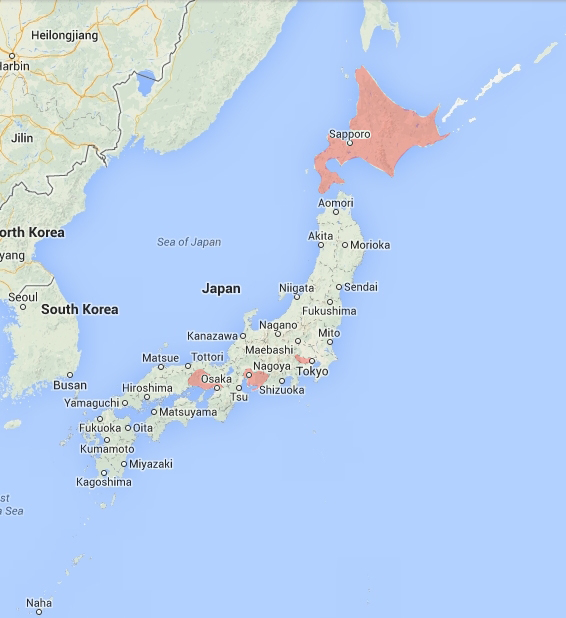
Japan is an island nation in East Asia. Located in the Pacific Ocean, it lies to the east of the Sea of Japan, China, North Korea, South Korea and Russia, stretching from the Sea of Okhotsk in the north to the East China Sea and Taiwan in the south. The characters that make up Japan's name mean "sun-origin", which is why Japan is sometimes referred to as the "Land of the Rising Sun".
Japan is an archipelago of 6,852 islands. The four largest islands are Honshu, Hokkaido, Kyushu, and Shikoku, which together comprise about ninety-seven percent of Japan's land area. Japan has the world's tenth-largest population, with over 126 million people. Honsh?'s Greater Tokyo Area, which includes the de facto capital city of Tokyo and several surrounding prefectures, is the largest metropolitan area in the world, with over 30 million residents.
Japan has a total of 6,852 islands extending along the Pacific coast of East Asia. he country, including all of the islands it controls, lies between latitudes 24O and 46ON, and longitudes 122O and 146OE. The main islands, from north to south, are Hokkaido, Honshu, Shikoku and Kyushu. The Ryukyu Islands, including Okinawa, are a chain to the south of Kyushu. Together they are often known as the Japanese Archipelago
The climate of Japan is predominantly temperate, but varies greatly from north to south. Japan's geographical features divide it into six principal climatic zones: Hokkaid?, Sea of Japan, Central Highland, Seto Inland Sea, Pacific Ocean, and Ry?ky? Islands. The northernmost zone, Hokkaido, has a humid continental climate with long, cold winters and very warm to cool summers. Precipitation is not heavy, but the islands usually develop deep snowbanks in the winter.
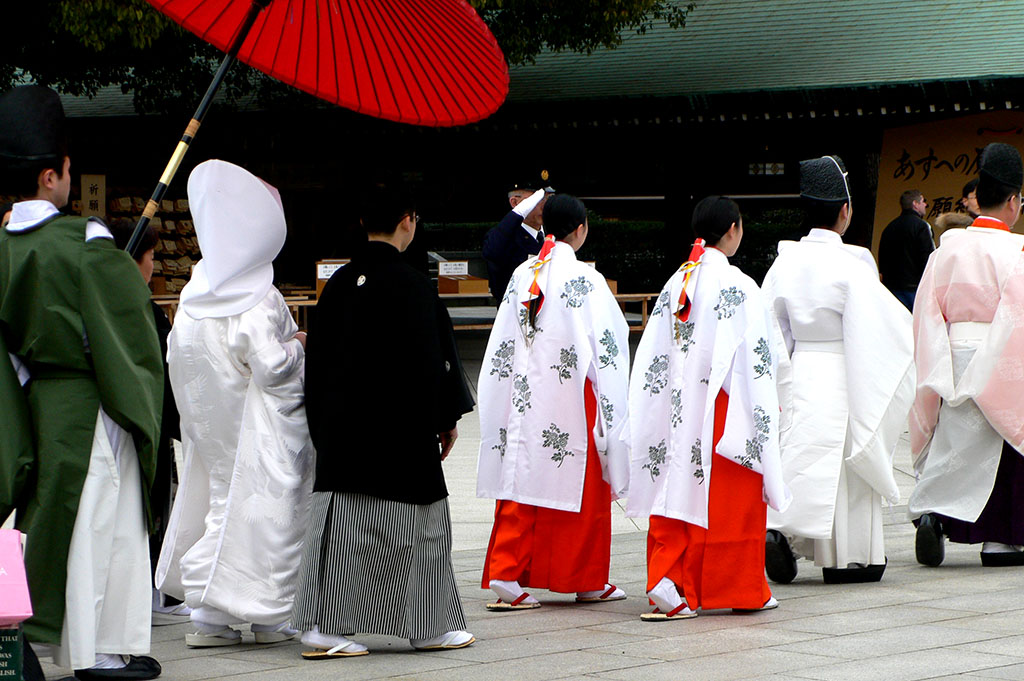
Japan enjoys full religious freedom based on Article 20 of its Constitution. Upper estimates suggest that 84?96 percent of the Japanese population subscribe to Buddhism or Shinto, including a large number of followers of a syncretism of both religions. However, these estimates are based on people affiliated with a temple, rather than the number of true believers. Other studies have suggested that only 30 percent of the population identify themselves as belonging to a religion.
Nevertheless, the level of participation remains high, especially during festivals and occasions such as the first shrine visit of the New Year. Taoism and Confucianism from China have also influenced Japanese beliefs and customs. Japanese streets are decorated on Tanabata, Obon and Christmas. Fewer than one percent of Japanese are Christian.
More than 99 percent of the population speaks Japanese as their first language. Japanese is an agglutinative language distinguished by a system of honorifics reflecting the hierarchical nature of Japanese society, with verb forms and particular vocabulary indicating the relative status of speaker and listener. Japanese writing uses kanji (Chinese characters) and two sets of kana (syllabaries based on simplified Chinese characters), as well as the Latin alphabet and Arabic numerals.
Besides Japanese, the Ryukyuan languages, also part of the Japonic language family, are spoken in Okinawa; however, few children learn these languages. The Ainu language, which has no proven relationship to Japanese or any other language, is moribund, with only a few elderly native speakers remaining in Hokkaido. Most public and private schools require students to take courses in both Japanese and English.