Ni
Nickel58.6934 (4)
Minerals containing nickel were of value for colouring glass green. The mineral used for colouring glass was called kupfernickel (false copper). Nickel was discovered by Baron Axel Frederik Cronstedt in 1751 in a mineral called niccolite. Apparently, he had expected to extract copper from this mineral but got none at all, obtaining instead a white metal that he called nickel after the mineral from which it was extracted.
- Name: Nickel
- Symbol: Ni
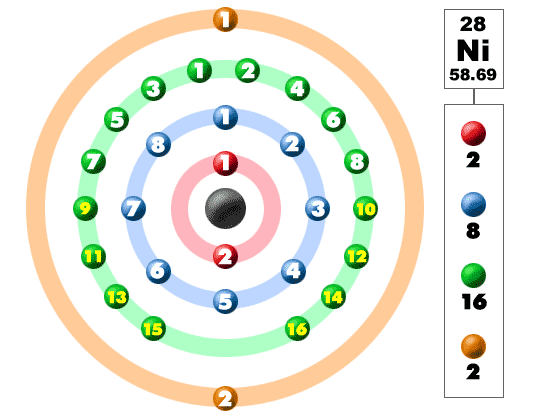
- Atomic number: 28
- Atomic weight: 58.6934 (4)
- Standard state: solid at 298 K
- Group in periodic table: 10
- Group name:none
- Period in periodic table: 4
- Block in periodic table: d-block
- Classification: Metallic
- batteries
- electroplating
- nickel added to glass gives a green colour
It is found as a constituent in most meteorites and often serves as one of the criteria for distinguishing a meteorite from other minerals. Iron meteorites, or siderites, may contain iron alloyed with from 5 to nearly 20% nickel.