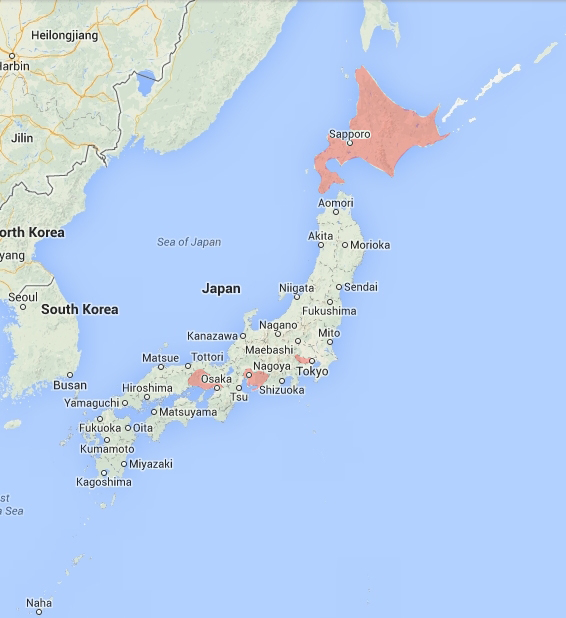
Japan is an island nation in East Asia. Located in the Pacific Ocean, it lies to the east of the Sea of Japan, China, North Korea, South Korea and Russia, stretching from the Sea of Okhotsk in the north to the East China Sea and Taiwan in the south. The characters that make up Japan's name mean "sun-origin", which is why Japan is sometimes referred to as the "Land of the Rising Sun".
Japan is an archipelago of 6,852 islands. The four largest islands are Honshu, Hokkaido, Kyushu, and Shikoku, which together comprise about ninety-seven percent of Japan's land area. Japan has the world's tenth-largest population, with over 126 million people. Honsh?'s Greater Tokyo Area, which includes the de facto capital city of Tokyo and several surrounding prefectures, is the largest metropolitan area in the world, with over 30 million residents.
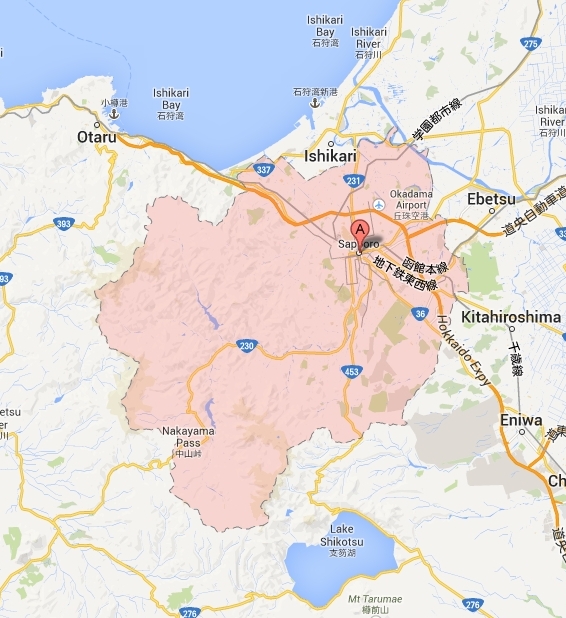
Sapporo is the fourth-largest city in Japan by population, and the largest city on the northern Japanese island of Hokkaido. Located in Ishikari Subprefecture, it is the capital of Hokkaido Prefecture, and an ordinance-designated city of Japan.
Sapporo is known outside Japan for having hosted the 1972 Winter Olympics, the first ever held in Asia, and for the city's annual Yuki Matsuri, internationally referred to as the Sapporo Snow Festival, which draws more than 2 million tourists from around the world. The city is also home to Sapporo Brewery and the famous white chocolate biscuits called shiroi koibito ("white sweetheart").
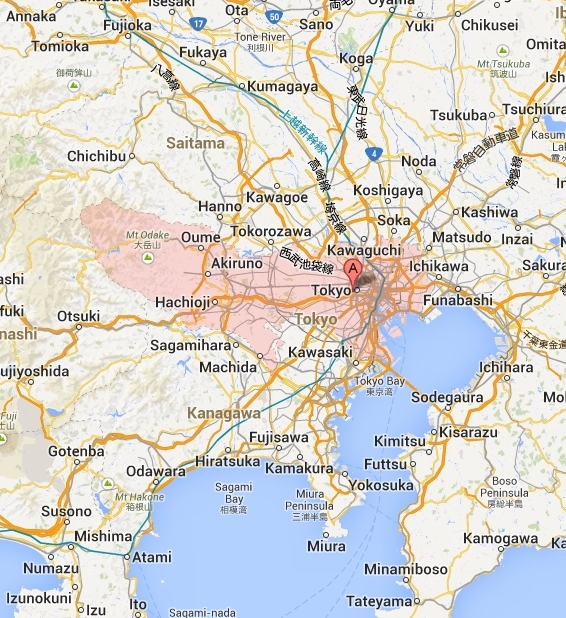
Tokyo ("Eastern Capital"), officially Tokyo Metropolis, is one of the 47 prefectures of Japan. Tokyo is the capital of Japan, the center of the Greater Tokyo Area, and the largest metropolitan area in the world. It is the seat of the Japanese government and the Imperial Palace, and the home of the Japanese Imperial Family. Tokyo is in the Kant? region on the southeastern side of the main island Honshu and includes the Izu Islands and Ogasawara Islands. Tokyo Metropolis was formed in 1943 from the merger of the former Tokyo Prefecture and the city of Tokyo.
Tokyo is often thought of as a city but is commonly referred to as a "metropolitan prefecture". The Tokyo metropolitan government administers the 23 Special Wards of Tokyo (each governed as an individual city), which cover the area that was formerly the City of Tokyo before it merged and became the subsequent metropolitan prefecture. The metropolitan government also administers 39 municipalities in the western part of the prefecture and the two outlying island chains. The population of the special wards is over 9 million people, with the total population of the prefecture exceeding 13 million. The prefecture is part of the world's most populous metropolitan area with upwards of 35 million people and the world's largest urban agglomeration economy with a GDP of US$1.479 trillion at purchasing power parity, ahead of the New York metropolitan area in 2008. The city hosts 51 of the Fortune Global 500 companies, the highest number of any city.
Tokyo has been described as one of the three "command centres" for the world economy, along with New York City and London. The city is considered an alpha+ world city, listed by the GaWC's 2008 inventory and ranked fourth among global cities by A.T. Kearney's 2012 Global Cities Index. In 2012, Tokyo was named the most expensive city for expatriates, according to the Mercer and Economist Intelligence Unit cost-of-living surveys, and in 2009 named the third Most Liveable City and the World�fs Most Livable Megalopolis by the magazine Monocle. The Michelin Guide has awarded Tokyo by far the most Michelin stars of any city in the world. Tokyo hosted the 1964 Summer Olympics and is currently a candidate city for the 2020 Summer Olympic Games.
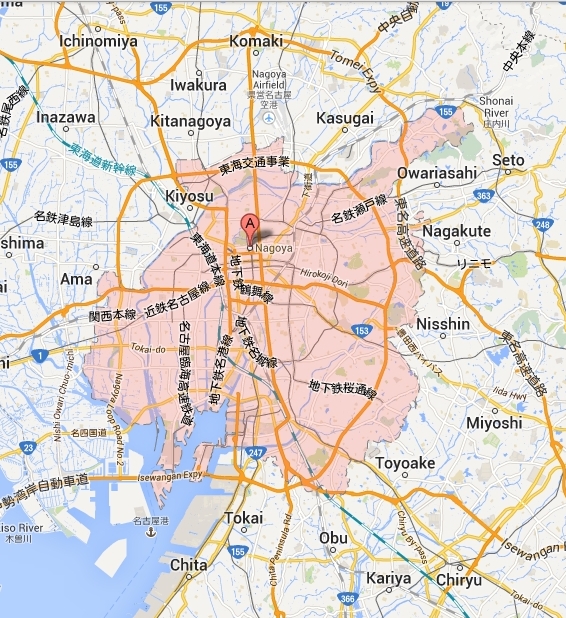
Nagoya is the largest city in the Chibu region of Japan. It is the third-largest incorporated city and the fourth most populous urban area in Japan.
Located on the Pacific coast on central Honshu, it is the capital of Aichi Prefecture and is one of Japan's major ports along with those of Tokyo, Osaka, Kobe, Yokohama, Chiba, and Kitakyushu. It is also the center of Japan's third largest metropolitan region, known as the Chokyo Metropolitan Area. As of 2000, Chokyo Metropolitan Area has 8.74 million people, of which 2.27 million live in the city of Nagoya.
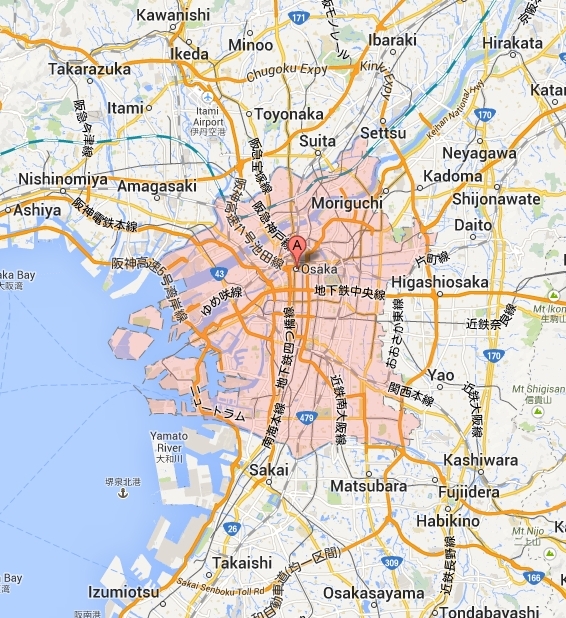
Osaka is a city in the Kansai region of Japan's main island of Honshu, a designated city under the Local Autonomy Law, the capital city of Osaka Prefecture and also the largest part of the Keihanshin metropolis, which comprises three major cities of Japan: Kyoto, Osaka and Kobe. Located at the mouth of the Yodo River on Osaka Bay, Osaka is Japan's third largest city by population after Tokyo (special wards) and Yokohama. Keihanshin is the second largest metropolitan area in Japan by population and one of the largest metropolitan areas highly ranked in the world, with nearly 19 million people, and by GDP the second largest area in Japan and the seventh largest area in the world.
Historically the commercial center of Japan, Osaka functions as one of the command centers for the Japanese economy. The ratio between daytime and night time population is 141%, the highest in Japan, highlighting its status as an economic center. Its nighttime population is 2.6 million, the third in the country, but in daytime the population surges to 3.7 million, second only after Tokyo (combining the special wards of Tokyo, which is not a single incorporated city, for statistical purposes; see the Tokyo article for more information on the definition and makeup of Tokyo). Osaka used to be referred to as the "nation's kitchen" (tenka no daidokoro) in feudal Edo period because it was the centre of trading for rice, creating the first modern futures exchange market in the world.