Akina's Singles Discography
1982
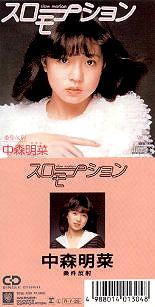
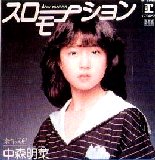
Akina released her first single "Slow Motion" in 1982. It reached No.30 on the charts and moved 176,000 copies for a total of 39 weeks on chart.
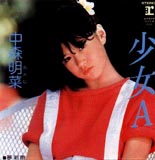
Her second single "Shyojo A" (Teenage Girl A) was considered a daring effort by a young singer about women at that time. It was nearly banned because of its suggestive lyrics. A very similar move to her idol Momoe Yamaguchi.All that media attention brought the single to No.5 on the charts and moved 396,000 copies (29 weeks).
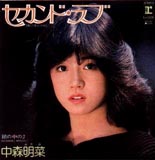
Her third and best selling single "Second Love" gave Akina her first No. 1 of her career. The ballad debuted at No.2, jumped to the coveted No.1 spot for three weeks, surrended the top spot for one week and then topped the charts again for another three weeks. It sold a whopping 766,000 copies (26 weeks).
1983
Akina released three singles this year but since "Second Love" was released in late 1982, its sales were considered for the 1983 year in compilation. Together with her phenomenal sales in her albums, Akina topped the sales for singles and albums for all artistes in 1983. She would repeat that feat another 3 times (1985, 86, 87), and I believe is still the singer that holds the record for the number of years for being the best selling artiste of the year.
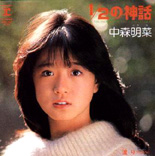
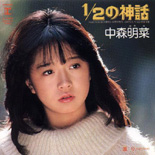
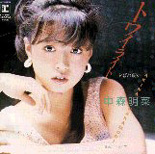
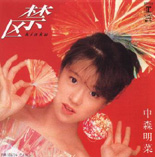
"1/2 no Shinwa" (1/2 a legend) had two covers, debuted at No.1 and stayed at the pole position for six weeks as well, and sold over 573,000 copies (17 weeks). "Twilight - Yuuguredayori" was denied the top spot by one of the top selling singles and stayed at No.2 for two weeks. The ballad sold a total of 430,000 copies (16 weeks). The third single of the year "Kinku" (Restricted Zone), which she sang at the 1983 Red and White Song Festival", returned Akina to the No.1 spot, and sold 511,000 copies (21 weeks).
1984
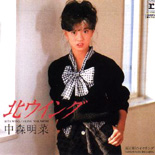
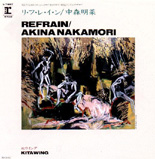
Akina released five singles this year (actually only four effectively) and this included "Kita Wing" (North Wing), "Southern Wind", "Jukkai" (1984) - Ten Commandments (1984), "Kazarija Nainoyo Namida Wa" (Tears Are Not Fashion Accessories) and "Refrain" (which is an album cut from "Possibility", coupling with the first single song of the year "Kita Wing"). This is one of Akina's most successful years in terms of singles sales but she did not win the Best Selling Artiste of the Year award because "Kazarija Nainoyo Namida Wa" was also released at the end of the year and most of its sales (after the first week of release) was considered for calculation in 1985 (Seiko Matsuda won the award that year). "Kita Wing" was denied the top spot once again by the top selling single of 1984 ("Moshimo Ashita Ga" (If Tomorrow) which sold almost a million copies). "Kita Wing" actually sold about 576,000 copies but combined with the sales of "Refrain", it is reported that "Kita Wing" sold a total of 614,000 copies (28 weeks).
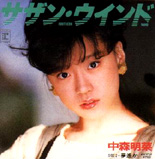
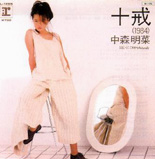
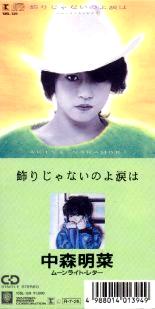
"Southern Wind" the next single, again returned Akina to the No.1 spot for three weeks. Written by Anzhen Chittai's lead singer, this song won Akina the "Pop Artiste Award" at the Megapolis Taisho. It sold a total of 549,000 copies. The third single, "Jukkai (1984) also topped the charts, selling 611,000 copies in total (18 weeks), and won quite a number of awards for Akina. She sang this popular song in the Red and White Song Festival. All the above three singles sold so well, that Akina took up three spots in the year-end best selling singles chart. (Akina would complete this feat another three consecutive times) The last single of the year "Kazarija Nainoyo Namida Wa" is a remake of an old song by a famous Japanese composer / musician / singer. Akina's funky and rockish remix gathered new fans and made it her best selling single of 1984. It sold over 625,000 copies.
1985
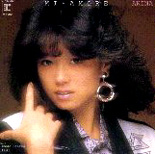
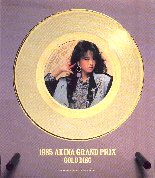
Akina released three singles and a maxi 12 inch single this year. The first single "Mi Amore" (Meu amore ... - I Love You) was a Latin flavoured song which topped the charts for 2 weeks and is effectively the top selling single of 1985 (not counting the sales accumulated by other singles in 1984). With sales of 631,000 copies (19 weeks), it was the second best selling single in the 1985 year end charts and her career to date as well. This wonderful song won Akina the first of her coveted Record Taisho awards at the Japan Grand Prix (she won two in total and was the youngest at 20, then to win the award until Namie Amuro won it a couple of years back.) and many other award as well. She also performed this song at the Red and White Song Festival that year and was voted the second artiste (by no. of votes) whom the Japanese audience want to watch at the Red and White Song Festival (the first being Sayuri Ishikawa - an enka singer). The second picture with a Golden Disc is the Record Taisho Award (The Japanese Grammy for "Record Of The Year") thaat Akina won.
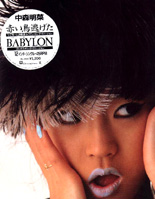
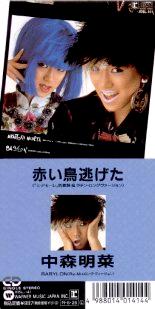
The second single "Akai Tori Nigeta" (The Red Bird Flys Away) is the first and only maxi 12 inch single Akina has released. It is a funkier and more mysterious remix of the song "Mi Amore" and is the first and only remix in Japanese pop history to feature a total different set of lyrics with the same music. The third picture is the original cover and when it was released, it debuted at No.12 on the charts (probably because her fans did not recognise her in that unusual makeover) but topped the charts the next week, being the first maxi single to top the Oricon chart in history. During the week that it topped the charts, "Mi Amore" was still in the Top 10 and Akina had the honour of having two singles in the Top 10 at the same time. Its sales of over 354,000 copies (15 weeks) ensured that it was the best selling maxi-single in history as well.
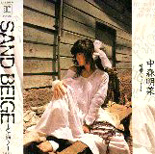
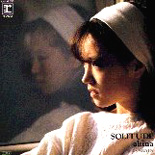
The third single "Sand Beige - Sabakue" is another ethnic flavoured song associated with the Sahara desert. It topped the charts as well and sold 461,000 copies (16 weeks). The last single, a ballad, "Solitude" also topped the charts and sold 336,000 copies (17 weeks). It also won the "Best Lyrics" award at the Japan Grand Prix that year.
At the year end singles chart sales compilation, Akina's singles "Mi Amore", "Kazarija Nainoyo Namida Wa" and "Sand Beige - Sabakue" took the second, sixth and seventh best selling positions of the year (Akina would repeat that exact same feat for the next two years in succession). A great honour (probably not emulated by any other singer in history but a pity as well because she never got to top the year end charts).
1986
Akina repeated her almost impossible feat amongst the unforgiving and fickle Japanese audience with another amazing year in music sales. As reported earlier, she won the Best Selling Artiste in 1983 and then from 1985 to 1987, and with changing images, she proved that she was no fluke in her previous successes.
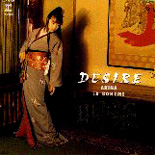
Her first single of the year "Desire - Jonetsu" was again the second best selling single of the year (beaten by a remake of the horrible English song "Cha Cha Cha" by a one hit wonder) with over 516,000 copies (18 weeks). Nonetheless, Akina was very moved when she won a V2 (victory the second consecutive time) at the 1986 Japan Grand Prix - Record Taisho award. She became the first female artiste to win it twice and the first artiste (both male or female) to win consecutively. Her outfit for this song is a modern kimono, which is held with a modern belt at the hip region (more like a man's kimono), instead of the traditional manner and she donned one of those traditional Japanese short wigs (like a Japanese doll). She also wore high heels instead of the wooden slippers as well. She performed this multi-award winning song in the Red and White Song Festival and had the most interesting dress that night, which was covered by most magazines. They dubbed her the "White Fairy", because of her all white appearance (like a typical Japanese bride as well). The kimono was rather traditional (more female) which was all white with silver linings on the dress. The hem of the kimono though, was folded upwards to assist in her executing the difficult dance steps and her little bag at the back of her dress, drew a fountain of purplish blue flowers. She donned a longer white wig, high cut boots and blue contacts as well to complete that "ice queen" look.
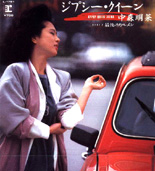
Her next single "Gypsy Queen", a ballad, was less exciting and the cover was an everyday shot of her crossing to take a cab. However, she took a different approach to singing the song and adopted a more feminine voice while sinigng it. She didn't dress up like a gypsy though for the song, but only wore off shoulder low cut dresses. It was a No.1 hit as well and sold 358,000 copies in total (16 weeks). It won her the "Best Pop Artiste" award at the Megapolis Taisho that year.
Her last single "Fin" (to be pronounced "Fair" because it represents "Finish" in French"), another ballad, showed her in a pose with her adorable dog. It hit the No.1 spot, sold 317,000 copies (16 weeks) and won her first and only Record Of the Year award at another Music Grand Prix in Japan (second in prestige to the Japan Grand Prix).
It was a milestone year for Akina and "Desire", "Gypsy Queen" and "Fin" took the No.2, 6 and 7 spot in the year end sales charts as well.

1987
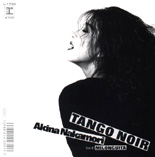
The first single "Tango Noir", a tango styled song, returned Akina to the limelight once again with her tango dance and dresses. With 348,000 copies sold (13 weeks), it was the second best selling single of the year and also for Akina herself that year as well. During one of her performances promoting this song, she actually sprained her back and had to be held back to her seat.
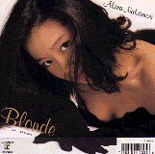
Her second single "Blonde" was a Western flavoured song and was written specifically for her by foreign song-writers for her new album. The original version is also sung by her and is included in her first and only English album "Cross My Palm" (also the best selling English album by a Japanese artiste in history) named "The Looks That Kill". A Japanese song writer filled in the Japanese lyrics. It showed her determination to venture into unchartered waters and the fans reciprocated that. Unfortunately, it was not a very good song, but it still topped the charts and sold 301,000 copies (17 weeks).
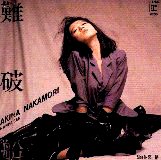
Her last single, one of her favourites as well, is "Nanpa Sen" (Sunken Ship). When she sang this painful ballad before it was released commercially, she was so emotionally shaken that she wept and her hands were shaking by the time she completed the song. It was written by an enka singer and it is an unusual song for Akina because it is more "enka" (traditional Japanese folk or country like) rather than a pop song. However, it was a very good song and the fans lapped it all up. It was another No.1 hit for Akina and it sold over 413,000 copies (19 weeks), to become her best selling single of the year. Her outfit for this song is the big heavy set ball gown (many different variations) but when performing this multi award winning song at the Red and White Song Festival, she donned a hat (that represented the turbulent waves). Also gone is the big ball dress and in place, was a black number with a an extension at the waist area, with black tranparent fabric spreading out like a veil, probably to signify some breakers and the sea. A vision.
"Tango Noir", "Blonde" and "Nanpa Sen" took up the second, sixth and seventh position once again in the year-end singles sales charts. Even though "Nanpa Sen" sold more than "Tango Noir" eventually, about 11,000 of its eventual sales were only accounted for in 1988.
1988
Last year actually marked the end of the stranglehold Akina had on the pop music scene and her popularity started to wane this year, with upcoming acts like Yoko Minamino, Miho Nakayama and most notably, Shizuka Kudo.
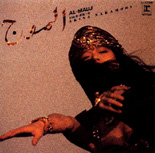
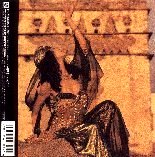
Her first single, "Al-Mauj" (The Waves), is an Arabic flavoured song and the costumes for performing this song were one of her most exquisite yet. Although it hit No.1, its sales were a rather dismal 297,000 copies (16 weeks), marking the first time that an Akina single had sold less than 300,000 copies. Nonetheless, her TV performances still ensured that she was largely in the limelight.
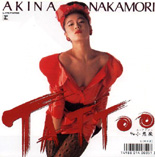
Her next single, "Tattoo", caused a slight furore, because of the mini skirt donned on the cover and the provocative mini dresses she wore while performning this song. "Tattoo" actually meant drums and this song is laced with drum arrangements and is reminiscent of the older days when drums were used as the main instruments in the 30s-40s. The performance also emulated a cabaret with the microphone also specially designed for the song. It's sales were however not much higher than "Al Mauj" and also failed to go past the 300,000 mark with 297,000 copies sold (16 weeks). However, it won her the third and last of the "Pop Artiste Award" at the Megapolis Taisho and was her most popular song of the year. I believe she would have covered this song at the Red and White Song Festival if she had not contracted a sore throat at the end of the year. She showed that she was clearly in pain when she sang at some variety program in the lead up to the Christmas and New Year season.
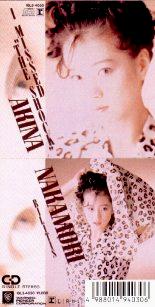
She sang the next song "I Missed The Shock" at the Red and White Song Festival - a rather simple balladry song with difficult arrangements. This song marked the end of her 13 consecutive No.1 hits when it only hit No.3 and stayed at that position for a couple of weeks or more (the No.1 song was "Akatombo" - one of the top songs of the year and "Melody" by Yui Asaka - a young and upcoming singer at that time - now forgotten probably). It became her best selling single of the year with 311,000 copies sold (16 weeks). For her performances, she donned smaller sized ball gowns with a more English touch to the dresses. It usually contains portraits or painting on the dresses and during her performance at the Red and White Song Festival, she appeared as a queen (befitting for the queen of pop), completing the touch with a crown as well. That would mark the last time she appeared in the Red and White Song Festival (six times in total - another uncanny resemblance to her idol, Momoe Yamaguchi).
1989
Akina only released one single this year because she attempted suicide in July 11, two days shy of her 23rd birthday on July 13. She was discovered by her then lover Matchy, who called the ambulance and was rushed into the emergency ward. She was lucky to have survived because she never intended to die anyway (according to reports). She "retired" from the scene for the next couple of months, before resurfacing for a sudden press conference with Matchy on her side, apologizing for her silly action and causing unncessary worry to everyone. Her suicide attempt was a desperate one to try to win Matchy back but I guess her plan backfired. Matchy would leave her forever and marry someone else.
This was a stark contrast to the strong, impetutous, modern woman image that she projected through her performances and publicity. It would not be such a surprise if you read her interviews when she just debuted and her wish was to get married before the age of 24 and retire from the scene at the top, just like her idol, Momoe. Japanese fans are rather traditional and very fickle and therefore would consider any form of suicide attempt as an unlucky omen, which started to mark the downfall of her illustrious career. Though she made a successful comeback one year later, it was only short-lived.
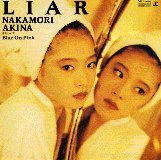
"Liar" released a few months before, was not a huge commercial success and though it returned Akina to the No.1 spot, it only sold 274,000 copies (about 20,000 of the sales occured after her suicide attempt when it returned to the charts) and spent 20 weeks on chart in total.
1990
Akina made her comeback on 17 July 1990 with her new single "Dear Friend", after spending lots of time in Hawaii, getting a tan (looking very un-Japanese) and promoting the song, singing it live at one of the most expensive hotels in Hawaii. "Dear Friend" was a departure from her usual songs, and she sings about getting back on her feet with the help of a dear friend. It is an inspiring song and it sold 150,000 on its first week of sales (biggest opening sales for Akina), hitting the No.1 spot and regaining Akina to her former glory. It also became the sixth best selling single of the year with 548,000 copies in total. I think the success is due to the fact that she gained sympathy from the Japanese due to her determination to get back on her feet and she looked happy as well. Seiko Matsuda was linked to Akina's suicide attempt when photographs of her philandering with Matchy (she was married) surfaced. Seiko's music career suffered as a result. However a reversal of fortunes occured when the Japanese audience felt that Akina was still wallowing in her past with Matchy and couldn't seem to get over the fact that he's gone for good. The negative publicity around her also contributed to this eventual result. As for Seiko, she just flourished with every negative report about her philandering and it probably came at the right time when the New Age Japanese women were looking for some form of liberation from the traditional Japanese values and roles for women, and found a model in Seiko.
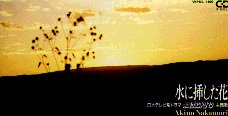
Her next single, "Mizunisashita Hana" (The Flower In The Water), also one of Akina's more favoured songs, is a ballad, which featured a photograph taken during twilight. Though it marked the first time that Akina did not appear in the photo, the cover photo itself was actually taken by Akina her, who has an intense interest in photography. It also made it to the No.1 spot and sold 340,000 copies.

1991
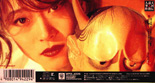
Akina's 27th single marks Akina's last single release with Warner Pioneer. "Futari Shizuka" (The Silence Between Two People) hit No. 3 on the charts and ended Akina's 17 single run at No.1, but sold 484,000 copies, more than most of the sales of her No.1 singles. It is largley aided by the fact that it is one of the theme songs for a popular drama series and it also contains an Akina penned song (lyrics) on the flip side of the single named "Wasurette" (Forgotten).

1993
Akina's first release with new recording company MCA Records, is "Everlasting Love", a double A-side single with "Not Crazy To Me" reached only No.10 and only sold 129,000 copies. "Everlating Love" was penned by the famous composer, who won the Oscar for his music for "The Last Emporer", and "Not Crazy To Me" was penned by Nokko, the lead singer of the rock band Rebecca, but even the prestige of these songwriters failed to increase any impact on the sales of the single. One of the reasons could also be that the one year break from the pop industry had done more harm than good for her career, especially when media reports chose to focus on her repeated suicide attempts, drinking problems and anorexia as well.

1994
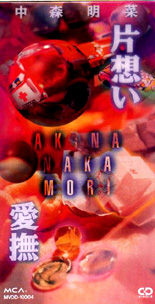
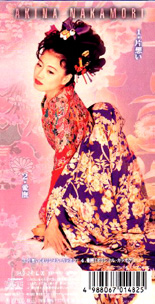
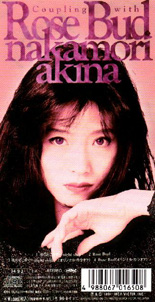
"Kattaomoi" (Crush) was another remake of an old song, which was featured in the album "Uta-Hime" (Songstress) that year as well. It was a double A-side single as well, which featured a radio favourite from Akina's previous album "Unbalance + Balance" (Akina's first original album since "Cruise" in 1989). The song "Aibu" (Touch Me) is written by hitmaker Testuyo Komuro, before he made it really big with his Komuro family of singers (his most famous protege being Namie Amuro). This single sold slightly better than "Everlasting Love" but failed to make it to the Top 10, being the first single since her debut single not to chart in the Top 10. It only managed the No.17 position and sold 134,000 copies.
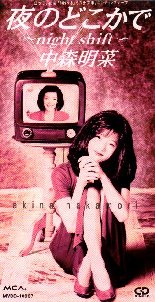
The next single, "Yoru no Doko Kade - night shift - was another dismal performance even though it was the ending theme for the late night news program. It only managed the 14th position and sold only 118,000 copies.
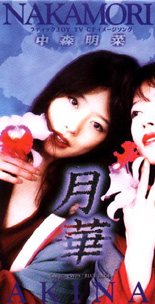
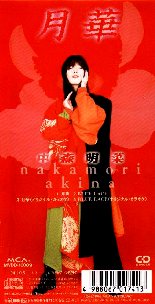
The last single, "Gekka" was only released one month after her last and was the theme song for a fashion house in Japan. It returned Akina to the Top 10, when the single entered at No.8 but sales were still not very impressive at 137,000 copies. Nevertheless, it was her best selling single at MCA records.
1995
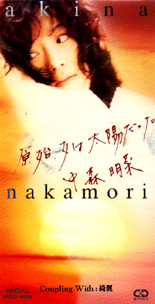
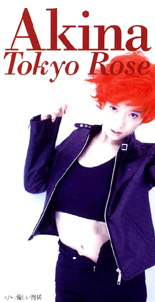
Akina released two singles this year, which were not too exciting and so were the results for them. "Genshi, Onna wa Taiyo Datta" sold 100,000 copies and only managed the No.15 position and "Toyko Rose" (which sounds uncannily like "Tattoo") did even worse (probably because Akina was rather unrecognizable on the cover), with the No. 32 position and only 32,000 in sales.
1996
"Moonlight Shadow" was a "make or break it" single for Akina. It was written by then very popular Testuya Komuro (who wrote "Aibu") for her and many viewed this single as the true comeback for her. Unfortunately, it was not a very good song and though it was in the fashion of disco friendly music, it lacked the punch in the material that Komuro wrote for his younger proteges. It fizzled at the charts with only 112,000 copies in sales and the No.14 position (8 weeks).

1997
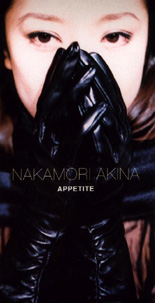
"Appetite" was Akina's last single with MCA records and though I personally thought it was a rather interesting song, it failed again at the charts with only 25,000 copies in sales and the No.46 position (4 weeks). Japanese audiences were starting to forget her.
1998
"Keisei - Never Forget" marked her first single with her third record company "Gauss Entertainment". It was the theme song for the TV drama series "Tsumetai Tsuki" (Cold Moon), in which Akina starred in as well. She starred as a pyschologically disturbed woman who tries to wreck a happy family. Her strong performance won her some new fans and the single did reasonably better than her last attempt. It sold 98,000 copies and hit the 19th spot (7 weeks).
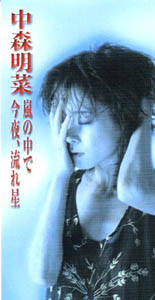
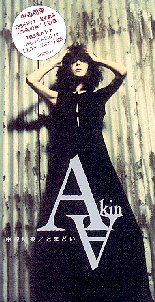
Her next two singles returned her to the "slums", mainly because she refused to do any promotions for the song. Her second single, "Konya, Nagareboshi" sold only 12,000 copies and was Akina's worse chart performance at No.66 (3 weeks). "Tomadoi" did slightly better in terms of chart position at No. 40 but sold only 10,000 copies (2 weeks), making it the worst selling single (unless her newest "Trust Me" beats it).

1999
In 1999, Akina performed in another drama series "Border" and "Ophelia" is the theme song for the program. The flip side "To Be" is the first time Akina has an all English song on her single. Since it was a good song with a mysterious beat, it hit the 29th position and sold 38,000 copies (8 weeks)
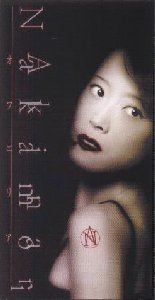
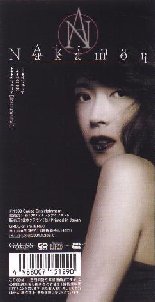
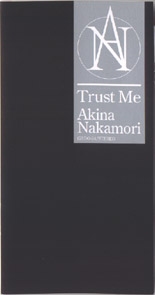
Her last single with Gauss is Latin flavoured "Trust Me", which is the first time, there is not picture on an Akina single cover. It comes after a time when Akina's troubles seem to be at its highest peak. Akina has promised her 1,600 fans who have bought her birthday concert tickets could get the refund when she cancelled the performance (and the fans did not get back their money).With all that negative publicity, and in order to settle the problem, she borrowed 24 million yen from a finance company. On 10 December, Akina refunded all the money to her fans. "Trust Me" sold 4,610 copies on its first week. What amount it sells it on its second week is not reported as yet.
Despite all these pitfalls, Akina had assured her fans during a charity concert for the "Taiwan Aid" (hosted by Judy Ongg) that she will fight on and not give up. The fans cheered her on after she said this and she performed "Dear Friend" and a Momoe song "Iihi Tabitachi" (Bon Voyage - Setting out on a Nice Day).