ANGELS
A Television History

Actually, the phenomenon of Angel mania was probably more related to smart programming than it was to the show's notorious subject matter. In 1976 television viewing was dominated by adult women who accounted for 60% of the viewing audience at any given time with the other 40% divided between adult males, teenagers and children. At that time the head of programming at ABC was Fred Silverman who at the age of twenty-five reprogrammed the CBS daytime schedule and moved the network into the number one daytime position with their early morning through late afternoon programs. Silverman, who was hired by the lagging ABC to work his program magic in prime time, saw the obvious appeal of Charlie's Angels for female viewers. He placed the Angels on Wednesday nights at ten P.M. eastern standard time. This was the time slot which generally held the highest percentage of adult female viewers. Most had sent the kids to bed and, in many cases their husbands too, and were free to roam the airwaves uninterrupted. Also, to top off the coup, the Angels were up against such mediocre shows as The Blue Knight and Quest. (Who remembers these?) And to further guarantee the appeal to women Aaron Spelling had the forethought to allow the show an unprecedented $20,000 budget for clothing, make-up and hair styling.
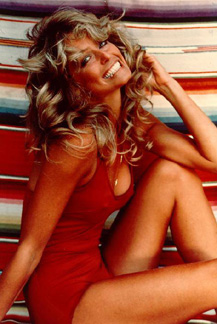 Though Charlie's Angels was predominantly aimed at women Silverman
realized that the show would also have masculine appeal. As explained
in the November 22, 1976 Time magazine article on the success
of the show (of which the three angels adorned the cover) "Typically,
each Angels episode makes sure at least one co-star strips down
to a bikini in the first ten minutes, the better to keep males
in a state of gape-jawed passivity and expectation thereafter."
Though Charlie's Angels was predominantly aimed at women Silverman
realized that the show would also have masculine appeal. As explained
in the November 22, 1976 Time magazine article on the success
of the show (of which the three angels adorned the cover) "Typically,
each Angels episode makes sure at least one co-star strips down
to a bikini in the first ten minutes, the better to keep males
in a state of gape-jawed passivity and expectation thereafter."
ABC had struck gold. Here was a show that had equal appeal for both men and women. Women watched to see glamorous feminine women doing "men's work" and the male audience watched to see glamorous feminine women doing "men's work" also, because the plots usually required the girls to be near-nude at some point to solve a case. In the same Time article mentioned before Charlie's Angels are labeled what "might be called family-style porno, a mild erotic fantasy that appeals about equally to men and women."
Not all women loved the show though. Some feminists saw Charlie's Angels as a direct threat to their movement, seeing anything slightly sexy as being sexist. Feminist journalist Judith Coburn is quoted as feeling that "Charlie's Angels is one of the most misogynist shows the networks have produced recently. Supposedly about strong women, it perpetuates the myth most damaging to women's struggle to gain professional equality: that women always use sex to get what they want, even on the job." She thought the program to be "a version of the pimp and his girls. Charlie dispatches his street wise girls to use their sexual wiles on the world while he reaps the profits." This sort of loaded opinion only heightened the show's appeal as more people tuned in to see what the controversy was about. The controversy was mostly all hype though. Somehow the series managed to create the myth of being violent and sexual though the series didn't actually show the viewer anything really controversial. It was all just extremely well orchestrated titillation on behalf of the show's producers, ABC and journalists who eagerly jumped on the show to exploit this hype during an otherwise uneventful television season.