

|
Necrobiosis
Lipoidica Diabeticorum.
************************************
Estas 34 referencias
bibliográficas nos actualizan sobre esta compleja
patología, manifestación clínica de la diabetes. Hay una NECROBIOSIS LIPOIDICA NO
DIABETICORUM, la cual será motivo de otra revisión. EDITORIAL
ENGLISH: These 34
bibliographical references modernize us on this complex pathology, clinical
manifestation of the diabetes. There is a NECROBIOSIS LIPOIDICA NON
DIABETICORUM, which will be reason of another revision. Abstract Necrobiosis lipoidica diabeticorum is an unusual dermatologic condition with a characteristic clinical appearance and a clear association with diabetes mellitus. There is currently no treatment that reverses the atrophic changes associated with this lesion. We have carried out a clinicopathologic study on 15 subjects and, in addition, have reviewed 10 further biopsy specimens of necrobiosis lipoidica diabeticorum. We found a frequent association of necrobiosis lipoidica diabeticorum with other chronic complications of diabetes mellitus, including limited joint mobility. It is possible that nonenzymatic glucosylation or other changes in collagen may be important in the etiology of necrobiosis lipoidica diabeticorum and the limited joint mobility. We confirmed that cutaneous
anesthesia is usually present in the necrobiosis lipoidica diabeticorum
lesions. With the use of an antibody to S100 protein and an
immunohistochemical method, there was an apparent decreased number of
nerves in the skin lesions. We suggest that sensory loss results from local
destruction of cutaneous nerves by the inflammatory process. Finally, in
six elliptical biopsies extending into clinically normal skin, we
demonstrated that the inflammatory infiltrate of necrobiosis lipoidica
diabeticorum extended from the lesion into apparently normal skin
surrounding clinically active lesions. Thus, intradermal steroids might be
administered to perilesional areas surrounding active lesions in the hope
of halting progression. Abstract Granuloma annulare and necrobiosis lipoidica diabeticorum have rarely been
reported in the same patient. We describe the unusual case of a woman with
diabetes and a history of generalized granuloma annulare who noted leg
ulcers that clinically represented ulcerated necrobiosis lipoidica
diabeticorum and had histologic features of necrobiosis lipoidica
diabeticorum and granuloma annulare. Her condition responded to treatment
with antiplatelet agents. Abstract The histopathologic findings in 331 cases of necrobiosis lipoidica diabeticorum seen during a 50-year period were reviewed. Three cases showing cholesterol cleft formation were found. All 3 cases were associated with severe diabetes mellitus. The differential diagnosis of importance is necrobiotic xanthogranuloma. Common features included extensive hyaline necrobiosis and foreign-body giant cells. Atypical and Touton-type giant
cells are more common in necrobiotic xanthogranuloma. Vascular changes in
necrobiotic xanthogranuloma may include granulomatous involvement of
muscular walls with thrombosis. Explanations for cholesterol cleft
formation are offered. When cholesterol clefts are seen in biopsy specimens
of necrobiosis, necrobiotic xanthogranuloma must be ruled out. In addition,
when found in necrobiosis lipoidica diabeticorum, these clefts may imply
diabetes mellitus with complications. Abstract In order to evaluate patients with necrobiosis lipoidica diabeticorum and to compare them with age, sex, and duration of diabetes matched controls, 15 patients with necrobiosis were each matched with 5 control subjects with diabetes mellitus. Complications of diabetes, glycaemic control, and proteinuria were measured. Patients with necrobiosis (mean age 40, range 18-74 years) had a mean duration of diabetes of 14 (range 3-36) years; 8 patients were male, and 7 were female. For necrobiosis versus controls, background retinopathy (67% vs 27%, p = 0.009), proteinuria (53% vs 17%, p = 0.006), and smoking (60% vs 20%, p = 0.003) were all more common with necrobiosis. There were no significant differences between patients with
necrobiosis and control patients in the prevalence of vascular disease and
neuropathy. Glycosylated haemoglobin concentrations were higher in patients
with necrobiosis (p = 0.02). Blood pressure measurements were similar in
both groups. We conclude that smoking, proteinuria, and retinopathy were
more prevalent in diabetic patients with necrobiosis; the skin lesion may
therefore share common aetiological factors which affect the microvascular
circulation, leading to damage to basement membranes and vascular
endothelial cells. Abstract Results of an open trial of platelet inhibitor treatment for necrobiosis
lipoidica diabeticorum suggest the possible importance of abnormal platelet
function in this disease. In ten female patients with necrobiosis lipoidica
diabeticorum (six who were diabetic and four who were not) platelet
survival times were measured before and after treatment with aspirin and
dipyridamole. Pretreatment platelet survival time was considerably
shortened in 50 percent of the diabetic and nondiabetic patients.
Platelet-inhibitor treatment prolonged platelet survival time toward normal
in most of these patients. The clinical response to treatment varied from
healing to no noticeable effect. Abstract A case of necrobiosis lipoidica diabeticorum (NLD) in a 12-year-old male
patient is described. Diabetes mellitus (DM) was diagnosed at the age of
1.5 years. The onset of the first NLD lesion had been previously observed
at the age of 7, on the back of the left foot. Three new lesions appeared
at the age of 8, one on the left leg, the others on the thighs. At the age
of 12, four infiltrated, reddish patches, with slight central atrophy were
evident on his lower extremities. Histopathological features showed foci of
collagen degeneration with sclerosis, surrounded by a chronic, mainly
perivascular, granulomatous infiltrate, made up of lymphocytes and
histiocytes. The patient is now 19-year old, with no eye or kidney failure,
owing to a constant metabolic control of DM. A constant follow-up of the
patient demonstrated a self-resolution of NLD plaques, with no evidence of
further lesions. Abstract Necrobiosis lipoidica diabeticorum is a chronic cutaneous complication of diabetes mellitus with microangiopathy as an important pathophysiologic factor. Because of the known success of hyperbaric oxygen in the treatment of chronic non-healing wounds, we used this mode of therapy to treat a diabetic patient with ulcerated necrobiosis lipoidica of 7 years' duration, refractory to medical and surgical treatment. The patient received daily
sessions of hyperbaric oxygen therapy. There was considerable improvement
during the course of the treatment, with complete closure of all the
ulcerations after 98 sessions. The success of this treatment emphasizes the
role of hypoxia in the pathogenesis of the lesion. This simple and safe
treatment method may be a good solution for patients with chronic
nonhealing necrobiosis lipoidica which fails to respond to other
therapeutic approaches. Abstract A 58-year-old diabetic woman with necrobiosis lipoidica diabeticorum demonstrated lesions with raised, prominent borders. These areas were found on biopsy to have transepidermal elimination of elastic fibers. We present this case as a unique finding and review the characteristics and possible mechanisms of transepidermal elimination. ======================================================================== Abstract The prevalence of persistent microalbuminuria, retinopathy, and peripheral and autonomic neuropathy was assessed in 18 children and adolescents with type 1 (insulin-dependent) diabetes mellitus (IDDM) who suffered from necrobiosis lipoidica diabeticorum (NLD) and in 40 diabetics without NLD, matched for sex, age, duration of disease, and metabolic control. The mean +/- SD age of the patients was 15.1 +/- 8.6 years (range 7.9-23.9 yrs) and their duration of IDDM was 10.9 +/- 8.1 years (range 7.1-21.0 yrs). Their
mean glycosylated hemoglobin level was 9.9 +/- 5.0% (7.3-16.6%) and their
fructosamine level was 274 +/- 180 mumol/L (199-466 mumol/L). Patients with
NLD had a higher frequency of persistent microalbuminuria (p < 0.001) and
retinopathy (p < 0.001) than those without NLD. Our study suggests that
children as well as adult diabetics with NLD can be at high risk for
nephropathy and retinopathy; NLD can be a clue for diabetic nephropathy and
retinopathy. Abstract Twelve female patients with necrobiosis lipoidica diabeticorum (six with diabetes and six without) had a 5-mm punch biopsy of the skin lesion performed. The tissue was processed for dermatopathologic examination in 12 cases and for direct immunofluorescence in 11. Vasculopathy with
inflammation and thickening of vessel walls, at times leading to occlusion,
was found in lesional skin in all 12 cases. Vessels contained deposits of
immunoreactants in the involved skin in 11 cases. This included IgM in six,
C3 in nine, fibrin in ten, IgG in one, and IgA in two. Vessels contained
deposits of immunoreactants in uninvolved skin in seven patients (C3 in
four, IgM in three, fibrin in three, C4 in one, and IgA in one), three of
whom had type I diabetes. Abstract We have found a previously undescribed histopathologic feature of
necrobiosis lipoidica diabeticorum among 310 biopsied cases: lymphoid
nodules. This feature does not correlate with unique clinical lesions or
forms of the disease. The lymphoid nodules are similar in appearance to
those in other chronic dermal inflammations. Abstract In 1877, Dr Heinrich Koebner inflicted an experimental trauma on the
uninvolved skin of a psoriatic patient. This resulted in the appearance of
a typical psoriatic lesion at the site of trauma. This reaction, known as
Koebner's phenomenon (KP), has subsequently been associated with several
skin diseases. However, it has not been associated previously with
necrobiosis lipoidica diabeticorum (NBL), a rare skin manifestation of
diabetes mellitus. This report presents the unusual finding of NBL
associated with KP in a patient with diabetes mellitus. Abstract Granuloma annular (GA) and necrobiosis lipoidica diabeticorum (NLD) are disorders characterized by granulomatous inflammation and degenerative changes in collagen and elastic fibers. Because these disorders have often been described as being associated with altered extracellular matrix deposition, we studied the in situ expression of interstitial collagenase, 92-kDa gelatinase, and tissue inhibitor of metalloproteinases (TIMP)-1. Twelve lesions each of GA and NLD of different histopathologic types and durations were examined. Interstitial collagenase mRNA was seen in histiocyte-like cells in one-third of the cases of both diseases, typically in younger lesions. In GA, collagenase mRNA was only detected in lesions of the palisading type. Signal for 92-kDa gelatinase mRNA was observed in eosinophils, which were present in low numbers in five of 12 GA and three of 12 NLD samples. The signal for this enzyme and the presence of eosinophils did not correlate with the age of lesion. TIMP-1 mRNA was consistently expressed by histiocyte-like cells in both disorders. In GA, TIMP-1 mRNA was detected at the outer edge of the palisading granulomas, but in NLD, inhibitor expression was seen in the perivascular and periadnexal accumulation of inflammatory cells. Our data indicate that
collagenase and TIMP are expressed early in these disorders and that these
proteins may contribute to stromal remodeling associated with necrobiotic
lesions. Our results further indicate that the localization of TIMP-1
production may provide a distinction between the two disorders, whereas
metalloproteinase expression is not sufficiently specific to aid in the
differential diagnosis of GA and NLD. Abstract Necrobiosis lipoidica diabeticorum is a rare skin disorder, usually considered a marker for diabetes mellitus. More than half of the patients with necrobiosis lipoidica diabeticorum have diabetes mellitus, but less than one per cent of diabetes mellitus patients have necrobiosis lipoidica diabeticorum. In the diabetes and dermatology literature, we find the position that there is no effect of glucose control on either the appearance of necrobiosis lipoidica diabeticorum or the clinical course of the lesion. We base our challenge to this position on a critical review of
the original data. And conclude on the contrary, that necrobiosis lipoidica
diabeticorum is usually associated with poor glucose control and that
tighter glucose control, as currently practised, might improve or prevent
the disorder. Abstract A diabetic patient is described presenting psoriasis, necrobiosis lipoidica diabeticorum, granuloma annulare, and vitiligo and with a history of recurrent erysipelas and mycotic infections. Scrupulous physical examination excluded further systemic or cutaneous involvement. The immunological workup revealed both phenotypic and functional defects in cellular immunity. ======================================================================== Abstract Necrobiosis lipoidica often fails to respond adequately to therapy with topical and intralesional corticosteroids, or to systemic medications like niacinamide and pentoxifylline (Trental). On the basis of unpublished work which showed a predominance of T helper cells in lesions of necrobiosis lipoidica, and recalling the case of a woman whose necrobiosis lipoidica improved after she was started on cyclosporine for a renal transplant, systemic cyclosporine was successfully used in the cases of two young women who had insulin-dependent diabetes and were disfigured by severe, ulcerating necrobiosis lipoidica on the anterior lower legs. Response to
treatment was monitored with photographs. In both cases the ulcers
resolved, and remained in remission after cyclosporine was stopped. Abstract OBJECTIVES: Necrobiosis lipoidica is a rare degenerative disease of dermal connective tissue usually observed in young diabetic patients. Several drugs have been suggested to be useful, but none have been shown to be effective in all cases. CASE REPORT: A young patient with insulin-dependent diabetes had a severe invalidating ulcerated necrobiosis lipoidica. Oral corticosteroids led to a satisfactory regression then stabilization with 6 mg/d prednisone. DISCUSSION: Oral corticosteroids would appear to be
effective treatment and should be validated by controlled studies.
Corticosteroids should only be used in exceptionally severe forms of
ulcerated necrobiosis lipoidica after failure of conventional treatments.
Diabetes would be an indication under strict metabolic control. AB - A lotion of 20% benzoyl peroxide was applied to ulcers on legs from necrobiosis lipoidica diabeticorum. The ulcers healed rapidly and uneventfully, leaving firm, yellow scars. The efficacy and simplicity of use of topical benzoyl peroxide therapy is discussed. ====================================================================== AB - We review the literature on the surgical treatment of necrobiosis
lipoidica diabeticorum, and we describe 7 cases treated at Stanford
University Medical Center. Experiences with them prompt us to recommend
surgical excision of the lesions down to the deep fascia, ligation of the
associated perforating blood vessels, and the use of split-skin grafts to
cover the defects. There were no recurrences when we did all these things. AB - Biopsy specimens from 12 patients with necrobiosis lipoidica
(diabeticorum) were studied by direct immunofluorescent microscopy. The
immunoglobulin IgM was present in blood vessel walls of involved skin from
six patients, and the third component of complement (C3) was present in the
blood vessel walls of involved skin from seven patients. The immunoglobulin
IgA was similarly observed in two patients. In addition, IgM, C3, or
fibrinogen were observed at the dermal-epidermal junction of involved skin
from seven patients. Necrobiotic areas invariably contained fibrinogen.
These findings suggest that an immunecomplex vasculitis may be involved in
the pathogenesis of necrobiosis lipoidica. AB - Granuloma annulare and necrobiosis lipoidica diabeticorum have rarely
been reported in the same patient. We describe the unusual case of a woman
with diabetes and a history of generalized granuloma annulare who noted leg
ulcers that clinically represented ulcerated necrobiosis lipoidica
diabeticorum and had histologic features of necrobiosis lipoidica
diabeticorum and granuloma annulare. Her condition responded to treatment
with antiplatelet agents. AB - Morphologically, clinically and histologically the picture of necrobiosis lipoidica with and without diabetes represents an entity. In our opinion, granulomatosis disciformis chronica et progressiva Miescher reflects a specific reaction type of necrobiosis lipoidica being influenced by genetic factors. Its histological appearance is characterised by tuberculoid or sarcoid-like structures, in which the damage of the collagen as defined by necrobiosis, is variable but never absent. With regard to the factor of age, the concurrence of necrobiosis lipoidica sine diabete with granulomatosis disciformis Miescher in the middle of the period of life also speaks in favour of the similarity of both skin disorders. An injury seems to represent one of the conditional factors for the outbreak of the disease. The analysis of the histological slides revealed furthermore that the damage of the skin is confined to the clinically recognizable lesion. For its pathogenesis a local disturbance of the metabolism in the skin seems to be decisive i.e., the disturbance of the carbohydrate metabolism (shift from the citrate cycle to the pentosephosphate cycle, associated with the stimulation of fatty acid production). In the abnormal metabolism of the carbohydrates, the diabetes mellitus must be considered as the most important factor, however not excluding others as yet still unknown. ====================================================================== AB - A 30-year-old man had suffered from persistent ulceration within an area of necrobiosis lipoidica diabeticorum for 13 months. The ulcerating necrobiosis lipoidica was resistant to topical therapy and oral therapy with acetylsalicylic acid. However, the ulcers healed completely within 8 weeks of administration of 400 mg pentoxifylline twice daily. ====================================================================== AB - Granuloma annular (GA) and necrobiosis lipoidica diabeticorum (NLD) are disorders characterized by granulomatous inflammation and degenerative changes in collagen and elastic fibers. Because these disorders have often been described as being associated with altered extracellular matrix deposition, we studied the in situ expression of interstitial collagenase, 92-kDa gelatinase, and tissue inhibitor of metalloproteinases (TIMP)-1. Twelve lesions each of GA and NLD of different histopathologic types and durations were examined. Interstitial collagenase mRNA was seen in histiocyte-like cells in one-third of the cases of both diseases, typically in younger lesions. In GA, collagenase mRNA was only detected in lesions of the palisading type. Signal for 92-kDa gelatinase mRNA was observed in eosinophils, which were present in low numbers in five of 12 GA and three of 12 NLD samples. The signal for this enzyme and the presence of eosinophils did not correlate with the age of lesion. TIMP-1 mRNA was consistently expressed by histiocyte-like cells in both disorders. In GA, TIMP-1 mRNA was detected at the outer edge of the palisading granulomas, but in NLD, inhibitor expression was seen in the perivascular and periadnexal accumulation of inflammatory cells. Our data indicate that
collagenase and TIMP are expressed early in these disorders and that these
proteins may contribute to stromal remodeling associated with necrobiotic
lesions. Our results further indicate that the localization of TIMP-1
production may provide a distinction between the two disorders, whereas
metalloproteinase expression is not sufficiently specific to aid in the
differential diagnosis of GA and AB - One hundred sixteen patients with granuloma annulare and necrobiosis
lipoidica were studied. The relationship of these two disorders with
diabetes mellitus suggests that atypical granuloma annulare could be linked
to necrobiosis lipoidica, toward which it progresses. ====================================================================== AB - An open study of high dose nicotinamide in the treatment of 15 patients with necrobiosis lipoidica is reported. Of 13 patients who remained on treatment for more than 1 month, eight improved. Improvement took the form of a decrease in pain and soreness, a decrease in erythema and the healing of ulcers if present, although the skin did not return completely to normal in any patient. There were no significant side-effects, particularly with respect to diabetic control, an important finding as lesions tended to relapse if treatment was stopped. ====================================================================== AB - Skin blood flow was measured by the laser Doppler technique in
lesional and clinically normal skin of 10 diabetic patients with
necrobiosis lipoidica during and after treatment with 40 mg acetylsalicylic
acid (ASA) daily. The measurements showed that the blood flow during ASA
treatment was significantly decreased in the central lesional skin without
changes in the peripheral part of the lesions and normal skin. In view of
these findings we suggest that low-dose ASA may not be the best treatment
for necrobiosis lipoidica. AB - Twenty patients, ten suffering from disseminated granuloma anulare and ten from necrobiosis lipoidica, were treated with clofazimine 200 mg p.o. daily. Six patients in each group (60%) responded to this regimen, and three of the responders in each group achieved complete remission of the dermatosis. In eight patients (40%) no improvement at all was observed. All the patients treated had reddening of the skin, but this was reversible after the end of therapy, as were the other side-effects, i.e. diarrhoea and dryness of the skin, which were not experienced by all patients. ====================================================================== AB - 16 patients with clinically and histologically verified necrobiosis
lipoidica lesions were treated with either 40 mg acetylsalicylic acid or
placebo daily for 24 weeks in a double-blind controlled study. The lesions
became statistically significantly larger in both groups in spite of
inhibition of the aggregation of the platelets in the acetylsalicylic group. AB - A case of necrobiosis lipoidica in a patient with idiopathic hemochromatosis and diabetes mellitus is presented. Histologic examination revealed excessive amounts of iron pigment in macrophages in the corium of the necrobiotic skin. There were no iron deposits in the normal skin. ====================================================================== AB - Alpha 2-macroglobulin, caeruloplasmin and haptoglobin were measured in the sera of patients with necrobiosis lipoidica, granuloma annulare and diabetes. Alpha 2 Macroglobulin and caeruloplasmin were significantly raised in diabetes, and caeruloplasmin was raised in necrobiosis lipoidica without diabetes. The ratio of alpha 2-globulin to serum albumin was significantly high for all three proteins in diabetes, and for haptoglobin and caeruloplasmin in necrobiosis lipoidica. None of these proteins was abnormally raised in non-diabetic patients with granuloma annulare. There is good evidence that the plasma protein changes in diabetes contribute to the development of microangiopathy by their influence on blood viscosity. The altered plasma protein profile in necrobiosis lipoidica may therefore be of relevance to the development of the vascular lesions in this disorder. ====================================================================== AB - ABSTRACT: Necrobiosis lipoidica (NL), a skin disease, is associated with insulin-dependent diabetes mellitus (IDDM). Natural autoantibody (NAb) activity in sera from 16 patients suffering from NL, with or without IDDM, was compared to that in sera from 41 patients with IDDM and 43 healthy controls. Isotype-specific enzyme-linked immunosorbent assays (ELISAs) were used to detect NAbs against actin, myosin, keratin, desmin, troponin, tropomyosin, thyroglobulin, insulin, single-stranded DNA and the hapten trinitrophenyl. NAb activity was significantly higher in sera from patients with NL (either with or without IDDM), compared with that detected in sera from patients with IDDM which was similar to that of healthy individuals. High proportion of NL sera exhibited increased IgG anti-tropomyosin (69%), anti-troponin, anti-desmin and anti-keratin (50% each), anti-insulin (44%) and anti-trinitrophenyl (31%) activities, as well as increased IgA and IgM anti-keratin activities (26% and 31%, respectively). The great majority
(88%) of positive sera were polyreactive and contained NAbs, polyspecific
and monospecific (as demonstrated by immunoadsorption studies), belonging
to more than one isotype; there was no predominant serological reactivity
pattern. In conclusion, increased NAb activity to cytoskeleton proteins is
associated with the dermatological disease NL and not to the overlapping
autoimmune disease (IDDM). The origin and significance of these NAbs is
discussed. A case of nine dermatofibromata, including a giant one, associated with necrobiosis lipoidica and diabetes mellitus type II is reported. This case is unusual because of the number and size of the tumors and their association with the above-mentioned pathologic conditions. (20 References) ===================================================================== 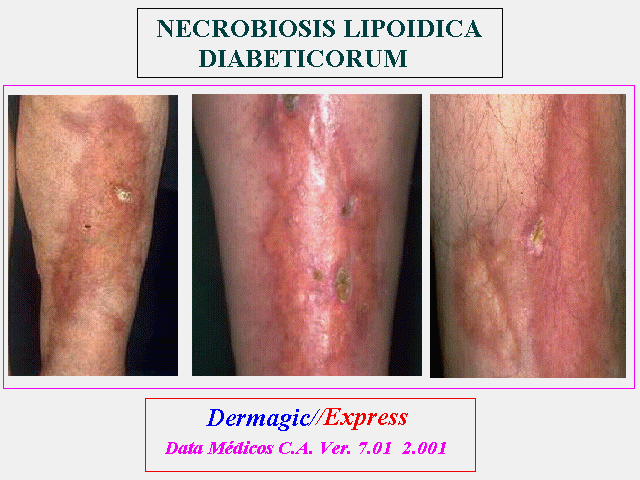 |
||||
|
|
|
|||
|
|
|
|||
|
|
||||