|
Home Page
About Dermagic
Contact Dermagic
Next Edition
Past Editions
Secret X files
|
Scleredema of
Buschke.
Escleredema de Buschke
************************************
****** DATA-MÉDICOS **********
************************************
ESCLEREDEMA DE BUSCHKE
SCLEREDEMA OF BUSCHKE
**************************************
****** DERMAGIC-EXPRESS No.60 *******
****** 30 JUNIO DE 1.999 ***********
30 JUNE 1.999
**************************************
***************************************
EDITORIAL ESPAÑOL:
=====================
Hola amigos de la red, en esta ooportunidad DERMAGIC les presenta una
pequeña revisión de la enfermedad: ESCLEREDEMA DE BUSCHKE.
Esta
patología esta asociada a Diabetes Mellitus. La semana pasada fue requerida en la la lista DERMLIST
de Brasil. Espero que estas 32 referencias nos ilustren bien el tema.
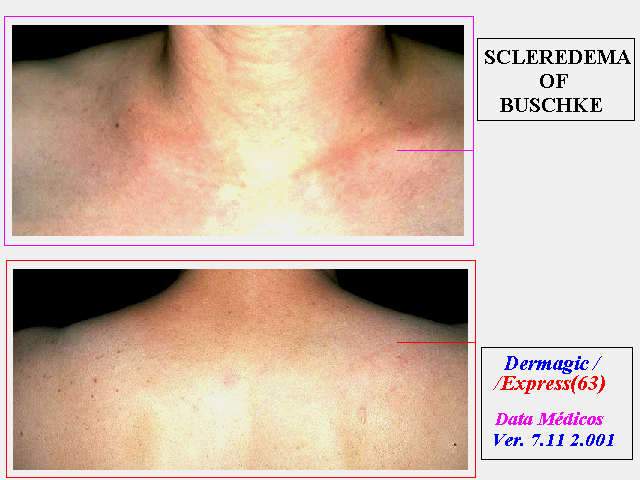
En el attach una lamina ilustrativa: Escleredema de Buschke, cuello y hombros.
saludos a todos !!!
Dr. José Lapenta R.,,,
EDITORIAL ENGLISH:
=====================
Hello friends of the net, in this opportunity DERMAGIC presents a
short review of the illness: SCLEREDEMA OF BUSCHKE,
This
pathology is associated to Diabetes Mellitus. Last week it was required in the the list DERMLIST of Brazil. I
hope these 32 references illustrate us well the topic.
In the attach an illustrative sheet: Scleredema of Buschke, neck and
shoulders.
Greetings to ALL, !!
Dr. José Lapenta R.,,
==================================================================
DERMAGIC/EXPRESS(60)
==================================================================
ESCLEREDEMA
DE BUSCHKE /
SCLEREDEMA OF BUSCHKE
==================================================================
1.) Scleredema of Buschke: a report of seven cases.
2.) In vivo study of skin mechanical properties in scleredema of Buschke.
3.) Systemic involvement in scleredema of Buschke associated with IgG-kappa
paraproteinaemia.
4.) Scleredema of Buschke successfully treated with electron beam therapy.
5.) Scleroderma-like disorders.
6.) [Scleredema adultorum Buschke. Case report and review of the literature]
7.) Scleredema diabeticorum of Buschke confined to the thighs.
8.) [Scleredema, acanthosis nigricans and IgA/Kappa multiple myeloma]
9.) Bath-PUVA therapy in three patients with scleredema adultorum.
10.) Diabetic scleredema: a case report and biochemical analysis for
glycosaminoglycans.
11.) Severe diabetic scleredema with extension to the extremities and
effective treatment using prostaglandin E1.
12.) [Systemic Buschke's scleredema with cardiomyopathy, monoclonal IgG
kappa gammopathy and amyloidosis. Case report with autopsy].
13.) Demonstration of increased levels of type I collagen mRNA using
quantitative polymerase chain reaction in fibrotic and granulomatous skin
diseases.
14.) Increased collagen propeptides in the skin of a scleredema patient but
no change in re-epithelialisation rate.
15.) Scleroedema in a child.
16.) Biochemical characterization and tissue distribution of the scleredema
in a case of Buschke's disease.
17.) Scleredema adultorum: case report and demonstration of abnormal
expression of extracellular matrix genes in skin fibroblasts in vivo and in
vitro.
18.) Scleredema revisited. A poststreptococcal complication.
19.) A fatal case of scleredema of Buschke.
20.) Electron-beam therapy in scleredema adultorum with associated
monoclonal hypergammaglobulinaemia.
21.) Diabetic scleredema and scleroderma-like changes in a patient with
maturity onset type diabetes of young people.
22.) Scleredema and smoldering myeloma.
23.) Acute scleredema with fatal outcome.
24.) Acid mucopolysaccharide staining in scleredema.
25.) Scleredema of Buschke associated with rheumatoid arthritis and
Sjogren's syndrome.
26.) [Post-traumatic scleroedema adultorum].
27.) Scleroedema diabeticorum: a minor but often unrecognized complication
of diabetes mellitus.
28.) Cardiomyopathy and multiple myeloma. Complications of scleredema
adultorum.
29.) Scleredema adultorum associated with a monoclonal gammopathy and
generalized hyperpigmentation.
30.) Scleredema and paraproteinemia. Enhanced collagen production and
elevated type I procollagen messenger RNA level in fibroblasts grown from
cultures from the fibrotic skin of a patient.
31.) Paraproteinemia in patients with scleredema. Clinical findings and
serum effects on skin fibroblasts in vitro.
32.) Biochemical characterization and tissue distribution of the scleredema
in a case of Buschke's disease.
==================================================================
==================================================================
1.) Scleredema of Buschke: a report of seven cases.
==================================================================
Author
Tate BJ; Kelly JW; Rotstein H
Address
Dermatology Unit, Alfred Hospital, Prahran, Vic, Australia.
Source
Australas J Dermatol, 37(3):139-42 1996 Aug
Abstract
Scleredema of Buschke is an uncommon dermatosis characterized by thickened,
indurated skin, sometimes with erythema. Histopathology shows thickened
dermal collagen with a mild infiltrate of mucin in the deeper dermis. Seven
adults with scleredema are presented, four females and three males, and
their mean age at diagnosis was 54 years. All had diabetes mellitus for an
average of 13 years prior to the onset of scleredema.
Complications of
diabetes, especially retinopathy (n = 5), neuropathy (n = 4) and peripheral
vascular disease (n = 3), were present in five patients. One patient died
(cause not established), and another has life-threatening cardiomyopathy.
We have no evidence that the scleredema was a significant aetiologic factor
in either case, despite published reports of fatalities related to
scleredema. Three patients were followed up for more than 1 year and,
irrespective of therapy, the scleredema did not resolve in any patient.
==================================================================
2.) In vivo study of skin mechanical properties in scleredema of Buschke.
==================================================================
Author Dobrev H
Address
Department of Dermatology, Medical University, Plovdiv, Bulgaria.
Source
Acta Derm Venereol, 78(2):103-6 1998 Mar
Abstract
A non-invasive, in vivo suction device was used to investigate the
mechanical properties of the skin in a patient with scleredema of Buschke.
Clinical scoring of skin induration and measurements of skin elasticity
were performed over 9 anatomic regions on admission and after 3 (on
discharge), 17 and 28 months. Immediate distension, final distension and
immediate retraction were significantly decreased, while the viscoelastic
to elastic ratio was significantly increased in the patient as compared to
the healthy controls.
Delayed distension and biological elasticity were
preserved. Low values of skin distensibility correlated with a severe skin
induration (p < 0.001). The changes were more expressive with the 8
mm-diameter measuring probe than the 2 mm-diameter probe. The method
applied can be used for objective and quantitative assessment of skin
involvement in scleredema of Buschke.
==================================================================
3.) Systemic involvement in scleredema of Buschke associated with IgG-kappa
paraproteinaemia.
==================================================================
Author
Basarab T; Burrows NP; Munn SE; Russell Jones R
Address
Department of Dermatology, Ealing Hospital, Southall, Middlesex, UK.
Source
Br J Dermatol, 136(6):939-42 1997 Jun
Abstract
Scleredema is a rare primary cutaneous mucinosis. Systemic involvement is
uncommon and histological confirmation is often lacking. We report a case
of a 60-year-old man with scleredema and evidence of mucin deposition on
biopsies from multiple extracutaneous sites. The bone marrow, nerve,
hepatic and salivary gland involvement seen on histology in our patient has
not, to our knowledge, been previously reported in this condition.
==================================================================
4.) Scleredema of Buschke successfully treated with electron beam therapy.
==================================================================
Author
Tamburin LM; Pena JR; Meredith R; Soong VY
Address
Department of Dermatology, University of Alabama at Birmingham, USA.
Source
Arch Dermatol, 134(4):419-22 1998 Apr
==================================================================
==================================================================
5.) Scleroderma-like disorders.
==================================================================
Author
Jablonska S; Blaszczyk M
Address
Department of Dermatology, Warsaw School of Medicine, Poland.
Source
Semin Cutan Med Surg, 17(1):65-76 1998 Mar
Abstract
Scleroderma-like disorders are widely disparate conditions mimicking either
systemic sclerosis or cutaneous localized scleroderma, not infrequently
displaying features of both. Some are exclusively sclerotic, some
scleroatrophic with prevailing sclerosis or atrophies.
The recognition of
scleroderma-like disorders is of practical importance because by
establishing the cause of the disease, it is possible to introduce an
effective therapy, as in scleredema Buschke or scleredema diabeticorum,
sclerodermiform porphyria, Borrelia burgdorferi-induced sclerodermiform
acrodermatitis atrophicans, sclerodermiform phenylketonuria, drug-induced
conditions, and so on. Scleroderma-like disorders strongly suggest that the
pathogenesis of skin sclerosis and internal involvement may be divergent,
and of various causes.
Some of them, such as atrophoderma Pasini-Pierini or
progressive facial hemiatrophy, frequently overlapping with scleroderma,
make the differentiation very difficult, if at all possible, and the
diagnosis is often arbitrary. Some, as sclerodermiform graft-versus-host
reaction, point to the autoimmune origin of scleroderma.
The amply-covered
congenital sclerodermiform conditions present a large spectrum of still not
widely known and extremely heterogeneous syndromes, associated with
numerous anomalies and/or malignancies.
==================================================================
6.) [Scleredema adultorum Buschke. Case report and review of the literature]
==================================================================
Author
Ulmer A; Schaumburg-Lever G; Bauer J; K¨otter I; Fierlbeck G
Address
Universit¨ats-Hautklinik T¨ubingen.
Source
Hautarzt, 49(1):48-54 1998 Jan
Abstract
Scleredema adultorum of Buschke is a rare disorder of unknown aetiology. It
is characterized by diffuse, non-pitting swelling and induration of the
skin.
Skin biopsies reveal marked thickening of the dermis due to
collagenous replacement of the subcutis and deposition of hyaluronic acid
between the collagen fibers. The disease classically only affects the skin.
In 24 cases an associated monoclonal gammopathy has been detected.
A
75-year-old patient had a 19-year history of scleredema adultorum. In
addition to a monoclonal gammopathy the patient suffered from involvement
of the tongue, pharynx and upper esophagus. Furthermore a polyneuropathy,
ocular involvement with restricted eye movements and a sicca syndrome were
present.
The simultaneous occurrence of cutaneous scleredema with any one
of the above mentioned symptoms has been reported before. The wide variety
of extracutaneous manifestations of scleredema as found in our patient is
amazing and has not been previously described.
==================================================================
7.) Scleredema diabeticorum of Buschke confined to the thighs.
==================================================================
Author
Farrell AM; Branfoot AC; Moss J; Papadaki L; Woodrow DF; Bunker CB
Address
Department of Dermatology, Charing Cross and Westminster Medical School,
London, U.K.
Source
Br J Dermatol, 134(6):1113-5 1996 Jun
Abstract
We describe a patient with insulin-dependent diabetes without vascular
complications in whom scleredema was confined to the thighs. Electron
microscopy demonstrated heterogeneity in both the size and density of the
collagen fibrils and the presence of filamentous material between them.
==================================================================
8.) [Scleredema, acanthosis nigricans and IgA/Kappa multiple myeloma]
==================================================================
Author
Valente L; Velho GC; Farinha F; Bernardo A; Ribeiro P; Massa A
Address
Service de M´edecine, hospital Geral de Santo Ant´onio, Porto, Portugal.
Source
Ann Dermatol Venereol, 124(8):537-9 1997
Abstract
BACKGROUND: Scleredema is an uncommon disease of unknown origin.
Characteristic thick skin with symmetrical diffuse induration develops. The
infiltration begins on the face and neck then extends to the root of the
upper limbs and trunk. There are three clinical types of scleredema.
The
first is preceded by an upper airway infection and progresses rapidly
before regressing spontaneously within a few months. The second type is
associated with chronic diabetes. The third type is associated with
monoclonal gammapathy, rarely of myelomatous type, and develops
insidiously. Acanthosis nigricans can be a paraneoplastic syndrome, often
associated with a gastrointestinal cancer. Few cases associating scleredema
and acanathosis nigricans have been reported.
CASE REPORT: A 56-year old
woman had developed scleredema over the last 6 years when acanthosis
nigricans appeared together with IgA kappa multiple myeloma. Treatment with
melphalan and prednisolone was effective against the myeloma as well as the
scleredema and acanthosis nigricans.
Discussion: Only five cases of
associated scleredema and multiple myeloma have been reported, four with
kappa IgG myeloma and one with IgA myeloma. An association between
acanthosis nigricans and sclerederma could be coincidental although the
fact that the different manifestations regressed together after the myeloma
treatment would suggest some relationship between these three diseases.
==================================================================
9.) Bath-PUVA therapy in three patients with scleredema adultorum.
==================================================================
Author
Hager CM; Sobhi HA; Hunzelmann N; Wickenhauser C; Scharenberg R; Krieg T;
Scharffetter-Kochanek K
Address
Department of Dermatology, University of Cologne, Germany.
Source
J Am Acad Dermatol, 38(2 Pt 1):240-2 1998 Feb
Abstract
BACKGROUND: Scleredema adultorum (SA) is a rare connective tissue disorder
for which no treatment has proven to be effective.
OBJECTIVE: Our purpose
was to determine the effect of bath-PUVA therapy on SA. METHODS: Three
patients were treated. Clinical evaluation of skin induration and thickness
as well as ultrasonography were performed at baseline and after treatment.
RESULTS: All three patients showed substantial clinical improvement with
bath-PUVA therapy (median of 59 treatments and a cumulative UVA dose of
245.7 J/cm2). Ultrasonography showed significant reduction in both skin
thickness and density.
CONCLUSION: Bath-PUVA therapy appears to be
effective in the treatment of SA.
==================================================================
10.) Diabetic scleredema: a case report and biochemical analysis for
glycosaminoglycans.
==================================================================
Author
Kobayashi T; Yamasaki Y; Watanabe T
Address
Division of Dermatology, Tokyo Daini National Hospital, Higashigaoka,
Meguro, Japan.
Source
J Dermatol, 24(2):100-3 1997 Feb
Abstract
We report a patient with the typical lesions of diabetic scleredema.
Histological findings of the involved skin were thickening of the dermis,
depositions of mucins, and fibrosis. Biochemical analysis revealed an
increase in glycosaminoglycans in the involved skin as well as in the
cutaneous lupus mucinosis. Mucinous materials were composed of hyaluronic
acid.
==================================================================
11.) Severe diabetic scleredema with extension to the extremities and
effective treatment using prostaglandin E1.
==================================================================
Author
Ikeda Y; Suehiro T; Abe T; Yoshida T; Shinoki T; Tahara K; Nishiyama M;
Okabayashi T; Nakamura T; Itoh H; Hashimoto K
Address
Second Department of Internal Medicine, Kochi Medical School, Nankoku.
Source
Intern Med, 37(10):861-4 1998 Oct
Abstract
We report a 49-year-old woman with severe diabetic scleredema (DS). The
patient had non-insulin-dependent diabetes mellitus (NIDDM) for 9 years and
noticed thickened skin on her back 3 years previously. Her DS rapidly
extended to her back and extremities with pain and immobility.
Her symptoms
of DS improved dramatically after establishing strict glycemic control and
intravenous administration of prostaglandin E1 (PGE1). However, the
histological findings of her skin biopsy did not change even after the
treatment for 12 weeks, and her symptoms worsened again after
discontinuation of glycemic control and PGE1 treatment.
The causes of DS
have been considered to be metabolic abnormalities associated with
hyperglycemia and hypoxia in the skin due to diabetic microangiopathy. PGE1
was an effective treatment for DS in our patient. Strict control of
hyperglycemia and PGE1 treatment may be sufficient to manage DS, although a
very long treatment period is necessary.
===================================================================
12.) [Systemic Buschke's scleredema with cardiomyopathy, monoclonal IgG
kappa gammopathy and amyloidosis. Case report with autopsy].
===================================================================
Medicina (B Aires) 1998;58(5 Pt 1):501-3
Paz RA, Badra RE, Marti HM, Maxit MJ
Hospital Privado de Comunidad, Mar del Plata, Argentina.
[email protected]
A 73 year old retired truck driver and blacksmith was studied in June 1996
for thoracic pain and was diagnosed as acute pericarditis which responded
well to steroid treatment. In January 1997, he noted swelling of the
abdominal skin, genitalia and limbs, sparing the feet. He was euthyroid,
did not have evidence of diabetes or a Raynaud's phenomenon.
His
proteinogram showed an IgG-Kappa monoclonal paraprotein M component, 1.31
g/oo. TSH and tetraiodotironine were normal; ESR 16 mm in the first hour.
As he did not respond to treatment he was referred to our hospital in March
1997. On physical examination the most relevant findings were a non-pitting
edema of the abdomen and lower limbs, sparing the feet.
An echocardiogram
was consistent with an infiltrative cardiomyopathy. Soon after his
hospitalization his condition worsened suddenly with severe bradicardia
(28/minute) due to a junctional rhythm and righ bundle branch block. He
suffered a cardiac arrest and died. The autopsy findings favoured the
diagnosis of systemic scleredema adultorum of Buschke.
Amyloid deposits
were also found although not abundant, with a similar distribution except
in the skin. In this article the clinical and autopsy findings are
presented in a patient showing coexistence of systemic Buschke's scleredema
with an infiltrative cardiomyopathy, IgG Kappa gammopathy and amyloidosis.
===================================================================
13.) Demonstration of increased levels of type I collagen mRNA using
quantitative polymerase chain reaction in fibrotic and granulomatous skin
diseases.
===================================================================
Br J Dermatol 1998 Jul;139(1):23-6
Tasanen K, Palatsi R, Oikarinen A
Department of Dermatology, Oulu University Hospital, Finland.
Collagen changes occur in localized scleroderma, scleredema and
sarcoidosis. Previous biochemical, immunohistochemical and in situ
hybridization studies have revealed increased collagen synthesis in these
diseases. In the present study, we measured by pro alpha 1 (I) collagen and
beta-actin mRNA levels in skin punch biopsy specimens from lesional and
healthy skin using a quantitative polymerase chain reaction (PCR).
In this
method, the targeted mRNA and a synthetic RNA as a internal standard are
co-amplified together with the same primers. The amount of pro alpha 1 (I)
collagen mRNA in cutaneous sarcoidosis lesions was found to be increased
about two- to threefold compared with the values obtained for the healthy
skin of the same two patients. In lesional skin of three patients with
localized scleroderma the number of pro alpha 1 (I) collagen molecules was
increased about two-fold.
The beta-actin mRNA values were at the same level
in the affected and unaffected skin of all the patients studied. In
conclusion, a marked increase in type I collagen gene expression was seen
in localized scleroderma and scleredema, leading to fibrosis of the skin,
and in a granulomatous skin disease, cutaneous sarcoidosis.
===================================================================
14.) Increased collagen propeptides in the skin of a scleredema patient but
no change in re-epithelialisation rate.
===================================================================
Acta Derm Venereol 1996 Jul;76(4):305-9
Haapasaari KM, Kallioinen M, Tasanen K, Risteli J, Palatsi R, Oikarinen A
Department of Dermatology, University of Oulu, Finland.
Scleredema is a rare disease, affecting the skin connective tissue with
increased amounts of collagen and glycosaminoglycans.
In the present study,
the collagen synthesis and re-epithelialisation rate were measured from a
64-year-old male patient, who rapidly developed extensive tightening of the
skin, without any underlying disease. The skin was thickened at several
sites when measured with ultrasound, and the histology revealed
accumulation of glycosaminoglycans and collagen bundles.
The collagen
synthesis rate was measured from suction blisters induced on two different
sites of the skin before the treatment and three times later up to 6 months
after the treatment with a systemic steroid was started. The aminoterminal
propeptide of type I collagen (PINP) was increased manifold in the affected
skin when compared with the controls, indicating active collagen deposition
in vivo.
Systemic steroid medication with high doses (over 20 mg/d)
decreased both the type I and the type III collagen propeptide levels. The
time schedule of the decreases in the propeptides in the thickened,
affected skin and in the clinically normal-looking skin varied, and
especially in the thickened skin in the abdomen the decrease in PINP was
noted only after 3 months of prednisolone therapy.
When the prednisolone
dose was only 10 mg daily, the propeptides were again up-regulated, perhaps
reflecting the natural course of the disease. The re-epithelialisation
rates at two different sites of the patient were similar to those in the
controls, suggesting that even massive fibrosis with active deposition of
collagen does not alter the basal rate of re-epithelialisation in the skin.
In conclusion, collagen synthesis is markedly elevated in scleredema,
leading to fibrosis of the skin.
A recently developed method utilizing
assays of collagen propeptides from suction blister fluid allows monitoring
of the collagen synthesis and detection of changes in the collagen
synthesis during the treatment of fibrotic disorders.
===================================================================
15.) Scleroedema in a child.
===================================================================
J Dermatol 1996 Jul;23(7):495-8
Mitsuhashi Y, Kondo S, Shimizu Y
Department of Dermatology, Yamagata University School of Medicine, Japan.
A 3-year-old Japanese girl with scleroedema was reported. She had had no
signs of diabetes but did have a preceding bacterial infection in the
tonsils three weeks before the skin lesion appeared.
The skin on the face,
shoulders, extensor aspect of the upper arms, and proximal half of the
forearms was indurated. The skin lesions expanded from the middle part of
the forearms to the wrists during the observation period. Thereafter, the
induration gradually disappeared.
A literature review revealed there were
only six reports of scleroedema in children under 15 years old before 1996
in Japan; a total of 166 cases of the disease was reported in the same
period. Five out of these six cases were not diabetes-associated. All but
one of these six patients were female. Juvenile scleroedema seems to be
rare in Japan.
===================================================================
16.) Biochemical characterization and tissue distribution of the scleredema
in a case of Buschke's disease.
===================================================================
Acta Derm Venereol 1987;67(3):193-8
Roupe G, Laurent TC, Malmstrom A, Suurkula M, Sarnstrand B
Biopsies from a patient with a longstanding form of scleredema adultorum
Buschke were analysed for morphological and biochemical changes in the
dermal connective tissue. By light microscopy the tissue changes were
located to the deep part of the reticular dermis.
Therefore dermal tissue
was separated into a superficial and a deep part and analysed
biochemically. By this procedure it was possible to show that the
concentration of hyaluronan in the deep part of the dermis was increased.
The urinary excretion of methylimidazole acetic acid, an indicator of the
mast cell mass in the body, was also elevated.
===================================================================
17.) Scleredema adultorum: case report and demonstration of abnormal
expression of extracellular matrix genes in skin fibroblasts in vivo and in
vitro.
===================================================================
Br J Dermatol 1995 Jun;132(6):992-9
Varga J, Gotta S, Li L, Sollberg S, Di Leonardo M
Department of Medicine, Jefferson Medical College, Thomas Jefferson
University, Philadelphia, PA 19107, USA.
To elucidate the mechanisms involved in the development of cutaneous
fibrosis in scleredema adultorum, we studied a patient with long-standing
scleredema who had no history of diabetes mellitus or preceding febrile
illness.
Histological examination of a biopsy specimen from involved
forearm skin demonstrated marked thickening of the dermis and accumulation
of mucin between collagen bundles. Increased levels of type I collagen
mRNA, as evidenced by positive in situ hybridization signals with an alpha
1(I) procollagen cDNA were found in numerous fibroblasts throughout the
dermis.
The expression of several genes coding for proteins involved in the
maintenance of connective tissue was examined by determining in vitro
protein production and mRNA levels in fibroblasts from the affected skin.
Total protein production, glucosamine incorporation and collagen synthesis,
were elevated by 44-97% in scleredema fibroblasts, compared with
fibroblasts from two healthy individuals. Levels of mRNAs for alpha 1(I)
and alpha 1(III) procollagens and fibronectin were elevated in scleredema
fibroblasts, whereas mRNA levels for the tissue inhibitor of
metalloproteinase were unaltered compared with control cultures.
The
results suggest that fibroblasts from the involved skin in non-diabetic
patients with scleredema may exhibit a biosynthetically activated
phenotype, which persists for several years. These alterations are likely
to be involved in the development of the cutaneous induration and
thickening which is characteristic of this disease.
===================================================================
18.) Scleredema revisited. A poststreptococcal complication.
===================================================================
Clin Pediatr (Phila) 1994 Oct;33(10):606-10
Cron RQ, Swetter SM
Department of Pediatrics, Lucille Salter Packard Children's Hospital at
Stanford, California.
Scleredema is a rare connective disease which must be differentiated from
scleroderma in childhood. Scleredema is characterized by thickening of the
dermis of the neck, head, and upper trunk. We report a case of scleredema
in an 8-year-old boy with coincident streptococcal colonization.
The
patient report demonstrates many of the common features of scleredema,
including an associated streptococcal infection, a relatively benign
presentation of illness, and the characteristic mucopolysaccharide
intradermal staining on skin biopsy.
The literature on scleredema is
reviewed, focusing on the disease course, differential diagnosis, and an
overview of the proposed three subgroups of scleredema. The association of
scleredema to a prior streptococcal infection is explored, and a proposed
autoimmune pathophysiology of the disease, as it relates to streptococcal
infection, is presented.
===================================================================
19.) A fatal case of scleredema of Buschke.
===================================================================
Br J Dermatol 1994 May;130(5):669-70
Sansom JE, Sheehan AL, Kennedy CT, Delaney TJ
Department of Dermatology, Bristol Royal Infirmary, U.K.
Scleredema of Buschke is a rare disorder characterized by the development
of areas of skin induration which usually resolve spontaneously. It is
occasionally associated with a benign gammopathy, and rarely with
myelomatosis.
We describe a 60-year-old woman with extensive skin changes,
who developed IgA myeloma. Unusually, her skin disease did not respond to
conventional myeloma therapy. Death occurred as a consequence of the
progressive skin disease.
===================================================================
20.) Electron-beam therapy in scleredema adultorum with associated
monoclonal hypergammaglobulinaemia.
===================================================================
Br J Dermatol 1994 Mar;130(3):394-7
Angeli-Besson C, Koeppel MC, Jacquet P, Andrac L, Sayag J
Department of Dermatology, CHU la Timone, Marseille, France.
We report a case of scleredema adultorum (Buschke's disease) associated
with an IgA kappa monoclonal hypergammaglobulinaemia. A significant
improvement in the skin was obtained with electron-beam therapy. Scleredema
would appear to be linked to monoclonal hypergammaglobulinaemia, but the
relationship between the skin disorder and the immunoglobulin abnormality
remains to be elucidated.
===================================================================
21.) Diabetic scleredema and scleroderma-like changes in a patient with
maturity onset type diabetes of young people.
===================================================================
Dermatology 1994;188(3):228-31
Iwasaki T, Kohama T, Houjou S, Iriuchijima T, Ohtsuka T, Ishikawa T,
Yamakage A, Mori M
Department of Internal Medicine, University School of Medicine, Maebashi,
Japan.
A 21-year-old housewife with maturity onset type diabetes of young people
developed scleredema diabeticorum, scleroderma-like skin thickness on
forearms and dorsum of hands, digital sclerosis and cheiroarthropathy. She
had diabetes mellitus since the age of 11 years. Her grandfather on the
mother's side, her mother and 3 of 5 her mother's brothers and sisters have
diabetes mellitus.
Blood glucose was 295 mg/dl. Urinary glucose was 5.3
g/day. Nail fold capillary microscopy revealed a progressive systemic
sclerosis pattern. Histologically, hematoxylin and eosin sections from back
and forearm skin demonstrated broad collagen bundles separated by widened
clear spaces throughout the thickened dermis.
===================================================================
22.) Scleredema and smoldering myeloma.
===================================================================
J Am Acad Dermatol 1992 Feb;26(2 Pt 2):319-21
Schmidt KT, Gattuso P, Messmore H, Shrit MA, Massa M, Welykyj S
Department of Dermatology, Loyola University Medical Center, Maywood, IL
60153.
A 46-year-old white man had classic findings of scleredema; subsequently, a
monoclonal immunoglobulin G lambda light chain was detected in his serum.
Findings of a bone marrow biopsy specimen revealed that he had an increased
percentage of plasma cells, some of which were atypical. A diagnosis of
scleredema and smoldering myeloma was made.
===================================================================
23.) Acute scleredema with fatal outcome.
===================================================================
J Assoc Physicians India 1990 Oct;38(10):807-8
Shah PK, Lakhotia M, Jain SK, Meena RC
Department of Internal Medicine, Dr SN Medical College, Hospitals, Jodhpur.
Death due to scleredema is rare. We report a patient with scleredema, which
had an acute onset and rapid progression, leading to death within a month.
Such an acute course terminating in fatality has not been described earlier.
===================================================================
24.) Acid mucopolysaccharide staining in scleredema.
===================================================================
J Cutan Pathol 1990 Aug;17(4):211-3
Cole HG, Winkelmann RK
Department of Dermatology, Mayo Clinic, Rochester, MN 55905.
We studied 26 formalin-fixed biopsy specimens taken from 22 patients with
scleredema and found positive staining in 67% of the tissues when both
colloidal iron and alcian blue methods were used. Single stains were
positive in only half the tissues.
Positive findings were noted in both
patients with diabetes (11 patients) and in those without it (11 patients).
Our experience indicates that multiple biopsies may be necessary to
demonstrate mucin in the dermis. Specimens obtained by incisional biopsy
are preferred.
===================================================================
25.) Scleredema of Buschke associated with rheumatoid arthritis and
Sjogren's syndrome.
===================================================================
Br J Dermatol 1989 Oct;121(4):517-20
Miyagawa S, Dohi K, Tsuruta S, Shirai T
Department of Dermatology, Nara Medical University, Japan.
A case of scleredema of Buschke associated with rheumatoid arthritis and
Sjogren's syndrome is described. The onset of the skin changes and
rheumatoid arthritis was almost simultaneous and the sicca syndrome
developed 4 years later.
===================================================================
26.) [Post-traumatic scleroedema adultorum].
===================================================================
Derm Beruf Umwelt 1989 Sep-Oct;37(5):176-8
Bergner T, Przybilla B
Dermatologischen Klinik und Poliklinik, Ludwig-Maximilians-Universitat
Munchen.
A 48-year-old male developed an induration of the skin of the neck a few
days after a blunt trauma to this region had occurred. A diagnosis of
scleredema adultorum (Buschke) could be established 3 years later. In view
of the history and the lack of other diseases thought to be related to the
elicitation of scleredema, a traumatic origin of the skin condition is
probable.
===================================================================
27.) Scleroedema diabeticorum: a minor but often unrecognized complication
of diabetes mellitus.
===================================================================
Diabet Med 1988 Jul-Aug;5(5):465-8
Sattar MA, Diab S, Sugathan TN, Sivanandasingham P, Fenech FF
Department of Medicine, Faculty of Medicine, Kuwait University, Safat.
The association of specific dermatological complications with diabetes
mellitus is well recognized. Of 100 hospital-based patients with diabetes
mellitus (age 48 years +/- 2SE), 14% had scleroedema diabeticorum.
The
affected subjects had a higher prevalence of retinopathy (p less than
0.001) and albuminuria (p less than 0.025). The duration of scleroedema
correlated with the duration of diabetes (p less than 0.005). These
findings highlight the relatively common occurrence of this skin condition
which often goes unrecognized in people with diabetes.
===================================================================
28.) Cardiomyopathy and multiple myeloma. Complications of scleredema
adultorum.
===================================================================
Arch Intern Med 1988 Mar;148(3):551-3
Rimon D, Lurie M, Storch S, Halon D, Eisenkraft S, Laor A, Cohen L
Department of Medicine B, Carmel Hospital, Haifa, Israel.
Multiple myeloma and congestive heart failure developed in a patient with
long-standing scleredema adultorum. Staining of the myocardium, performed
after her death, was positive for acid mucopolysaccharide and negative for
amyloid. To the best of our knowledge, this is the first case in which acid
mucopolysaccharide has been demonstrated in the myocardium, thus explaining
the cardiomyopathy of scleredema adultorum.
Review of the world literature
enabled us to identify a statistically significant increased prevalence of
plasma cell dyscrasia among patients with protracted scleredema. In all
patients, plasma cell dyscrasia appeared years after the onset of
scleredema. Immunofluorescent studies were negative for immunoglobulin
deposition.
We assume, therefore, that the plasma cell dyscrasia was
secondary to scleredema.
===================================================================
29.) Scleredema adultorum associated with a monoclonal gammopathy and
generalized hyperpigmentation.
===================================================================
Arch Dermatol 1987 May;123(5):629-32
McFadden N, Ree K, Soyland E, Larsen TE
Scleredema associated with a monoclonal gammopathy and generalized skin
pigmentation is described in a 56-year-old man with hyperlipoproteinemia
and cardiovascular disease.
The patient had IgG-lambda paraproteinemia,
without any evidence of multiple myeloma or immunoglobulin deposition in
affected skin. Ultrastructural studies of pigmented lesional skin showed
increased transfer of melanosomes to basal keratinocytes and dermal
melanophages containing complex melanosomes.
In addition, cytoplasmic,
electron-opaque lipid droplets were seen in approximately every third
keratinocyte or melanocyte, while only an occasional dermal cell contained
lipid droplets. The hyperpigmentation appeared to be directly related to
the scleredema, while the lipid deposition in skin was a likely consequence
of the hyperlipoproteinemia.
The findings further support the contention
that paraproteinemia and hyperpigmentation may, in some patients, be
associated features of scleredema adultorum.
===================================================================
30.) Scleredema and paraproteinemia. Enhanced collagen production and
elevated type I procollagen messenger RNA level in fibroblasts grown from
cultures from the fibrotic skin of a patient.
===================================================================
Arch Dermatol 1987 Feb;123(2):226-9
Oikarinen A, Ala-Kokko L, Palatsi R, Peltonen L, Uitto J
An edematous rash developed on the abdominal skin of a 76-year-old woman
who had had diabetes mellitus for ten years. Some months later, the
affected skin became thickened and indurated. Histopathologic examination
revealed marked dermal fibrosis with excessive deposition of collagen.
The
patient also had IgA (k-type) paraproteinemia. Fibroblast cultures from the
affected and unaffected skin were studied for collagen metabolism.
Procollagen synthesis was elevated about sixfold on fibroblasts derived
from the affected skin.
A similar increase was detected in messenger RNA
(mRNA) levels using a complementary DNA clone specific for human pro alpha
1(l) collagen mRNA. The elevated mRNA level could be the result of
increased transcriptional activity of collagen genes or decreased
degradation of collagen mRNAs.
Our findings suggest that increased collagen
deposition may account for the marked dermal fibrosis that we observed in
this patient.
===================================================================
31.) Paraproteinemia in patients with scleredema. Clinical findings and
serum effects on skin fibroblasts in vitro.
===================================================================
J Am Acad Dermatol 1987 Jan;16(1 Pt 1):96-107
Ohta A, Uitto J, Oikarinen AI, Palatsi R, Mitrane M, Bancila EA, Seibold
JR, Kim HC
Four patients with paraproteinemia and scleredema were studied. Histologic
features included marked thickening and fibrosis of the dermis and
subcutis.
Variable amounts of mucin deposits were detected in the
interfibrillar spaces. Serum from one patient significantly stimulated
collagen production in normal skin fibroblast cultures, whereas serum from
another patient stimulated collagen production in autologous cell cultures.
Moreover, serum from one patient stimulated the [35S]sulfate incorporation
into the fibroblasts. Circulating serum factors, possibly related to the
paraprotein, may enhance the synthesis of extracellular macromolecules by
dermal fibroblasts in these patients, thus providing a mechanism for dermal
fibrosis.
===================================================================
32.) Biochemical characterization and tissue distribution of the scleredema
in a case of Buschke's disease.
===================================================================
Acta Derm Venereol 1987;67(3):193-8
Roupe G, Laurent TC, Malmstrom A, Suurkula M, Sarnstrand B
Biopsies from a patient with a longstanding form of scleredema adultorum
Buschke were analysed for morphological and biochemical changes in the
dermal connective tissue. By light microscopy the tissue changes were
located to the deep part of the reticular dermis.
Therefore dermal tissue
was separated into a superficial and a deep part and analysed
biochemically. By this procedure it was possible to show that the
concentration of hyaluronan in the deep part of the dermis was increased.
The urinary excretion of methylimidazole acetic acid, an indicator of the
mast cell mass in the body, was also elevated.
====================================================================
DATA-MEDICOS/DERMAGIC-EXPRESS No (63) 30/06/99 DR. JOSE LAPENTA R.
====================================================================
|
|
|
|
|
|
Produced by Dr. José Lapenta R.
Dermatologist
Maracay Estado Aragua Venezuela 1999-2026
Telf.:
04142976087 - 04127766810
|
|
|
|
|
|

