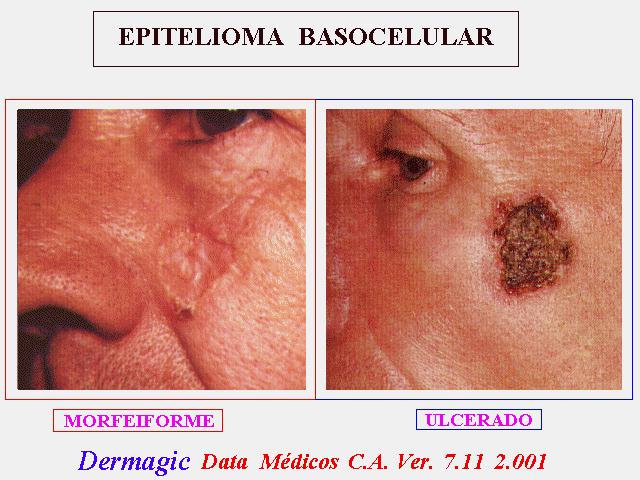
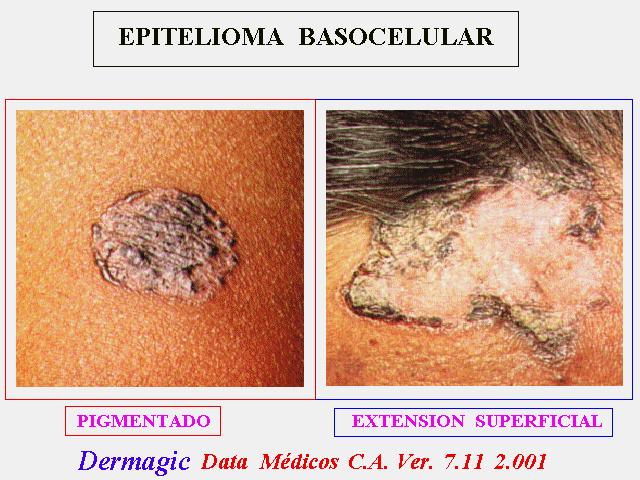
|
Data-Médicos
Dermagic/Express No. 2-(91)
22 Marzo
2.000 22 March 2.000
EDITORIAL ESPAÑOL
=================
Hola amigos de la red, DERMAGIC hoy
con el apasionante tema: CARCINOMA
BASO CELULAR.
Hace mucho tiempo se creía que este tumor NO se
presentaba
en NIÑOS, que NO tenia relación con
VIRUS, que era BENIGNO, que que NO
producía METÁSTASIS., que NO tenia relación con la
GENÉTICA (Antígenos
HLA).
Hoy el tiempo nos ha mostrado que SI EXISTEN
estas relaciones.
Las modalidades terapéuticas
vas desde el simple CURETAJE hasta la
utilización del LASER, CRIOCIRUGÍA, y otras mas.
Espero
disfruten estas
110 apocalípticas, Referencias
(la numero 1 contiene 30 mas).
Hubiera
sido interesante que a los 3 niños presentados en la
referencia
numero 1, se le hubiese hecho los
antígenos HLA, probablemente se
encontraría
alguna asociación.
Nos veremos en 2 semanas con otro
interesante tema.
PRÓXIMA EDICIÓN:
1.) El SIGNO DE LESER-TRELAT
Saludos a todos !!!
Dr. José
Lapenta R.,,,
EDITORIAL ENGLISH
=================
Hello friends of the net,
DERMAGIC today with the exciting topic: BASAL
CELL CARCINOMA.
A long time ago it was believed that
this tumor was not
presented in CHILDREN, that
he didn't have relationship with VIRUS, that
was BENIGN that METASTASIS didn't take place.that
didn't have
relationship with the GENETICS (HLA
Antigens).
Today the time has shown
us that
these relationships EXIST.
The therapeutic
modalities go from the simple CURETTAGE to the use of
the LASER, CRYOSURGERY, and other but. I wait enjoy
these apocalyptic110
References (the number 1
contain other 30).
It had been interesting
that to the 3 children presented in the
reference I number 1, he has been made the antigens HLA,
he would
probably be some association.
We will see in 2 weeks with other
interesting topic.
NEXT EDITION:
1.) LESER-TRELAT SIGN
Greetings to ALL, !!
Dr. José Lapenta R.,,,
===================================================================
REFERENCIAS
BIBLIOGRÁFICAS / BIBLIOGRAPHICAL
REFERENCES
===================================================================
1.) Basal Cell Carcinoma in Children Report of
3 Cases
2.) Papillomaviruses in non-melanoma
skin cancer: epidemiological aspects.
3.) Reconstruction of the scalp and cranium using
multiple free-tissue transfers following
recurrent basal cell carcinoma.
4.) Prognostic
value of apoptotic index in cutaneous basal cell carcinomas of head and neck.
5.) Low
levels of urokinase plasminogen activator components in
basal cell carcinoma of the skin.
6.) Folliculotropic T cells in regressive basal cell
carcinoma of skin.
7.) Repeated
5-aminolevulinic acid-based photodynamic therapy
following electro-curettage for pigmented
basal cell carcinoma.
8.) Sporadic
Bazex-Dupre-Christol-like Syndrome: Early Onset Basal
Cell Carcinoma, Hypohidrosis, Hypotrichosis,
and Prominent Milia.
9.) Reporting basal cell
carcinoma: a survey of the attitudes of
histopathologists.
10.) Host-related and
environmental risk factors for cutaneous basal
cell carcinoma: evidence from an italian case-control
study.
11.) Collagenolytic and gelatinolytic
matrix metalloproteinases and their inhibitors
in basal cell carcinoma of skin: comparison with normal skin.
12.) A Cancer-Registry-Assisted
Evaluation of the Accuracy of Digital
Epiluminescence Microscopy Associated with Clinical
Examination ofPigmented Skin Lesions.
13.) Expression of p53 in arsenic-related and
sporadic basal cell carcinoma.
14.)
Decision support software to help primary care
physicians triage skin cancer: a pilot study.
15.) A randomized, 12-year primary-prevention trial
of beta carotene supplementation for
nonmelanoma skin cancer in the physician's health study.
16.) Photofrin photodynamic therapy
can significantly deplete or preserve
oxygenation in human basal cell carcinomas during
treatment, depending on fluence rate.
17.) Gamma-irradiation deregulates cell cycle
control and apoptosis in nevoid basal cell
carcinoma syndrome-derived cells.
18.)
Expression of desmoglein I and plakoglobin in skin
carcinomas.
19.) Expression of basement
membrane antigens and matrix
metalloproteinases 2 and 9 in cutaneous basal and
squamous cell carcinomas.
20.)
Detoxifying enzyme genotypes and susceptibility to
cutaneous malignancy.
21.) Tumors
arising in nevus sebaceus: A study of 596 cases.
22.) Liposome-mediated gene transfer into human
basal cell carcinoma.
23.) Proliferative
Actinic Keratosis: Three Representative Cases.
24.) Diet and basal cell carcinoma of the skin in a
prospective cohort of men.
25.)
Preliminary observations on the use of topical
tazarotene to treat basal-cell carcinoma.
26.)HLA phenotypes and multiple basal cell
carcinomas.
27.) Multiple non-melanoma skin
cancer: evidence that different MHC genes are
associated with different cancers.
28.) HLA
DR4 is associated with the development of multiple basal
cell carcinomas and malignant melanoma.
29.) Multiple basal cell carcinoma in tropical
Australia.
30.) HLA-DR1 is not a sign of poor
prognosis for the development of multiple
basal cell carcinomas.
31.) Multiple basal
cell carcinomas and HLA frequencies in southern Australia.
32.) Expression of human
lymphocyte antigen (HLA)-DR on tumor cells in
basal cell carcinoma.
33.) Human leukocyte
antigen associations in basal cell carcinoma.
34.) Translocation (4; 14) and concomitant inv(14) in a
basal cell carcinoma.
35.) Long-term
therapy with low-dose isotretinoin for prevention of basal cell carcinoma: a multicenter clinical trial.
Isotretinoin-Basal Cell Carcinoma Study Group
[see comments]
36.) Treatment and prevention
of basal cell carcinoma with oral
isotretinoin.
37.) Chemoprevention of basal
cell carcinoma with isotretinoin.
38.)
Chemoprevention of skin cancer in xeroderma pigmentosum.
39.) Relative importance of prior basal cell
carcinomas, continuing sun
exposure, and
circulating T lymphocytes on the development of basal
cell carcinoma.
40.) Topical
tretinoin in actinic keratosis and basal cell carcinoma.
41.) Margin assessment of selected basal cell
carcinomas utilizing laser Doppler
velocimetry.
42.) Carbon dioxide laser
vaporization and curettage in the treatment of
large or multiple superficial basal cell carcinomas.
43.) The effect of intralesional 5-fluorouracil
therapeutic implant (MPI 5003) for treatment
of basal cell carcinoma.
44.) Cryosurgery and
topical fluorouracil: a treatment method for
widespread basal cell epithelioma in basal cell nevus
syndrome.
45.) Selective cytotoxic effect of
topical 5-fluorouracil.
46.) Nodular
superficial pigmented basal cell epitheliomas.
47.) Metastatic basal cell carcinoma: response to
chemotherapy.
48.) Basal cell carcinoma of the
vulva with lymph node and skin
metastasis--report of a case and review of 20 Japanese
cases.
49.) Basal cell carcinoma of the scalp
resulting in spine metastasis in a black
patient.
50.) Long-term survival following
bony metastases from basal cell carcinoma.
Report of a case.
51.)Giant basal cell
carcinoma with metastasis and secondary
amyloidosis: report of case.
52.) Pulmonary
metastases from a basal cell carcinoma.
53.)
Nonrecurrent primary basal cell carcinoma of the lower
extremity with late metastasis.
54.)
[Metastatic basal cell carcinoma]
55.)
Metastatic basal cell carcinoma: report of twelve cases
with a review of the literature [see comments]
56.) Rapid development of metastases from basal cell
carcinoma presenting as cranial nerve palsies.
57.) Photodynamic therapy by topical aminolevulinic
acid, dimethylsulphoxide and curettage in
nodular basal cell carcinoma: a one-year
follow-up study.
58.) Epidemiologic
characteristics and clinical course of patients with malignant eyelid tumors in an incidence cohort in
Olmstead County, Minnesota.
59.)
Does wound healing contribute to the eradication of
basal cell carcinoma following curettage and
electrodessication?
60.)Does inflammation
contribute to the eradication of basal cell
carcinoma following curettage and electrodesiccation?
61.) Cryosurgery in dermatology.
62.) [The
treatment of basal cell carcinoma patients by
dermatologists in Netherland].
63.)
[Therapy of non-melanocytic skin tumors].
64.)
[High resolution ultrasound imaging: value in treatment
of basocellular carcinoma by cryosurgery].
65.) Recurrent basal cell carcinoma treated with
cryosurgery.
66.) Fractional cryosurgery. A
new technique for basal cell carcinoma of the
eyelids and periorbital area.
67.) Long-term
follow-up of cryosurgery of basal cell carcinoma of the eyelid.
68.) Five-year results of
curettage-cryosurgery of selected large
primarybasal cell carcinomas on the nose: an alternative
treatment in a geographical area underserved
by Mohs' surgery.
69.) Laser microsurgery for
superficial T1-T2 basal cell carcinoma of the
eyelid margins.
70.)[Use of Nd:YAG laser for
treatment of basal-cell carcinomas and some
premalignant conditions].
71.) Laser therapy
of skin tumors.
72.) Treatment of superficial
basal cell carcinoma and squamous cell
carcinoma in situ with a high-energy pulsed carbon
dioxide laser.
73.) Prediction of subclinical
tumor infiltration in basal cell carcinoma.
74.) Recurrence rates of treated basal cell
carcinomas. Part 3: Surgical excision.
75.) Human papillomavirus type 2-associated basal
cell carcinoma in two immunosuppressed
patients.
76.) Occurrence of human
papillomavirus type 16 DNA in cutaneous
squamous and basal cell neoplasms.
77.) Basal
cell carcinoma of the genitalia.
78.)
Detection of human papillomavirus DNA in PUVA-associated non-melanoma skin cancers.
79.)Premalignant lesions and cancers of the skin in the
general population:
evaluation of
the role of human papillomaviruses.
80.) Human
papillomavirus type 2-associated basal cell carcinoma in
two immunosuppressed patients.
============================================================
1.) Basal Cell Carcinoma in Children Report of
3 Cases
============================================================
Arch Dermatol. 2000;136:370-372
Benjamin
W. LeSueur, BS; Nancy G. Silvis, MD; Ronald C. Hansen,
MD
Background The peak incidence of
basal cell carcinoma occurs in the
seventh
decade of life and is rare in children. When found in
the
pediatric
age group, basal cell
carcinoma is usually associated with a genetic
defect, such as basal cell nevus syndrome, xeroderma
pigmentosum, or
nevus
sebaceus. In
areas of intense UV radiation exposure, such as the
southwestern United States, children may be at
increased risk of
developing
this
malignancy de novo.
Observations Three children (2
boys, aged 8 and 16 years, and an
11-year-old
girl) from Tucson, Ariz, with isolated basal cell
carcinoma
unassociated with any other disease
or syndrome are described.
Conclusions Basal cell carcinoma
in children is probably the result of
a combination of UV radiation exposure and genetic
background. Early
recognition in children can
prevent extensive tissue destruction and
excess
scarring after excision. A higher index
of suspicion for basal cell
carcinoma may also
aid in prompt diagnosis of a possible genetic
disorder,
such as basal cell nevus syndrome.
BASAL CELL carcinoma (BCC) in children
is rare. Cases of BCC in the
pediatric
population have been reported in association with basal
cell
nevus syndrome,1 xeroderma pigmentosum,2
and nevus sebaceus3 and after
high-dose
radiotherapy.4 Isolated cases of BCC unrelated to one of
these
causes are seldom reported in
pediatric patients. Consequently,
clinicians often have a low index of suspicion, leading to
delay in diagnosis. We
report 3 cases of de
novo BCC in children who presented to the
dermatology
clinic at the University of
Arizona Medical Center, Tucson. These
children
had no known genetic syndromes and had not undergone
radiotherapy.
COMMENT
=========
Non melanoma skin cancers are the most common malignant
neoplasms in the
United States, representing
one third of all cancers diagnosed every
year.5, 6 Basal cell carcinoma represents 75% of
nonmelanoma skin
cancers
and has an
estimated annual incidence of more than 700,000 cases nationally.7, 8 The US average annual incidence of
BCC in whites is
currently 191 per 100,000 and
is increasing at a rate of 3% to 7% per
year.7, 9
Ultraviolet radiation exposure is
partly responsible for both BCC and
squamous
cell carcinoma, as evidenced by their increased
prevalence
after
chronic exposure to
sunlight and the preponderance of these lesions on sun-damaged skin. Although squamous cell carcinoma
is associated with
cumulative sun exposure,
BCC in younger patients does not show this
association.10, 11 D'Errico et al10 report that BCC
arising before the
age
of 40 years
corresponds with childhood or recreational sun exposure
but
does not correlate directly with
cumulative sun damage. Thus, in areas
of the world where the UV radiation is most intense,
such as the Sunbelt in
the United States, childhood sun
exposure is at a maximum and younger
patients
are at a higher risk of developing BCC.
Other factors besides sunlight are
reported to influence the development
of BCC. Gailani et al11 note a strong association
between BCC and the
inactivation of a gene at
chromosome 9q22, which is thought to be a
tumor
suppressor. Inactivation of this gene
was found in tumor tissue in 68%
of
BCCs examined and did not correlate directly with sun
exposure or age.
The
cause of this
mutation is unknown, but possible factors may include ionizing radiation, arsenicals, and polyaromatic
hydrocarbons. Basal
cell
nevus
syndrome and xeroderma pigmentosum represent inherited
genetic
mutations that predispose those
affected to BCC. Patients with basal
cell nevus syndrome are found to have a germline mutation
on chromosome 9.12
The peak incidence of BCC occurs in
the seventh decade of life.13 In the
pediatric age group, BCC usually
occurs in the setting of a known
genetic defect (Table 1). Although uncommon, isolated BCC in
children without
these
conditions
has been reported.14-29 Price et al14 described a
17-year-old
boy with a solitary BCC of the nose.
The patient had a history of
sunburns 1 or 2 times per year since the age of 9 years. His
mother had a BCC
removed at the age of 44
years. Histologically, the tumor was described
as
superficial BCC. Scobie and Preston17
described a 4-year-old boy with a
BCC of the scalp. The patient presented with a small
"cyst" on the occipital
region of the scalp and a family
history of skin cancer. The lesion,
described
histologically as well defined, recurred 8 months after excision.
Excision was repeated without
recurrence of tumor, based on follow-up 1
year
later.17 A 12-year-old boy living in Arizona was
described by
Comstock
et al18 with a
BCC on the nose. The lesion had been present since his
nose
was scratched by a cat 1 year
earlier. The youngest patient with BCC, a
27-month-old infant, was described by Keramidas and
Anagnostou.21 In
this
case, the
lesion grew rapidly and ulcerated after a 4-month delay
in
diagnosis.
It is debatable whether BCC is more
aggressive in children. Leffell et
al30 defined aggressive-growth BCC as sclerosing,
morpheaform, infiltrative,
or
invasive into nerves. Their retrospective review showed
an increased
occurrence of aggressive-growth
BCC in patients younger than 35 years
old compared with older patients. In contrast, Betti et
al13 and Dinehart et
al16 found no increase in the
frequency of the morpheaform pattern in
younger patients. All 3 of our patients had
histologically less
aggressive
forms
of BCC.
As total incidence rates of BCC
continue to rise, childhood cases may
become
more common. This increase in pediatric BCC may be
especially
true
in areas of
high-level UV radiation exposure. The percentage of
sunny
days
during the year, higher
altitude, and location closer to the equator may
place children in these areas at
increased risk. Early recognition can
prevent
extensive tissue destruction and scarring after excision
and aid
in
prompt diagnosis of a
possible genetic syndrome. We recommend that
clinicians have a higher index of suspicion for BCC when
evaluating
questionable lesions in children.
REFERENCES
============
1.
Gorlin RJ, Goltz RW.
Multiple
nevoid basal-cell epithelioma, jaw cysts and bifid rib.
N Engl J Med. 1960;262:908-912.
2.
Leibowitz E, Janniger CK, Schwartz RA, Lambert WC.
Xeroderma pigmentosum.
Cutis.
1997;60:75-77, 81-84.
3.
Goldstein GD, Whitaker
DC, Argenyi ZB, Bardach J.
Basal cell
carcinoma arising in a sebaceous nevus during childhood.
J Am Acad Dermatol.1988;18:429-430.
4.
Garcia-Silva J,
Velasco-Benito JA, Pena-Penabad C, Armijo M.
Basal cell carcinoma in a girl after cobalt irradiation
to the cranium
for acute lymphoblastic
leukemia: case report and literature review.
Pediatr Dermatol.1996;13:54-57.
5.
Silverberg E, Lubera JA.
Cancer statistics, 1989.
CA Cancer J
Clin.1989;39:3-20.
6.
Boring CC, Squires TS,
Tong T
Cancer statistics, 1991.
CA
Cancer J Clin.1991;41:19-36.
7.
Silverberg E, Boring CC,
Squires TS.
Cancer statistics, 1990.
CA Cancer J Clin.1990;40:9-26.
8.
Parker SL, Tang T, Bolden
S, Wingo PA.
Cancer statistics, 1997.
CA Cancer J Clin.1997;47:5-27.
9.
Green A.
Changing patterns in incidence of nonmelanoma skin
cancer.
Epithelial Cell Biol.1992;1:47-51.
10.
D'Errico M, Calcagnile
AS, Corona R, et al.
p53 mutations and
chromosome instability in basal cell carcinomas
developed at an early or late age.
Cancer
Res.1997;57:747-752.
11.
Gailani MR, Leffell DJ,
Zeigler A, Gross EG, Brash DE, Bale AE.
Relationship between sunlight exposure and a key genetic
alteration in
basal cell carcinoma.
J Natl Cancer Inst. 1996;88:349-354.
12.
Gailani MR, Bale SJ,
Leffel DJ, DiGiovanna JJ, Peck GL, Poliak S.
Developmental defects in Gorlin syndrome related to a
putative tumor
suppressor gene on chromosome
9.
Cell.
1992;69:111-117.
MEDLINE
13.
Betti R, Inselvini E,
Carducci M, Crosti C.
Age and site prevalence
of histologic subtypes of basal cell carcinomas.
Int J Dermatol. 1995;34:174-176.
14.
Price MA, Goldberg LH,
Levy ML.
Juvenile basal cell carcinoma.
Pediatr Dermatol.1994;11:176-177.
15.
Cox NH.
Basal
cell carcinoma in young adults.
Br J
Dermatol.1992;127:26-29.
16.
Dinehart SM, Dodge R,
Stanley WE, Franks HH, Pollack SV.
Basal cell
carcinoma treated with Mohs surgery: a comparison of 54
younger patients with 1050 older patients.
J Dermatol Surg Oncol.1992;18:560-566.
17.
Scobie WG, Preston J.
Basal cell carcinoma in children.
J R Coll
Surg Edinb.1992;37:46-47.
18.
Comstock J, Hansen RC,
Korc A.
Basal cell carcinoma in a 12-year-old
boy.
Pediatrics.1990;86:460-462.
19.
Cullen KW, Bleach NR,
Green DM.
Juvenile basal cell carcinoma.
Br J Clin Pract.1989;43:419-420.
20.
Fliss DM, Hauben DJ,
Ben-Meir P, Sion-Vardy N.
Solitary basal cell
carcinoma in a child.
Ann Plast
Surg.1989;22:43-46.
21.
Keramidas DC, Anagnostou
D.
Basal cell carcinoma of the lower lid in a
27-month-old child.
Z
Kinderchir.1987;42:250-251.
22.
Rahbari H, Mehregan AH.
Basal cell epithelioma (carcinoma) in children and
teenagers.
Cancer. 1982;49:350-353.
23.
Henriksson C, Eldh J,
Hersle K, Suurkula M.
Basal cell carcinoma in
children: case report.
Scand J Plast Reconstr
Surg.1981;15:157-158.
24.
Hernandez-Perez E.
Basal cell carcinoma in children.
Dermatologica.1975;150:311-315.
25.
Milstone EB, Helwig EB.
Basal cell carcinoma in children.
Arch
Dermatol.1973;108:523-527.
26.
Coskey RJ, Chow C.
Basal cell epitheliomas in children and young
adolescents.
Cutis.1973;12:224-226.
27.
Botvinick I, Mehregan
AH, Weissman F.
Morphea-like basal cell
epithelioma in a child.
Arch
Dermatol.1967;95:67-68.
28.
Murray JE, Cannon B.
Basal-cell cancer in children and young adults.
N Engl J Med.1960;262:440-443.
29.
Sewell RL.
Basal cell carcinoma in youth.
Arch Surg.
1941;42:909-912.
30.
Leffel DJ, Headington
JT, Wong DS, Swanson NA.
Aggressive-growth
basal cell carcinoma in young adults.
Arch
Dermatol.1991;127:1663-1667.
============================================================
2.) Papillomaviruses in non-melanoma skin cancer:
epidemiological aspects.
============================================================
Semin Cancer Biol 1999 Dec;9(6):397-403
Kiviat NB
Department of
Pathology, University of Washington, Seattle, WA, 98103,
USA
[Record supplied by publisher]
Worldwide, non-melanoma skin cancers
(NMSCs), which include squamous
cell
carcinoma (SCC) and basal cell carcinoma (BCC), are the
most commonly
diagnosed cancers among
Caucasians. It is well established that
ultraviolet
radiation (UVR) plays a central
role in the development of these
cancers,
and more recently, a role for specific genetic
mutations in the
pathogenesis of BCC has been
identified. The possibility that certain
types
of HPV, either alone or in conjunction with UVR, may
play a role in the
pathogenesis of these
cancers is suggested by several lines of evidence
reviewed below.*9 @2depidemiology / non-melanoma
skin cancer /
papillomavirus Copyright 2000
Academic Press.
============================================================
3.) Reconstruction of the scalp and cranium using
multiple free-tissue
transfers following
recurrent basal cell carcinoma.
============================================================
J Reconstr Microsurg 2000 Feb;16(2):89-93
Anderson PJ, Ragbir M, Berry RB,
McLean NR
Department of Plastic and
Reconstructive Surgery, Shotley Bridge General
Hospital, Durham, UK.
It is well-recognised that recurrent
disease can occur following surgery
for malignancy in the head and neck
region. This is particularly true of
basal cell carcinoma in which
recurrences may occur over many years and
despite the use of different treatment modalities.
Reconstruction of
large
defects may
become increasingly difficult and can be optimally
managed
by
free tissue transfer. The
authors report a case of basal cell carcinoma
that has required treatment for over 20 years, unique in
that on five
different occasions, free flaps
have been used for reconstruction.
============================================================
4.) Prognostic value of apoptotic index in cutaneous
basal cell
carcinomas
of head and
neck.
============================================================
Oral Oncol 1999 Nov 1;35(6):541-547
Staibano S, Lo Muzio L, Mezza E,
Argenziano G, Tornillo L, Pannone G, De
Rosa G
Department of
Biomorphological and Functional Sciences, Pathology
Section,
Faculty of Medicine and Surgery,
University "Federico II", Naples, Italy
Basal cell carcinoma (BCC) is the most
common type of human cancer,
often
locally invasive, and following a benign clinical
course. However, a
proportion of BCCs do recur
after treatment, causing extensive local
tissue
destruction, seldom metastasizing.
Morphological methods to
unequivocally
distinguish the aggressive forms of these tumors
(BCC2) from the
ordinary
ones (BCC1)
have so far been lacking. Apoptosis, or programmed cell
death,
is thought to be important for the
death of tumor cells in various
stages
of carcinogenesis. We analyzed the extent of
apoptosis in BCCs of head
and
neck
in a morphological, morphometric, and
electron-microscopic study,
to
estabilish on a retrospective basis, the relative
frequency of
recurrence
of tumors
showing different apoptotic rates. We found that BCC1
showed
lower apoptotic index (AI) than BCC2
[BCC1: AI from 2.03 to 10.45% (mean
value: 5.98%) BCC2: AI from 21.91 up
to 43.82% (mean value: 39.82%)].
The
morphometric analysis of both BCC1 and BCC2 revealed
significant
differences between the values
concerning nuclear area, length,
perimeter,
and roundness of the apoptotic cells with respect to
the 'viable'
neoplastic cells.
Electron-microscopy confirmed that the features of
morphological apoptotic cells were characteristic of
programmed cell
death.
We
hypothesized that low apoptotic rates in BCC1 could be
indicative of
a
good prognosis. In
fact, this corresponded to an 'expansive' but not
still
invasive neoplastic state. In this
phase, however, the tumor cells may
constitute
the target for genetic changes triggered by enviromental
physical or chemical mutagenic agents, such as UV
rays. BCC2, then,
could
be the
result of newly selected mutated neoplastic cellular
clones, with
more aggressive biological behavior.
The high apoptotic level found in
BCC2
could thus be used as an indirect alarm signal from
pathologists. This
hypothesis seems to be
supported by most of the current data in the
literature and by the clinical outcome of BCC2 of our
series. In our
opinion, routine evaluation of
apoptosis in BCCs could be proposed to
facilitate their sub-classification, contributing toward
the evaluation
of
the prospective
outcome of the individual patients.
============================================================
5.) Low levels of urokinase plasminogen activator
components in basal
cell
carcinoma
of the skin.
============================================================
Int J Cancer 2000 Feb;85(4):457-459
Maguire T, Chin D, Soutar D, Duffy MJ
Department of Surgery, St. Vincent's Hospital,
Dublin, Ireland.
Basal cell carcinoma of the skin (BCC)
is the most common cancer
worldwide.
Unlike most other human malignancies, BCCs rarely
metastasise. In this
investigation, we show
that the serine protease urokinase plasminogen
activator (u-PA), which is causally involved in
metastasis, is expressed
at
lower
levels in BCCs compared to other skin cancers, such as
squamous-cell
carcinomas (SCCs) or
malignant melanomas. Similarly, the u-PA receptor
as
well as the inhibitor PAI-1 were
present at lower levels in BCCs
relative
to both SCCs and melanomas. In contrast to u-PA,
tissue-plasminogen
activator, which is not
thought to be involved in metastasis, was
present
at similar levels in the different
types of skin lesion investigated. We
conclude that the failure of BCCs to
metastasise may at least be
partially
related to low expression of components of the u-PA
system. Copyright
2000
Wiley-Liss,
Inc.
============================================================
6.) Folliculotropic T cells in regressive basal cell
carcinoma of skin.
============================================================
Am J Dermatopathol 2000 Feb;22(1):30-3
Lespi PJ, Gregorini SD
Department of Pathology, HIGA Dr Jose Penna, Bahia
Blanca, Buenos Aires,
Argentina.
The histologic features of regression
may be found in some basal cell
carcinomas
(BCCs), and it is known that T-cell infiltrates have a
significant role in host defense against this tumor.
We examined 945
hair
follicles (HFs)
adjacent to 150 regressing BCCs of skin for the presence
of
inflammatory infiltrates and compared
the results against 315 HFs in 50
samples of
normal skin. Focal T-cell infiltrates localized mainly
to the
upper portion of the HFs were found in
14.5% of the follicles adjacent
to
regressing BCCs. A statistically significant increase of
inflammation in
HFs was observed in BCCs with active
regression compared with BCCs with
inactive
and mixed regression (P < 0.05). An increase in the
number of
HFs
involved by T
lymphocytes was also found in regressing BCCs compared
to
normal skin ( P < 0.00005). These data
suggest that the damage to the
follicles is
concordant with active regression of BCCs. We speculate
that
the immune-mediated regression of
BCCs is not only specifically directed
to
the cells of the tumor but may also induce activated
lymphocytes with
cytotoxic capability to cross
react with the follicular epithelium.
============================================================
7.) Repeated 5-aminolevulinic acid-based
photodynamic therapy following
electro-curettage for pigmented basal cell carcinoma.
============================================================
J Dermatol 2000 Jan;27(1):10-5
Itoh Y, Henta T, Ninomiya Y, Tajima S,
Ishibashi A
Department of Dermatology,
National Defense Medical College, Tokorozawa,
Japan.
5-Aminolevulinic acid-based
photodynamic therapy (ALA-PDT) in the
standard
manner is ineffective for pigmented basal cell
carcinoma (pBCC), because
melanin absorbs the photoactivating
light interred for protoporphyrin
IX.
The objective of this study was to assess the
therapeutic outcome of
pBCCs
with
repeated ALA-PDT following removal of pigmentation with
electro-curettage. After electro-curettage, 16 pBCCs
were treated with a
combination of topical application of
20% ALA in O/W emulsion and
topical
instillation of 10% ALA solution, followed by
photoactivating light.
ALA-PDT was performed
more than three times. Fourteen of 16 pBCCs showed
CR. Two pBCCs showing PR or NR were
excised. Repeated ALA-PDT following
electro-curettage was effective for pBCC.
============================================================
8.) Sporadic Bazex-Dupre-Christol-like Syndrome:
Early Onset Basal Cell
Carcinoma,
Hypohidrosis, Hypotrichosis, and Prominent Milia.
============================================================
Dermatol Surg 2000 Feb;26(2):152-154
Glaessl A, Hohenlautner U, Landthaler
M, Vogt T
Department of Dermatology,
University of Regensburg, Regensburg,
Germany.
BACKGROUND: We present the case of a
32-year-old woman with a large
recurrent
multifocal basal cell carcinoma on the scalp.
Conspicuous
accompanying symptoms were
multiple periorbital milia, hypotrichosis of
the
body and the scalp, and hypohidrosis. The
sparse hair of the scalp
showed
further abnormalities such as pili torti, as well as
flattened,
irregularly
curly hairs.
OBJECTIVE: In 1964, Bazex et al. described a syndrome
characterized by congenital hypotrichosis,
follicular atrophoderma, and
basocellular
neoplasms that included basal cell nevi and early onset
basal
cell carcinomas. The
Bazex-Dupre-Christol syndrome is a rare X-linked
dominant disease. A sporadic occurrence with the
typical constellation
of
these
symptoms has not yet been reported. The lack of a
positive family
history and no signs of
follicular atrophoderma argues for a sporadic
occurrence of a Bazex-Dupre-Christol-like syndrome. The
case reported
shares several features with the
classic Bazex-Dupre-Christol syndrome.
CONCLUSION: Our report documents the necessity to look
for early
development of basal cell carcinomas
in patients who show signs of the
epidermal
malformations described.
============================================================
9.) Reporting basal cell carcinoma: a survey of the
attitudes of
histopathologists.
============================================================
J Clin Pathol 1999 Nov;52(11):867-9
Milroy CJ, Richman PI, Wilson GD,
Sanders R
Restoration of Function and
Appearance Trust, Mount Vernon Hospital,
Northwood, Middlesex, UK. [email protected]
AIMS: To investigate the
histopathological reporting of basal cell
carcinoma. METHODS: Methods of classification and
attitudes to excision
margins were ascertained
from histopathologists in 130 centres; 82
replies
were obtained (63% response rate).
RESULTS: 24% of those replying did
not
use any classification system for basal cell
carcinoma. The remainder
(76%)
used
a wide variety of different classification systems. A
small number
(9%) of those questioned felt
reporting on completeness of excision was
not
important. The majority of histopathologists
considered the excision
margin
was
worth reporting but there were differences in methods of
processing
and
reporting biopsies.
CONCLUSIONS: There is considerable variation in
histopathological reporting of basal cell carcinoma.
There is a need for
uniformity of histopathological
reporting to allow both improved
management
decisions and comparative audit of this extremely
common skin cancer.
============================================================
10.) Host-related and environmental risk factors for
cutaneous basal
cell
carcinoma:
evidence from an italian case-control study.
============================================================
J Am Acad Dermatol 2000 Mar;42(3):446-52
Naldi L, DiLandro A, D'Avanzo B,
Parazzini F
[Medline record in process]
BACKGROUND: Despite its frequency,
there is a paucity of data on risk
factors for
basal cell carcinoma. OBJECTIVE: We assessed potential
risk
factors for basal cell carcinoma in a
population from southern Europe.
METHODS: This
multicenter case-control study involved 528 newly
diagnosed
cases and 512 controls. RESULTS:
In the multivariate analysis, red hair,
lighter colored eyes, high nevus
counts on the upper limbs, and the
presence of
solar lentigines and actinic keratoses were all
associated
with
basal cell
carcinoma. The risk of the tumor increased in subjects
who
reported burning easily and experiencing
sunburn episodes before 15
years
of
age. An association was documented with indices of
recreational sun
exposure but no clear
evidence of exposure-effect relationship was
found.
No relation was found with occupational
sun exposure. Finally, basal
cell
carcinoma appeared to be significantly associated with a
family history
of
skin tumors, a
personal history of tumors other than those on skin, and
radiotherapy. CONCLUSION: Genetic and environmental
factors appear to be
involved in the onset of basal cell
carcinoma.
============================================================
11.) Collagenolytic and gelatinolytic matrix
metalloproteinases and
their
inhibitors in basal cell carcinoma of skin: comparison
with normal skin.
============================================================
Br J Cancer 2000 Feb;82(3):657-65
Varani J, Hattori Y, Chi Y, Schmidt T,
Perone P, Zeigler ME, Fader DJ,
Johnson TM
Department of Pathology, The University of Michigan
Medical School, Ann
Arbor 48109, USA.
Tissue from 54
histologically-identified basal cell carcinomas of the
skin
was obtained at surgery and assayed
using a combination of functional
and
immunochemical procedures for matrix
metalloproteinases (MMPs) with
collagenolytic
activity and for MMPs with gelatinolytic activity.
Collagenolytic enzymes included MMP-1 (interstitial
collagenase), MMP-8
(neutrophil collagenase)
and MMP-13 (collagenase-3). Gelatinolytic
enzymes
included MMP-2 (72-kDa gelatinase
A/type IV collagenase) and MMP-9
(92-kDa
gelatinase B/type IV collagenase). Inhibitors of MMP
activity including
tissue inhibitor of
metalloproteinases-1 and -2 (TIMP-1 and TIMP-2) were
also assessed. All three collagenases
and both gelatinases were detected
immunochemically. MMP-1 appeared to be
responsible for most of the
functional
collagenolytic activity while gelatinolytic activity
reflected
both MMP-2 and MMP-9. MMP
inhibitor activity was also present, and
appeared, based on immunochemical procedures, to reflect
the presence of
TIMP-1 but not TIMP-2. As a group,
tumours identified as having
aggressive-growth
histologic patterns were not distinguishable from
basal
cell carcinomas with less
aggressive-growth histologic patterns. In
normal
skin, the same MMPs were detected by
immunochemical means. However, only
low to undetectable levels of
collagenolytic and gelatinolytic
activities
were present. In contrast, MMP inhibitor activity
was comparable to that
seen in tumour tissue. In previous
studies we have shown that exposure
of
normal skin to epidermal growth factor in organ
culture induces MMP
up-regulation and
activation. This treatment concomitantly induces
stromal
invasion by the epithelium (Varani
et al (1995) Am J Pathol 146:
210-217;
Zeigler et al (1996b) Invasion Metastasis 16:
11-18). Taken together
with
these
previous data, the present findings allow us to conclude
that the
same profile of MMP/MMP inhibitors
that is associated with stromal
invasion
in the organ culture model is expressed endogenously
in basal cell
carcinomas of skin.
============================================================
12.) A Cancer-Registry-Assisted Evaluation of the
Accuracy of Digital
Epiluminescence Microscopy
Associated with Clinical Examination of
Pigmented Skin Lesions.
============================================================
Dermatology 2000;200(1):11-16
Stanganelli I, Serafini M, Bucch L
Skin Cancer Clinic, Center for Cancer Prevention,
Department of
Prevention,
Ravenna
Health Care District, Ravenna, Italy.
BACKGROUND: The accuracy of digital
epiluminescence microscopy (D-ELM)
as
an adjunct to clinical examination for the diagnosis
of pigmented skin
lesions (PSLs) has seldom
been evaluated. OBJECTIVE: To compare the
accuracy of the combined clinical/D-ELM (C/D-ELM)
examination with that
of
the
clinical examination alone. METHODS: A total of 3,372
PSLs from
1,556
consecutive patients
referred to a skin cancer clinic underwent clinical
examination and a combined C/D-ELM
examination. The reference diagnosis
was
established using the histology report of known
surgical excisions plus
a
cancer-registry-based follow-up (duration 18 months) of
benign C/D-ELM
diagnoses. The two diagnostic
approaches were compared for sensitivity,
predictive value and false-positive rate. RESULTS: The
series included
55
melanomas and 43
basal cell carcinomas. About 50% of malignant
misdiagnosed
cases were identified solely
through the cancer registry. The C/D-ELM
diagnosis showed a greater sensitivity for melanoma
<0.76 mm thick (83
vs.
46% for
clinical examination alone; ratio, 1.82) and basal cell
carcinoma
(79 vs. 49%; ratio, 1.62), a
greater predictive value for melanoma (81
vs.
53%; ratio, 1.53) and a reduced total false-positive
rate (0.3 vs. 0.9%;
ratio, 0.31). CONCLUSION: D-ELM showed
a potential to improve the
clinical
diagnosis of PSL. Copyright (R) 2000 S.Karger AG, Basel
============================================================
13.) Expression of p53 in arsenic-related and
sporadic basal cell
carcinoma.
============================================================
Arch Dermatol 2000 Feb;136(2):195-8
Boonchai W, Walsh M, Cummings M,
Chenevix-Trench G
The Queensland Institute of
Medical Research, University of Queensland,
Brisbane, Australia.
BACKGROUND: The TP53 gene has been
shown to have an important role in
the
genesis of sporadic, presumably mainly
sunlight-related, basal cell
carcinoma (BCC).
However, its role in arsenic-related BCCs is not clear,
although the trivalent form of arsenic
has been long recognized as a
cause
of BCC. Arsenic treatment has been shown to cause
hypermethylation of
the
TP53 gene in
lung carcinoma cell lines, but it is not known if this
occurs
in vivo in arsenic-related BCCs.
OBJECTIVE: To compare the
immunohistochemical
expression of the p53 protein in arsenic-related and
sporadic BCCs to determine if the
expression pattern is consistent with
gene
silencing. SETTING: A research institute and hospital in
Australia.
CASES: One hundred seventeen white
patients with 121 sporadic BCCs and
21
white patients with 92 arsenic-related BCCs. MAIN
OUTCOME MEASURES: The
expression and the
intensity of p53 were scored semiquantitatively.
Statistical analysis was performed using the chi2
test. RESULTS:
Arsenic-related BCCs express
p53 less often and at a lower intensity
than
sporadic BCCs (P = .001; 2-tailed test). The BCCs
from sun-exposed
sites,
whether
arsenic related or sporadic, more frequently showed
overexpression
of p53 than those from
less-exposed areas (P = .004; 2-tailed test). T
he
more aggressive subtypes of BCC show a
higher level of expression of p53
than the less aggressive forms (P =
.04; 2-tailed chi2 test).
CONCLUSIONS:
These results are consistent with the hypothesis
that the TP53 gene is
down-regulated by
methylation in arsenic-related BCC, particularly those
from less-exposed sites. However, an
alternative possibility is that
mutations in
TP53 that stabilize the protein are less common in
arsenic-related BCCs. Further analysis will be
necessary to distinguish
between these
hypotheses.
============================================================
14.) Decision support software to help primary care
physicians triage
skin
cancer: a
pilot study.
============================================================
Arch Dermatol 2000 Feb;136(2):187-92
Gerbert B, Bronstone A, Maurer T,
Hofmann R, Berger T
Division of Behavioral
Sciences, School of Dentistry, University of
California, San Francisco 94111, USA.
[email protected]
OBJECTIVE: To determine whether
decision support software can help
primary
care physicians proficiently triage lesions
suggestive of basal cell and
squamous cell carcinoma.
DESIGN/MEASURES: Physicians selected triage
options for 15 digitized images of skin lesions, with
and without use of
the decision support software.
PARTICIPANTS/SETTINGS:
Twenty primary
care
physicians practicing in a health maintenance
organization or a city
health
clinic.
INTERVENTION:
Decision support software designed
to help
physicians
arrive at a
triage recommendation consisted of a clinical
information
form,
a decision tree,
and support features (teaching points, example images,
and
diagrams).
RESULTS: Without using the
decision support software,
physicians
chose the wrong triage decision 36.7% of the time;
using the decision
support software, they
chose the wrong response only 13.3% of the time.
Not
using the decision support software,
they failed to correctly perform a
biopsy on
or refer patients with cancerous lesions 22.1% of the
time;
using
the software, they
failed to correctly perform a biopsy on or refer
patients with cancerous lesions only 3.6% of the
time. Physicians scored
an
average
of 3 points (of a possible 15 points) higher when they
used the
software (signed rank, 101.0;
P<.001). They scored an average of 1 point
higher on the 7 cancerous lesions when
they used the software (signed
rank,
65.5; P<.001).
CONCLUSIONS:
Use of decision support
software could
improve
primary care
physicians' triage decisions for lesions suggestive of
nonmelanoma skin cancer, and potentially reduce
morbidity and health
care
costs. We
are designing a larger study to evaluate the accuracy
and
utility
of the software with
patients seen in clinical practice.
============================================================
15.) A randomized, 12-year primary-prevention trial
of beta carotene
supplementation for
nonmelanoma skin cancer in the physician's health
study.
============================================================
Arch Dermatol 2000 Feb;136(2):179-84
Frieling UM, Schaumberg DA, Kupper TS,
Muntwyler J, Hennekens CH
Division of
Preventive Medicine, Brigham and Women's Hospital,
Harvard
Medical School, Boston, Mass, USA.
CONTEXT: Although basic research
provides plausible mechanisms for
benefits
of beta carotene supplementation on nonmelanoma skin
cancer (NMSC)
primarily consisting of basal
cell carcinoma (BCC) and squamous cell
carcinoma (SCC), observational studies are inconsistent.
Randomized
trial
data are limited to
1 trial of secondary prevention that showed no
effect
of beta carotene on the incidence of
NMSC after 5 years.
OBJECTIVE: To
test
whether supplementation with beta carotene reduces
the risk for
development
of a first
NMSC, including BCC and SCC.
DESIGN: Randomized,
double-blind,
placebo-controlled trial
with 12 years of beta carotene supplementation
and
follow-up. SETTING: Physicians' Health
Study in the United States.
PARTICIPANTS:
Apparently healthy male physicians aged 40 to 84 years
in
1982 (N = 22 071). INTERVENTION: Beta
carotene, 50 mg, on alternate
days.
MAIN OUTCOME MEASURE: Relative risk (RR) and 95%
confidence interval
(CI)
for a first
NMSC, BCC, and SCC. RESULTS: After adjusting for age and
randomized aspirin assignment, there was no effect
of beta carotene on
the
incidence of
a first NMSC (RR, 0.98; 95% CI, 0.92-1.05), BCC (RR,
0.99;
95%
CI, 0.92-1.06), or SCC
(RR, 0.97; 95% CI, 0.84-1.13). There was also no
significant evidence of beneficial or harmful
effects of beta carotene
on
NMSC by
smoking status (current, past, or never).
CONCLUSION:
This
large-scale, randomized, primary
prevention trial among apparently
healthy
well-nourished men indicates that an average of 12
years of
supplementation
with beta
carotene does not affect the development of a first
NMSC,
including BCC and SCC.
============================================================
16.) Photofrin photodynamic therapy can
significantly deplete or
preserve
oxygenation in human basal cell carcinomas during
treatment, depending
on
fluence
rate.
============================================================
Cancer Res 2000 Feb 1;60(3):525-9
Henderson BW, Busch TM, Vaughan LA,
Frawley NP, Babich D, Sosa TA, Zollo
JD, Dee AS, Cooper MT, Bellnier DA,
Greco WR, Oseroff AR
Photodynamic Therapy
Center, Roswell Park Cancer Institute, Buffalo, New
York 14263, USA.
At high fluence rates in animal
models, photodynamic therapy (PDT) can
photochemically deplete ambient tumor oxygen through the
generation of
singlet oxygen, causing acute
hypoxia and limiting treatment
effectiveness.
We report that standard clinical treatment
conditions (1 mg/kg
Photofrin,
light
at 630 nm and 150 mW/cm2), which are highly effective
for treating
human basal cell carcinomas,
significantly diminished tumor oxygen
levels
during initial light delivery in a majority of
carcinomas. Oxygen
depletion
could
be found during at least 40% of the total light dose,
but tumors
appeared well oxygenated toward the
end of treatment. In contrast,
initial
light delivery at a lower fluence rate of 30 mW/cm2
increased tumor
oxygenation in a majority of
carcinomas. Laser treatment caused an
intensity- and treatment time-dependent increase in
tumor temperature.
The
data suggest
that high fluence rate treatment, although effective,
may
be
inefficient.
============================================================
17.) Gamma-irradiation deregulates cell cycle
control and apoptosis in
nevoid basal cell
carcinoma syndrome-derived cells.
============================================================
Jpn J Cancer Res 1999 Dec;90(12):1351-7
Fujii K, Miyashita T, Takanashi J,
Sugita K, Kohno Y, Nishie H, Yasumoto
S,
Furue M, Yamada M
Department of Genetics,
National Children's Medical Research Center,
Tokyo.
The nevoid basal cell carcinoma
syndrome (NBCCS) is an autosomal
dominant
disorder characterized by nevi, palmar and plantar
pits, falx
calcification, vertebrate anomalies
and basal cell carcinomas. It is
well
known in NBCCS that gamma-irradiation to the skin
induces basal cell
carcinomas or causes an
enlargement of the tumor size, although the
details
of the mechanism remain unknown. We
have established lymphoblastoid cell
lines from three NBCCS patients, and
we present here the first evidence
of
abnormal cell cycle and apoptosis regulations. A
novel mutation (single
nucleotide deletion) in
the coding region of the human patched gene,
PTCH,
was identified in two sibling patients,
but no apparent abnormalities
were
detected in the gene of the remaining patient.
Nevertheless, the three
established cell lines
showed similar features in the following
analyses.
Flow cytometric analyses revealed
that the NBCCS-derived cells were
accumulated
in the G2M phase after gamma-irradiation, whereas normal
cells
showed cell cycle arrest both in the
G0G1 and G2M phases. The fraction
of
apoptotic cells after gamma-irradiation was smaller in
the NBCCS cells.
The
level of p27
expression markedly decreased after gamma-irradiation in
the
NBCCS cells, although the effects of
the irradiation on the expression
profiles for
p53, p21 and Rb did not differ in normal and NBCCS
cells.
These findings may provide a clue to
the molecular mechanisms of
tumorigenesis in
NBCCS.
============================================================
18.) Expression of desmoglein I and plakoglobin in
skin carcinomas.
============================================================
J Cutan Pathol 2000 Jan;27(1):24-9
Tada H, Hatoko M, Tanaka A, Kuwahara
M, Muramatsu T
Division of Plastic Surgery,
Nara Medical University, Japan.
Reduction or absence of cell-cell
adhesion molecules has been reported
in
various carinomas and the abnormal expression of
these molecules
contributes to the invasive
and metastatic behavior of malignant tumor
cells. In epidermal keratinocytes, the main cell-cell
adhesion systems
are
adherens
junctions and desmosomes. Previous studies have shown
that, in
skin carcinomas, the decreased
expression of E-cadherin, major
constitutional
glycoprotein of adherens junctions, is associated with
the
invasive and metastatic ability of the
tumor cells. In the present
study,
we examined the expression of desmoglein I and
plakoglobin, the
constitutional components of
desmosomes, in various skin carcinomas such
as
basal cell carcinoma (BCC), squamous cell carcinoma
(SCC), extramammary
Paget's disease and
Bowen's disease by an immunofluorescence method. In
normal human skin, desmoglein I and plakoglobin were
strongly expressed
in
the
intercellular space of the epidermis except for the
basal cell
layer.
In BCC and SCC,
the expression of desmoglein I and plakoglobin was
markedly
reduced or absent in tumor cells.
In carcinoma in situ of Paget's
disease,
compared with the normal epidermal cells surrounding
tumor cell nests,
the
expression of
these molecules was reduced in tumor cells. In Paget's
disease with dermal infiltration of tumor cells, the
expression of these molecules was almost absent throughout
the epidermis. In Bowen's
disease,
the expression of desmoglein I was reduced in the
dumping cells and
dyskeratotic cells. These
results suggest that the expression of
desmosomal
cadherin is reduced or absent in
human skin carcinomas, and that
reduction
of these molecules may also contribute to the
invasiveness and
metastasis
of skin
carcinomas.
============================================================
19.) Expression of basement membrane antigens and
matrix
metalloproteinases
2 and 9 in
cutaneous basal and squamous cell carcinomas.
============================================================
Anticancer Res 1999 Jul-Aug;19(4B):2929-38
Dumas V, Kanitakis J, Charvat S,
Euvrard S, Faure M, Claudy A
INSERM U346,
Lyon, France.
BACKGROUND: Basement membrane (BM)
antigens and matrix
metalloproteinases
(MMP) are involved in tumor invasion and metastasis.
Basal (BCC) and
squamous cell carcinomas (SCC)
differ with respect to their biological
behavior since the former are only locally aggressive
whereas the latter
have a metastatic potential. MATERIALS
AND METHODS:
We studied the
immunohistochemical expression of several BM antigens
and of MMP2 and
MMP9,
in 13 BCC, 13
SCC, and 8 in situ skin carcinomas. RESULTS: The
expression
of most BM antigens was reduced
in the tumors in comparison with normal
skin.
Hemidesmosome- and lamina lucida-associated antigens
(plectin,
NUT2,
alpha 6/CD49f and
laminin-5) were more decreased in BCC, whereas
collagens
type VII and IV were more decreased
in SCC as compared with BCC; in BCC
and
SCC both collagens tended to be decreased on the
leading edge of
invasive
tumor
masses. In situ carcinomas showed a slightly diminished
expression
of
alpha 6/CD49f
integrin, plectin and NUT2. The expression of both MMP2
and
MMP9 was increased in SCC as compared
with BCC.
CONCLUSION: Our findings
further upheld the role of BM antigens
and MMPs in the process of tumor
aggressiveness. The reduced expression of collagen IV,
combined with an
increased expression of both
MMP2 and MMP9 could account for the
increased
metastatic potential of SCC vs BCC through an
increased invasion of the
extracellular matrix
and the vascular space.
============================================================
20.) Detoxifying enzyme genotypes and susceptibility
to cutaneous
malignancy.
============================================================
Br J Dermatol 2000 Jan;142(1):8-15
Lear JT, Smith AG, Strange RC, Fryer
AA
Department of Dermatology, Clinic 6,
Bristol Royal Infirmary, Bristol
BS2
8HW, U.K.; *Department of Dermatology, North
Staffordshire NHS Trust,
Stoke
on
Trent ST4 7PA, U.K.; Department of Dermatology, Centre
for Cell and
Molecular Medicine, School of
Postgraduate Medicine, Keele University,
North
Staffordshire Hospital, Stoke on Trent ST4 7PA, U.K.
While ultraviolet (UV) exposure is
thought to be a major risk factor for
basal cell carcinoma (BCC) and
squamous cell carcinoma, more recent
research
has focused on genetic factors predisposing to these
cancers.
UV
constitutes an oxidative
stress with generation of free radicals,
leading
to lipid and DNA damage and gene
mutation. It could therefore be
hypothesized
that individual ability to deal with these products may
be
important in cutaneous carcinogenesis. It
is clear from recent studies
that
polymorphisms in detoxifying enzyme genes are important
in determining
susceptibility to skin cancer.
The magnitude of effect in BCC is similar
to
that seen with many other previously described risk
factors. However,
uncertainties exist
regarding the phenotypic consequences of some of
these
polymorphisms and relevant
substrates. This review describes the
influence
of polymorphisms in detoxifying
enzymes in determining susceptibility to
skin cancer (in particular to BCC) and
give a brief overview of the
biochemistry of
the detoxification process.
============================================================
21.) Tumors arising in nevus sebaceus: A study of
596 cases.
============================================================
J Am Acad Dermatol 2000 Feb;42(2 Pt 1):263-8
Cribier B, Scrivener Y, Grosshans E
Laboratoire d'Histopathologie Cutanee, Clinique
Dermatologique des
Hopitaux
Universitaires de Strasbourg, France.
BACKGROUND: Prophylactic surgical
excision of nevus sebaceus (NS) during
childhood is often recommended because
various neoplasms can occur on
NS.
The proportion of malignant tumors occurring on NS is
highly variable
among
the published
series, and there are controversies on the nature of
these
neoplasms because many of the
previously described basal cell carcinomas
could actually be trichoblastomas,
which are benign follicular tumors.
OBJECTIVE:
We retrospectively analyzed all cases of NS of our
collection,
excised during the period from
1932 through 1998, and recorded all
associated
epithelial and nonepithelial changes. We especially
differentiated basal cell carcinomas from
trichoblastomas by silhouette
analysis and
examination of the stroma. These findings were analyzed
according to gender, age, and localization.
METHODS:
Microscopic
analysis
of NS by two
examiners was performed independently of clinical data.
RESULTS:
A total of 596 cases were included from 290
females and 306
males,
mean age 25.4
years (range, 1 month to 87 years); 232 were excised in
children younger than 16 years. NSs were located on
the scalp in 49.8%
of
cases. Basal
cell carcinomas were found in 5 cases (0.8%, mean age
39.3
years) and benign tumors in 81 cases
(13.6%, mean age 46.3 years).
Syringocystadenoma papilliferum (n = 30, 15 males, 15
females) and
trichoblastoma (n = 28, 7 males,
21 females) were the most frequent
benign
tumors. NS with associated tumors were located on
the scalp in 79% of
cases. Only 4 benign
tumors (1.7%) and 2 warts were observed in patients
younger than 16 years. Various types
of epithelial hyperplasia were
noted
that could not be considered neoplasms, as well as
epidermal and
apocrine
cysts.
CONCLUSION:
The rate of malignant tumors arising on NS
was very
low
and we did not observe
such cases in children, who had associated benign
tumors in only 1.7% of cases. Benign
neoplasms were common and most of
them
occurred on the scalp; this was not a bias resulting
from a longer
duration
before
surgery. Trichoblastoma and not basal cell carcinoma was
the most
frequent follicular tumor associated
with NS and showed a striking
female
predominance. Most trichoblastomas had previously been
misdiagnosed but
could actually be easily
recognized by typical histologic features.
Because
most tumors occurred in adults older
than 40 years, our study suggests
that
prophylactic surgery in young children is of
uncertain benefit. Clinical
follow-up is probably sufficient, and
even those cases with clinical
changes often
proved to be benign tumors or warts.
============================================================
22.) Liposome-mediated gene transfer into human
basal cell carcinoma.
============================================================
Gene Ther 1999 Dec;6(12):1929-35
Hottiger MO, Dam TN, Nickoloff BJ,
Johnson TM, Nabel GJ Howard Hughes Medical
Institute, University of Michigan Medical Center, Departments of Internal Medicine and Biological
Chemistry, Ann Arbor, MI, USA.
Direct intralesional injection of DNA
encoding interferon-alpha2 (IFN-alpha2) was
used in an effort to sustain local protein delivery for
the treatment of human basal cell
carcinoma (BCC). A novel model to
study
this malignancy was established by transplantation
of human BCC tissue
on
to
immunodeficient mice with a relatively high rate of
engraftment and
stable phenotype for
superficial BCC (20 of 25; 80%). Gene transfer was
significantly increased by using DNA liposome
complexes (lipoplexes).
Recombinant gene
expression was detected predominantly in the epidermis
and, to a lesser extent, in the dermis. Gene
transfer of IFN-alpha2
using
this
method resulted in sustained production of IFN-alpha2
protein and
increased expression of a known
IFN-inducible gene, the class II major
histocompatibility (MHC) antigen, and induced BCC
regression, presumably
through a non-immune mechanism.
Intralesional injection of DNA
lipoplexes
encoding IFN-alpha protein may therefore be
applicable to the treatment
of
cutaneous BCC.
============================================================
23.) Proliferative Actinic Keratosis: Three
Representative Cases.
============================================================
Dermatol Surg 2000 Jan;26(1):65-69
Goldberg LH, Chang JR, Baer SC, Schmidt JD
OBJECTIVE:
This article describes a
new subtype of actinic keratosis
that
exhibits proliferative characteristics both
histologically and
clinically.
We
describe three representative cases occuring in the
presence of
infiltrative squamous cell
carcinoma (SCC) and/or basal cell carcinoma
(BCC).
METHODS: Histories of each lesion in the three
cases discussed
were
obtained. The
lesions were removed by Mohs micrographic surgery.
Permanent
sections, stained with
hematoxylin and eosin, were examined and studied
under light microscopy.
RESULTS: All three lesions
had failed
conventional
treatment
with liquid nitrogen and/or 5-fluorouracil (5-FU).
Histologic
examination of the lesions revealed
sheets of dysplastic cells growing
along the
basal layer of the epidermis and migrating down hair
follicles
and sweat ducts. An associated
infiltrative SCC and/or BCC was found in
each
case.
CONCLUSIONS: Proliferative actinic keratosis is
resistant to
standard therapies because of
deep migration of abnormal cells along
hair
follicles and sweat ducts. It has a strong
propensity to develop
infiltrative SCC and may
occur concomitantly with BCC.
============================================================
24.) Diet and basal cell carcinoma of the skin in a
prospective cohort
of men.
============================================================
Am J Clin Nutr 2000 Jan;71(1):135-41
van Dam RM, Huang Z, Giovannucci E,
Rimm EB, Hunter DJ, Colditz GA, Stampfer MJ,
Willett WC Departments of Nutrition and
Epidemiology, Harvard School of Public Health,
Boston, MA 02115, USA.
BACKGROUND: Low intake of fat and high
intake of specific vitamins have
been
hypothesized to reduce risk of basal cell carcinoma of
the skin
(BCC).
OBJECTIVE:
Our
objective was to examine intakes of fat, antioxidant
nutrients, retinol, folate, and vitamin D in
relation to risk of BCC.
DESIGN: In 1986, diet
was assessed by a validated food-frequency
questionnaire in 43217 male participants of the Health
Professionals
Follow-up Study who were 40-75 y
of age and free of cancer. During 8 y
of
follow-up, we ascertained 3190 newly diagnosed cases
of BCC.
RESULTS:
Total fat
consumption was associated with a lower risk of BCC
[relative risk
(RR): 0.81; 95% CI: 0.72, 0.90
for the highest compared with the lowest
quintile of intake; P for trend < 0.001). Simultaneous
modeling of
specific
fatty acids
suggested that this inverse association was limited to
monounsaturated fat (RR: 0.79; 95% CI: 0.65, 0.96; P
for trend = 0. 02);
saturated and polyunsaturated fat were
not associated with BCC risk.
Folate
intake was associated with a slightly higher risk of BCC
(RR: 1.19; 95%
CI:
1.01, 1.40; P for
trend = 0.11), whereas alpha-carotene was associated
with
a slightly lower risk (RR: 0.88; 95%
CI: 0.79, 0.99; P for trend =
0.01).
Intakes of long-chain n-3 fatty acids, retinol, vitamin
C, vitamin D, or
vitamin E were not materially related
to BCC risk.
CONCLUSIONS:
These
findings do
not support the hypothesis that diets low in fat or high
in
specific vitamins lower risk of BCC.
============================================================
25.) Preliminary observations on the use of topical
tazarotene to treat
basal-cell carcinoma.
============================================================
N Engl J Med 1999 Dec 2;341(23):1767-8
Peris K, Fargnoli MC, Chimenti S
Publication Types:
Letter
============================================================
============================================================
26.)HLA phenotypes and multiple basal cell
carcinomas.
============================================================
SO - Dermatology 1994;189(3):222-4
AU - Rompel R; Petres J; Kaupert K;
Mueller-Eckhardt G
PT - JOURNAL ARTICLE
AB - BACKGROUND: Previous investigators noted
an association of multiple
basal
cell carcinomas (BCC) with certain HLA antigens;
however, these
findings were contradictory,
and the associations were only weak.
OBJECTIVE: The aim of the study was to objectify the
previously found
associations.
METHODS:
Serologic HLA typing for class I and class II
antigens was performed in 49 unrelated patients with 5
or more BCCs.
RESULTS: HLA-DR4 showed
decreased frequencies in the patient group as
compared with healthy controls (n = 716). Cw7 was found
to be increased
in
the total group
of patients as well as in a subgroup with multiple BCCs
of
the face (n = 24), while a subgroup
with BCCs mainly on the trunk (n =
25)
revealed increased frequencies of HLA-A11, -B17,
-B22 and -Cw3. However,
none of these deviations appeared
significant after correction of p
values.
CONCLUSION: We conclude that, if at all, the HLA
system plays only a
minor
role in
the development of multiple BCCs.
============================================================
27.) Multiple non-melanoma skin cancer: evidence
that different MHC
genes
are
associated with different cancers.
============================================================
SO - Dermatology 1994;188(2):88-90
AU - Czarnecki D; Tait B; Nicholson I; Lewis A
PT - JOURNAL ARTICLE
AB - HLA
DR frequencies of patients with multiple non-melanoma
skin
cancers were analysed. There were
significant differences in the
frequencies of
HLA DR1, DR4 and DR7 between patients who only had basal
cell carcinomas and patients who had both basal and
squamous cell
carcinomas. There were
significant differences in the frequency of HLA
DR53
between the two groups. This antigen
is in linkage disequilibrium with
HLA
DR4 and DR7, and it is not possible to distinguish
the primary
susceptibility locus.
============================================================
28.) HLA DR4 is associated with the development of
multiple basal cell
carcinomas and malignant
melanoma.
============================================================
SO - Dermatology 1993;187(1):16-8
AU - Czarnecki D; Nicholson I; Tait B; Nash C
PT - JOURNAL ARTICLE
AB -
An
association between HLA DR4 and the development of
multiple
basal
cell carcinomas (BCC)
and malignant melanoma (MM) was detected in
southern
Australia. There were highly
significant differences in HLA DR
frequencies
between patients with multiple BCCs and MM and
matched patients with
multiple BCCs only.
These findings suggest that hereditary factors
associated with the HLA system influence what types of
multiple skin
cancers people develop.
============================================================
29.) Multiple basal cell carcinoma in tropical
Australia.
============================================================
SO - Int J Dermatol 1992 Sep;31(9):635-6
AU - Czarnecki D; Collins N; Chow P; Nicholson
I; Tait B
PT - JOURNAL ARTICLE
AB - No association between HLA DR1 and the
development of multiple
basal
cell
carcinomas (BCC) was found among patients who had lived
at least
two-thirds of their lives in the
tropics. The percentage of patients
with
multiple BCCs increased with age; this was different
from what has been
found in people living in
the temperate zone of Australia.
============================================================
30.) HLA-DR1 is not a sign of poor prognosis for the
development of
multiple basal cell carcinomas.
============================================================
SO - J Am Acad Dermatol 1992 May;26(5 Pt
1):717-9
AU - Czarnecki D; Lewis A;
Nicholson I; Tait B; Nash C
PT - JOURNAL
ARTICLE
AB - BACKGROUND: HLA-DR1 is
associated with the development of multiple
basal cell carcinomas (BCC). However,
the association is weak.
OBJECTIVE:
The purpose of our study was to determine whether
HLA-DR1 is a marker
for
susceptibility to the development of many BCCs during a
lifetime.
METHODS:
Persons with
multiple BCCs were placed into two groups: those with
less
than 10 and those with 20 or more. In
addition, the HLA-DR1 frequencies
were
analyzed. RESULTS: HLA-DR1 was associated with multiple
BCCs in the
group with less than 10 BCCs but not
with the other group. These
patients
were significantly younger on average than those with 20
or more BCCs.
CONCLUSION: HLA-DR1 is
associated with the development of multiple BCCs
at
an early age but it is not associated
with development of large numbers
of
BCCs. The amount of UV light a person receives appears
to be more
important.
============================================================
31.) Multiple basal cell carcinomas and HLA
frequencies in southern
Australia.
============================================================
SO - J Am Acad Dermatol 1991
Apr;24(4):559-61
AU - Czarnecki D; Lewis
A; Nicholson I; Tait B
PT - JOURNAL
ARTICLE
AB
- An association between
HLA-DR1 and the development of multiple basal
cell carcinomas was detected in southern Australia.
A reduction in
HLA-DR4
was found in
patients with basal cell carcinoma compared with a local
control group. The relative risk for HLA-DR1 was
2.1, which was lower
than
that for
persons in farther countries from the equator.
============================================================
32.) Expression of human lymphocyte antigen (HLA)-DR
on tumor cells in
basal cell carcinoma.
============================================================
SO - J Am Acad Dermatol 1987
Apr;16(4):833-8
AU - Kohchiyama A; Oka
D; Ueki H
PT - JOURNAL ARTICLE
AB - Immunohistologic studies of eight patients
with basal cell
carcinoma
were
undertaken using a series of monoclonal antibodies. In
all of the
patients, the majority of dermal
infiltrates reacted with OKT3 and OKIa1
(HLA-DR), with a slight predominance
of OKT4+ helper/inducer T cells
(the
mean OKT4/OKT8 ratio was 1.8). Both OKT4+ and OKT8+
cells were seen
infiltrating the tumor masses.
In addition, in five cases, human
lymphocyte
antigen (HLA)-DR was demonstrated on some tumor
cells close to a vast
number of HLA-DR+
infiltrates surrounding the carcinoma, but not on
epidermal keratinocytes and tumor cells devoid of
the HLA-DR+
infiltrates.
A
considerable number of OKT6+ dendritic cells were also
observed
surrounding the carcinoma. Staining
with OKB7 and OKM1 revealed
negligible
reactive cells, and virtually none of the dermal
infiltrates reacted
with
Leu-7
(HNK-1). These findings suggest that in addition to
varied
immunologically competent cells,
expression of HLA-DR antigen on tumor
cells
may participate in a cellular immune reaction, a defense
mechanism
against tumor cell proliferation in
basal cell carcinoma.
============================================================
33.) Human leukocyte antigen associations in basal
cell carcinoma.
============================================================
SO - J Am Acad Dermatol 1985
Jun;12(6):997-1000
AU - Myskowski PL;
Pollack MS; Schorr E; Dupont B; Safai B
PT
- JOURNAL ARTICLE
AB - Basal cell
carcinoma is the most common form of skin cancer and is
one in which both host and
environmental factors are thought to play a
role
in its pathogenesis. For an investigation
of the role of human leukocyte
antigen (HLA)-associated variations in
genetic susceptibility,
thirty-one
patients with multiple basal cell carcinomas were typed
for HLA-A, B, C,
and DR antigens. Patients were
compared with both local and appropriate
ethnic group controls. No statistically significant
association with
HLA-A,
B, or C
antigens was noted in any group. However, a significant
increase
in
HLA-DR1 was noted in
non-Irish, non-Ashkenazi patients. A tendency
toward a
decrease in HLA-DR3 was also noted
among patients of Irish or Ashkenazi
Jewish
descent. The role of HLA-associated genetic factors in
this form
of
skin cancer needs
further investigation.
============================================================
34.) Translocation (4; 14) and concomitant inv(14)
in a basal cell
carcinoma.
============================================================
SO - Cancer Genet Cytogenet 1991 Oct
15;56(2):177-80
AU - Kawasaki RS;
Caldeira LF; Andre FS; Gasques JA; Castilho WH;
Bozola
AR; Thome JA; Tajara EH
PT - JOURNAL ARTICLE
AB -
Chromosome analysis of short-term cultures from a basal
cell
carcinoma was performed. The analyzed
karyotypes showed a pseudodiploid
clone
characterized by a der(4)t(4; 14) (p14; p11) and a
concomitant
inversion of the same chromosome 4
involved in the t(4; 14) with the
breakpoints
at p14 and q25.
============================================================
35.) Long-term therapy with low-dose isotretinoin
for prevention of
basal
cell
carcinoma: a multicenter clinical trial.
Isotretinoin-Basal Cell
Carcinoma Study Group
[see comments]
============================================================
SO - J Natl Cancer Inst 1992 Mar
4;84(5):328-32
AU - Tangrea JA; Edwards
BK; Taylor PR; Hartman AM; Peck GL; Salasche
SJ;
Menon PA; Benson PM; Mellette JR; Guill
MA; et al
PT - CLINICAL TRIAL; JOURNAL
ARTICLE; MULTICENTER STUDY; RANDOMIZED
CONTROLLED TRIAL
AB - BACKGROUND:
High-dose isotretinoin has been reported to have a
prophylactic effect on nonmelanoma skin cancer,
although it is
associated
with
significant toxicity. PURPOSE: To test the effectiveness
of the
long-term administration of low-dose
isotretinoin in reducing the
occurrence of
basal cell carcinoma at a new site in patients with
previously treated basal cell carcinomas and to
measure the toxicity
associated with this
regimen, we conducted a clinical trial at eight
cancer
centers.
METHODS: Nine hundred and
eighty-one patients with two or more
previously confirmed basal cell carcinomas were randomly
assigned to
receive either 10 mg of
isotretinoin or a placebo daily. Patients were
followed for 36 months and monitored at 6-month
intervals for skin
cancer
and toxic
effects.
RESULTS: After 36 months of treatment, no
statistically
significant difference in
either the cumulative percent of patients with
an
occurrence of basal cell carcinoma at a new
site or the annual rate of
basal cell
carcinoma formation existed between patients receiving
isotretinoin and those receiving the placebo.
Elevated serum
triglycerides,
hyperostotic axial skeletal changes, and mucocutaneous
reactions were
more
frequent in the
group receiving isotretinoin than in the control group,
and
these differences were all
statistically significant (P less than .001).
CONCLUSION: This low-dose regimen of
isotretinoin not only is
ineffective
in reducing the occurrence of basal cell carcinoma at
new sites in
patients
with two or
more previously treated basal cell carcinomas but also
is
associated with significant adverse
systemic effects.
IMPLICATION: The
toxicity
associated with the long-term administration of
isotretinoin,
even
at the low dose
used in this trial, must be weighted in planning future
prevention trials.
============================================================
36.) Treatment and prevention of basal cell
carcinoma with oral
isotretinoin.
============================================================
SO - J Am Acad Dermatol 1988 Jul;19(1 Pt
2):176-85
AU - Peck GL; Di Giovanna JJ;
Sarnoff DS; Gross EG; Butkus D; Olsen TG;
Yoder FW
PT - JOURNAL
ARTICLE
AB - Twelve patients with
multiple basal cell carcinomas resulting from
varying causes were treated with
high-dose oral isotretinoin (mean daily
dosage: 3.1 mg/kg/day) for a mean of 8
months. Of the 270 tumors
monitored
in these patients, only 8% underwent complete clinical
and histologic
regression. All patients
developed moderate to severe acute toxicities,
leading five patients to withdraw from the study.
Retinoid skeletal
toxicity was identified in
two patients who were examined after
long-term
therapy. Lower doses of isotretinoin (0.25 to 1.5
mg/kg/day) were
ineffective for chemotherapy
but demonstrated a chemopreventive effect
in a
subset of three patients who received these lower
doses for 3 to 8
years.
Two of these
three patients have been observed after discontinuation
of
therapy. In one patient with a history of
arsenic exposure, only one new
tumor has appeared in a 27-month
posttreatment observation period; in
the
other patient with the nevoid basal cell carcinoma
syndrome, 29 new
tumors
have
appeared within a 13-month period. This suggests that
the need for
long-term maintenance therapy
with isotretinoin for chemoprevention of
basal
cell carcinoma may depend on the underlying cause of the
skin
cancers.
============================================================
37.) Chemoprevention of basal cell carcinoma with
isotretinoin.
============================================================
SO - J Am Acad Dermatol 1982 Apr;6(4 Pt
2 Suppl):815-23
AU - Peck GL; Gross EG;
Butkus D; Di Giovanna JJ
PT - JOURNAL
ARTICLE
AB -
Three patients with
multiple basal cell carcinomas, due either to
excessive sunlight exposure, the nevoid basal cell
carcinoma syndrome,
or
arsenical
insecticide exposure, were treated with oral
isotretinoin for
2
1/2 to 4 years.
Although higher doses were used initially,
approximately
1.5 mg/kg/day was used for long-term
therapy in all three patients.
Therapeutic
effects on existing tumors varied between each patient,
and
only nine of sixty-five lesions underwent
complete clinical regression.
No
tumors enlarged in two patients; a few tumors enlarged
slightly in the
third patient, particularly
during the later courses of therapy when
isotretinoin was given at lower dosage. No new lesions
have been
observed
in any of these
three patients. With these encouraging preliminary data,
it
now may be appropriate to perform
larger trials for longer periods of
time
to determine the usefulness of isotretinoin in the
chemoprevention of
basal
cell
carcinoma in patients with multiple tumors.
============================================================
38.) Chemoprevention of skin cancer in xeroderma
pigmentosum.
============================================================
SO - J Dermatol 1992 Nov;19(11):715-8
AU - Kraemer KH; Di Giovanna JJ; Peck GL
PT - JOURNAL ARTICLE
AB - Xeroderma pigmentosum is a rare recessive disease with
sun
sensitivity, increased freckling and
defective DNA repair. Xeroderma
pigmentosum
patients have more than a 1000-fold increased risk of
developing skin cancer including basal cell
carcinoma, squamous cell
carcinoma and
melanoma. We studied chemoprevention of new skin cancers
with
oral retinoids in xeroderma
pigmentosum patients who had multiple skin
cancers. Xeroderma pigmentosum patients were cleared of
all pre-existing
tumors surgically and then treated
with high dose (2 mg/kg/day) oral
isotretinoin
(13-cis retinoic acid, Accutane) for two years and then
for
one year off treatment. Patients were
examined at regular intervals for
new
tumor formation and for side effects. Five xeroderma
pigmentosum
patients
had a total of
121 basal or squamous cell carcinomas in 2 years before
treatment and only 25 tumors during 2 years of
treatment. The tumor
frequency increased
8.5-fold after the drug was discontinued (New Engl J
Med 318: 1633-1637, 1988). Toxicity
(cutaneous, triglyceride,
liver-function or
skeletal abnormalities) prompted subsequent use of a
low
dose protocol. Patients were treated
initially with 0.5 mg/kg/day oral
isotretinoin
and the dose was increased sequentially to 1.0 or 1.5
mg/kg/day. We found that toxicity was less with the
lower doses. The
lowest
effective,
least toxic dose varied among the xeroderma pigmentosum
patients.
============================================================
39.) Relative importance of prior basal cell
carcinomas, continuing sun
exposure, and
circulating T lymphocytes on the development of basal
cell
carcinoma.
============================================================
SO - J Invest Dermatol 1992
Aug;99(2):227-31
AU - Robinson JK;
Rademaker AW
PT - JOURNAL ARTICLE
AB - This 36-month prospective study of a
group of 61 people at high
risk
to
develop multiple basal cell carcinomas (BCC) examined
the circulating
lymphocyte subsets of the population,
patterns of sun exposure, and the
longitudinal
development of basal cell carcinoma. Sun exposure status
was
highly correlated with immune status
defined by the CD4/CD8 T-lymphocyte
ratio. There were significantly more
BCC at 18 and 36 months in the 35
patients
with high sun exposure and low CD4/CD8 ratio than in the
20
patients with low sun exposure and high
CD4/CD8 ratio. A multivariate
analysis
assessed the relative importance of prior basal cell
carcinoma,
sun exposure, and immune status on the
development of the skin cancer.
Basal cell
carcinoma developing in the previous 18 months and sun
exposure
during those 18 months were the
first and second most important
variables
in determining development of basal cell carcinoma
during the next 18
months. CD4/CD8 ratio had
no additional predictive ability once prior
skin
cancers and sun exposure were accounted
for. A low ratio of CD4/CD8
cells
correlated with high sun exposure during the preceding
18 months.
============================================================
40.) Topical tretinoin in actinic keratosis and
basal cell carcinoma.
============================================================
SO - J Am Acad Dermatol 1986 Oct;15(4 Pt
2):829-35
AU - Peck GL
PT
- CLINICAL TRIAL; JOURNAL ARTICLE
AB -
In several studies between 1962 and 1978, topical
tretinoin was
proved capable of producing
complete regression of actinic keratosis and
basal cell carcinoma. But because its
efficacy is not comparable to that
of
other modalities, topical tretinoin is currently
used only as an adjunct
to
topical
5-fluorouracil in the treatment of actinic keratosis.
One recent
report found topical tretinoin
ineffective in the chemoprevention of
actinic
keratosis. Although the oral synthetic retinoids
isotretinoin
and
etretinate have
been used in the prevention and treatment of cutaneous
malignancy, the potential exists for chronic
toxicity from the prolonged
systemic therapy that appears
necessary for maintaining the
chemopreventive
effect. For this reason, it may be appropriate to
study further the
preventive as well as
therapeutic effects of topical tretinoin and other
retinoids for actinic keratosis and
skin cancer. If they prove safe and
effective,
the use of topical retinoids in the prevention and
treatment
of
cutaneous tumors may be
the most significant clinical application of
these
drugs.
============================================================
41.) Margin assessment of selected basal cell
carcinomas utilizing laser
Doppler velocimetry.
============================================================
SO - Int J Dermatol 1993 Apr;32(4):290-2
AU - Kirsner RS; Haiken M; Garland LD
PT - JOURNAL ARTICLE
AB -
BACKGROUND. Basal cell carcinomas (BCC) have increased vasculature,
therefore, blood flow within
the tumor may be greater than normal
surrounding skin. We attempted to detect the difference
in blood flow
between the tumor and uninvolved
surrounding skin utilizing laser
doppler
velocimetry (LDV).
METHODS. Ten patients with 14 BCC
were studied. Using
LDV, we calculated the size of the
tumor based on margin assessment as
predicted
by the measured difference in blood flow and compared
this
size
with the clinically
predicted size and the size of the defect after Mohs
micrographic surgery (MMS).
RESULTS.
Clinical evaluation of tumor size
prior to MMS
did not correlate with the size of the surgical defect
after
MMS; however, correlation was found
between the predicted size of the
tumor
as determined by LDV and the defect after MMS.
CONCLUSIONS. Tumor size
of
BCC as
predicted by measured differences in blood flow using
LDV
correlated
with the size of the
surgical defect after MMS. This suggests that LDV
was
able to detect the difference in blood
flow between the tumor and
uninvolved
surrounding skin.
============================================================
42.) Carbon dioxide laser vaporization and curettage
in the treatment of
large or multiple superficial basal
cell carcinomas.
============================================================
SO - J Dermatol Surg Oncol 1987
Feb;13(2):119-25
AU - Wheeland RG;
Bailin PL; Ratz JL; Roenigk RK
PT -
JOURNAL ARTICLE
AB - Many of the
standard forms of therapy for large or multiple
superficial basal cell carcinomas are limited by
significant
postoperative
pain,
excessive scarring, and prolonged wound healing time.
Combining
traditional curettage with carbon
dioxide laser vaporization creates a
procedure
that allows excellent visualization, due to the
bloodless
surgical field produced by the
laser, minimal nonspecific thermal
damage,
rapid healing, and diminished postoperative pain. In
addition, the speed
and ease with which this procedure can
be performed allow successful
treatment of
many lesions in a single outpatient session. We wish to
report
our results using this technique
for the treatment of 52 patients with
370
superficial basal cell carcinomas.
============================================================
43.) The effect of intralesional 5-fluorouracil
therapeutic implant (MPI
5003) for treatment of basal cell
carcinoma.
============================================================
SO - J Am Acad Dermatol 1992 Nov;27(5 Pt
1):723-8
AU - Orenberg EK; Miller BH;
Greenway HT; Koperski JA; Lowe N; Rosen T;
Brown DM; Inui M; Korey AG; Luck EE
PT - CLINICAL TRIAL; JOURNAL ARTICLE;
RANDOMIZED CONTROLLED TRIAL
AB - BACKGROUND:
Basal cell carcinomas (BCCs) are usually
treated with
ablative procedures. A
nonsurgical treatment alternative would be of
value
in selected patients. OBJECTIVE: We
evaluated the safety and efficacy of
a
new preparation for intralesional sustained-release
chemotherapy with
MPI
5003,
5-Fluorouracil Therapeutic Implant, for treatment of
BCCs.
METHODS:
Two doses of
intralesional MPI 5003 (0.25 and 0.5 ml) were compared
in a
double-blind study of 20 patients with
biopsy-proven BCC. One BCC per
patient was
treated weekly for up to 6 weeks and followed up monthly
for
3
months until excisional biopsy
for histologic examination. Before
excision
the cosmetic appearance of the test site was graded.
RESULTS:
Eighty
percent of 10 BCCs treated
with 0.5 ml of MPI 5003 had histologically
confirmed cures as compared with 60% of 10 tumors
treated with the lower
dose (0.25 ml). Cosmetic assessments
before excision were typically good
to
excellent. No systemic side effects occurred.
CONCLUSION:
Results
indicate
the
potential of MPI 5003 for targeted local chemotherapy
for BCC.
============================================================
44.) Cryosurgery and topical fluorouracil: a
treatment method for
widespread basal cell
epithelioma in basal cell nevus syndrome.
============================================================
SO - J Dermatol 1993 Aug;20(8):507-13
AU - Tsuji T; Otake N; Nishimura M
PT - JOURNAL ARTICLE
AB - A
58-year-old man with basal cell nevus syndrome had
variously
sized
basal cell
epitheliomas (BCEs), mostly of the superficial type, on
his
chest, back, and lumbar areas. BCEs on the
lumbar area were treated with
5-fluorouracil (5-FU) cream which was
applied daily under occlusive
dressings (ODT).
Complete erosion occurred in the center, but not at the
periphery of the lesions. In the
latter regions, BCE remained. Then
cryosurgery
(cryo) followed by topical 5-FU (cryo + 5-FU) was tried
to
treat the peripheral, non-eroded lesions;
this caused complete erosions.
Biopsy specimens obtained 6 months
after epithelization did not show any
evidence of recurrence. We also tried
either cryo alone or cryo + 5-FU
on
the chest lesions, and either 5-FU alone or cryo + 5-FU
on the abdominal
lesions. Cryo alone or 5-FU alone
could not clear BCE, but cryo + 5-FU
could.
These results suggest that the cryo + 5-FU was the most
effective
of
these therapies.
============================================================
45.) Selective cytotoxic effect of topical
5-fluorouracil.
============================================================
SO - Arch Dermatol 1983
Sep;119(9):774-83
AU - Dillaha CJ;
Jansen GT; Honeycutt WM; Bradford AC
PT
- JOURNAL ARTICLE
AB - As an
investigative procedure, a hydrophilic ointment
containing
20%
5-fluorouracil (5-FU)
was applied to the skin of patients with extensive
actinic keratoses of the face and
neck, for a period of four weeks. This
resulted in a selective inflammation,
erosion, and disappearance of the
keratoses
without significant alteration of the normal skin.
Transitory
adverse reactions included corneal
and conjunctival irritations,
phototoxic
reactions, and erosion of the lower lip border. No
evidence of systemic
absorption was detected.
Only preliminary follow-up observations are
available, and no conclusion can be drawn as to the
long-term results.
============================================================
46.) Nodular superficial pigmented basal cell
epitheliomas.
============================================================
SO - Arch Dermatol 1982
Nov;118(11):928-30
AU - Shelley WB; Wood
MG
PT - JOURNAL ARTICLE
AB
- Eradication of multiple nodules, papules, and plaques
of pigmented
basal cell epitheliomas of the back of
one patient was achieved by nine months of
daily treatment with 5% fluorouracil cream. Such topical chemotherapy offers the physician an alternative to
surgery and
radiation
in treating
patients who have widespread nodular superficial
epitheliomas.
The need for a prolonged
period of treatment and follow-up is
emphasized.
============================================================
47.) Metastatic basal cell carcinoma: response to
chemotherapy.
============================================================
SO - J Am Acad Dermatol 1990 May;22(5 Pt
2):905-8
AU - Bason MM; Grant-Kels JM;
Govil M
PT - JOURNAL ARTICLE
AB - Basal cell carcinoma is a common cutaneous
neoplasm that rarely
metastasizes.
Unfortunately, there is little effective treatment
available
when metastasis does occur.
Therefore potentially promising therapies
for
metastatic basal cell carcinoma should be reported.
We report a case of
basal cell carcinoma
metastatic to bone, bone marrow, and the pleural
cavity in a 51-year-old woman who showed a striking,
albeit brief,
response
to treatment
with a combination of cisplatin, bleomycin,
methotrexate,
and
5-fluorouracil.
============================================================
48.) Basal cell carcinoma of the vulva with lymph
node and skin
metastasis--report of a case and
review of 20 Japanese cases.
============================================================
SO - J Dermatol 1995 Jan;22(1):36-42
AU - Mizushima J; Ohara K
PT -
JOURNAL ARTICLE; REVIEW (37 references); REVIEW OF
REPORTED CASES
AB - A 79-year-old
Japanese woman who had basal cell carcinoma
presenting
as a large ulcer on her vulva with
lymph node and skin metastasis is
described.
Histological examination revealed that tumor nests with
peripheral palisading invaded deeply into the
subcutaneous tissue and
were
accompanied by marked mucinous changes and fibrous
reaction. Vascular
invasion was also observed.
There were inguinal lymph node metastases
and
two papular skin metastases on her right thigh. The
primary tumor and
the
metastases
were excised. The defect was repaired by bilateral
gracilis
musculo cutaneous flaps and a skin
graft. We surveyed the literature and
found 20 cases of metastasizing basal
cell carcinoma in Japan.
============================================================
49.) Basal cell carcinoma of the scalp resulting in
spine metastasis in
a
black patient.
============================================================
SO - J Am Acad Dermatol 1994 Nov;31(5 Pt
2):916-20
AU - Oram Y; Orengo I; Alford
E; Green LK; Rosen T; Netscher DT
PT -
JOURNAL ARTICLE
AB - Basal cell
carcinoma (BCC), the most common skin cancer in the
United
States, is locally invasive but has
a low risk of metastasis. BCC is
rare
in black patients but, regardless of racial origin,
most BCC occurs on
sun-exposed areas. We
describe a 67-year-old black man with a large BCC
on
the hairy scalp, a relatively
sun-protected area, that metastasized to
the
spine. To our knowledge, this is the first
description of a black
patient
with
development of metastatic BCC on an otherwise normal
scalp.
============================================================
50.) Long-term survival following bony metastases
from basal cell
carcinoma. Report of a case.
============================================================
SO - Arch Dermatol 1986 Aug;122(8):912-4
AU - Hartman R; Hartman S; Green N
PT - JOURNAL ARTICLE
AB - A patient with recurrent basal cell carcinoma developed
cervical-vertebral and epidural metastases. He
received palliative
irradiation and had a
durable remission for three years. With relapse,
he
underwent a laminectomy and
chemotherapy and remained asymptomatic at 54
months following the diagnosis of bony
metastases. To our knowledge, he
is
the longest reported survivor with bony metastases and
is illustrative
of
the potential
survival advantage from palliative therapy.
============================================================
51.)Giant basal cell carcinoma with metastasis and
secondary
amyloidosis:
report of
case.
============================================================
SO - Acta Derm Venereol 1983;63(6):564-7
AU - Beck HI; Andersen JA; Birkler NE; Ottosen
PD
PT - JOURNAL ARTICLE
AB
- Basal cell carcinoma of the skin is a slow growing
relatively
benign
tumor usually
located on the head and neck. Although rare, metastasis
to
lymph nodes or parenchymatous organs
has been reported previously (1-9).
We
wish to add another case of metastasizing basal cell
carcinoma of the
skin,
which
presented certain unique features only rarely reported
(1), namely
complicating amyloidosis in the
kidneys, the lymph nodes, the spleen and
probably in the intestinal canal.
============================================================
52.) Pulmonary metastases from a basal cell
carcinoma.
============================================================
SO - J Cutan Pathol 1981 Jun;8(3):235-40
AU - Keenan R; Hopkinson JM
PT
- JOURNAL ARTICLE
AB - Although basal
cell carcinomas are the commonest malignant
condition
of the skin (Borel 1973) pulmonary
metastases are rare; it appears that
only 30
authenticated cases have been reported (Sakula 1977). A
further
case is described of a man aged 64 who
presented severe dyspnoea and who
for 12 years had harbored an untreated
ulcerating lesion of the
abdominal
wall shown histologically to be a basal cell carcinoma.
Chest
radiography
showed metastatic
disease confirmed histologically to be identical to
the
ulcerating skin lesion. Unfortunately,
because of the severe respiratory
condition, no definitive treatment was
indicated and the patient died of
respiratory failure 2 weeks following
discharge.
============================================================
53.) Nonrecurrent primary basal cell carcinoma of
the lower extremity
with
late
metastasis.
============================================================
SO - J Dermatol Surg Oncol 1994
Jul;20(7):490-3
AU - Siegle RJ; Wood T
PT - JOURNAL ARTICLE
AB -
BACKGROUND.
Metastatic basal cell carcinoma (MBCC) is
rare, with
most
cases of head and
neck origin and from large multi-recurrent tumors.
MBCC
is very rare from lower extremities
and even more rare from primary
tumors
that were small and treated without local
recurrence.
OBJECTIVE.
This
paper
presents a case of MBCC in a 78-year-old woman who had
previously
undergone
resection
without local recurrence of a small lower extremity
basal cell
carcinoma.
CONCLUSION.
MBCC can
present atypically with site of origin
on
lower extremities, initial tumor size small, and
nonrecurrence of the
primary tumor site. The
clinician should be aware of this as well as
understand that prompt and aggressive surgical therapy
to localized
metastases may extend survival.
============================================================
54.) [Metastatic basal cell carcinoma]
============================================================
SO - Ann Dermatol Venereol
1993;120(2):135-8
AU - Beaulieu-Lacoste
I; Joly P; Ruto F; Thomine E; Fusade T;
Chevallier B; Ortoli JC; Lauret P
MC
- English Abstract
PT - JOURNAL ARTICLE;
REVIEW (16 references); REVIEW OF REPORTED CASES
AB - A case of basal cell carcinoma in a
17-year old male patient
complicated, 5 years
later, by inguinal and pulmonary metastases is
reported. This clinical case raises two problems: the
reality of the
entity
and the
long-term follow-up of this type of tumours.
============================================================
55.) Metastatic basal cell carcinoma: report of
twelve cases with a
review
of the
literature [see comments]
============================================================
SO - J Am Acad Dermatol 1991 May;24(5 Pt
1):715-9
AU - Lo JS; Snow SN; Reizner
GT; Mohs FE; Larson PO; Hruza GJ
PT -
JOURNAL ARTICLE; REVIEW (67 references); REVIEW,
TUTORIAL
AB - Metastatic basal cell
carcinoma was found in 12 patients at the
University of Wisconsin Mohs Surgery Clinic during the
period 1936 to 1989.
All patients
were white men. The time of onset of the primary tumor
ranged
from childhood to 71 years. Eleven
patients had previous treatment for
basal cell
carcinoma; two patients had received x-ray radiation to
the
face
for teenage acne. The
locations of the primary basal cell carcinomas
were
the face (n = 10), back (n = 1), and arm
(n = 1). The primary tumors
ranged
from 3.6 x 3.0 to 20.0 x 7.0 cm. The interval from onset
to the first
sign
of metastases
ranged from 7 to 34 years. In all cases, the primary
tumor
was histologically identical to the
metastatic lesion. Perineural
extension
of the basal cell carcinoma in the primary lesion
was found in five
cases.
Regional
lymph nodes were the most frequent site of metastasis.
Treatment
consisted of a combination of
surgery, radiation, and chemotherapy. Only
two patients survived more than 5
years after surgical treatment. One
patient
has survived 25 years and is still alive.
============================================================
56.) Rapid development of metastases from basal cell
carcinoma
presenting
as cranial
nerve palsies.
============================================================
SO - J Dermatol Surg Oncol 1988
Dec;14(12):1410-2
AU - Ambros RA;
Standiford SB; Sobel HJ; Haim A; Mohit-Tabatabai MA
PT - JOURNAL ARTICLE
AB - A
case is reported of metastatic basal cell carcinoma
presenting
with
multiple neurologic
deficits 20 months after excision of the primary
lesion
with good local control. Many
features associated with the development
of
metastasis from basal cell carcinoma were not
present in this case.
============================================================
57.) Photodynamic therapy by topical aminolevulinic
acid,
dimethylsulphoxide and curettage in
nodular basal cell carcinoma: a
one-year
follow-up study.
============================================================
Acta Derm Venereol 1999 May;79(3):204-6
Soler AM, Warloe T, Tausjo J, Berner A
Photodynamic Out-patient Clinic, Department of
Surgical Oncology, The Norwegian Radium
Hospital, Oslo.
Fifty-eight patients with 119 nodular
(2 mm or more in thickness) basal cell
carcinomas successfully treated with photodynamic
therapy were
included in this 1-year follow-up
study. The initial cure rate at 3-6
months was
92% after photodynamic therapy, which included an
initial
debulking procedure and topical
application of dimethylsulphoxide in
order
to enhance penetration of 5-aminolevulinic acid (20%
in cream) to which
the
lesions were
exposed for 3 h prior to exposure to light. At
examination
12-26 months (mean 17 months)
after treatment 113 lesions (95%) were
still
in complete response. Six lesions (5%) had recurred,
located on the
face,
scalp and ear.
The cosmetic outcome was evaluated as excellent to good
in
91%. Microscopic examination of
biopsies taken from healed areas in 7
patients
did not reveal any sign of damage in 5 and only minor
alterations
in 2.
============================================================
58.) Epidemiologic characteristics and clinical
course of patients with
malignant eyelid
tumors in an incidence cohort in Olmstead County,
Minnesota.
============================================================
Ophthalmology 1999 Apr;106(4):746-50
Cook BE Jr, Bartley GB
Department of Ophthalmology, Mayo Clinic and Mayo
Foundation, Rochester,
Minnesota 55905, USA.
OBJECTIVE: To determine the
epidemiologic and clinical characteristics
of
patients with malignant eyelid tumors in an
incidence cohort. DESIGN:
Cohort series.
PARTICIPANTS: A computerized retrieval system was used
to
identify all patients residing in
Olmsted County, Minnesota, who had a
newly
diagnosed malignant eyelid tumor during the 15-year
interval from
1976 through 1990. The patients'
medical records were reviewed for
demographic
and clinical data.
INTERVENTION: Surgical excision with
frozen-section histopathologic analysis, Mohs'
micrographic excision,
and
electrodesiccation and curettage were the primary
methods of treatment.
MAIN OUTCOME MEASURES:
Survivorship free of tumor.
RESULTS: The
incidence
cohort included 174 patients who
each had 1 tumor; men and women were
equally
affected, and all patients were white. Tumors developed
most
commonly on the lower eyelid (n = 85;
48.9%) and in the medial canthal
region (n =
48; 27.6%) but involved the right and left sides with
equal
frequency. Of the 174 tumors, 158 were
basal cell carcinomas (90.8%), 15
were squamous cell carcinomas (8.6%),
and 1 (0.6%) was a malignant
melanoma. The
age- and gender-adjusted incidence rates for basal cell
carcinoma, squamous cell carcinoma, and malignant
melanoma were 14.35,
1.37, and 0.08 per
100,000 individuals per year, respectively. No cases
of
sebaceous gland carcinoma were
identified. The 5- and 10-year recurrence
rates for all tumors on the eyelid
were 2% and 3%, respectively. The
probability
of an unrelated malignancy developing elsewhere in the
body
was
approximately 9% at 5 years
and 15% at 10 years.
CONCLUSIONS: Basal cell
carcinoma is the most common malignant
eyelid tumor in whites. The lower
eyelid and medial canthus are the most
frequent sites of origin. Men and
women are equally affected. Recurrence
after surgical excision is
uncommon.
============================================================
59.) Does wound healing contribute to the
eradication of basal cell
carcinoma following
curettage and electrodessication?
============================================================
Dermatol Surg 1999 Mar;25(3):183-7; discussion
187-8
Nouri K, Spencer JM, Taylor JR, Hayag
M, DeVoursney J, Shah N Department of
Dermatology and Cutaneous Surgery, University of Miami School of Medicine, Miami Veterans Affairs
Medical Center, Florida, USA.
BACKGROUND:
Histologic studies
indicate that C&D fails to mechanically
remove
all the tumor in a percentage of cases that far exceeds
the
5-year
recurrence rate. This
raises the question that if C&D does not
mechanically
remove the tumor in a significant
number of patients, why don't we
observe
tumor recurrence in most of these patients? Our
previous study indicates
that inflammation occurring over 1
month following C&D does not clear
residual
tumor. It may be some other process, requiring more
time, that
clears the residual tumor. Perhaps
the proliferative or maturation phase
of
wound healing or, alternatively, a slow-acting
process such as a
low-grade
immune
response set in motion earlier, clears the residual
tumor.
OBJECTIVE:
To test the hypothesis that
wound healing and maturation
following C&D
clear residual tumor that has not mechanically removed
by
the
procedure. METHODS: The
frequency of residual BCC detected
histologically
immediately following C&D was
compared with the frequency 3 months after
the C&D, an amount of time in which
the maturation phase of wound
healing
is well under way.
RESULTS:
Twenty-two of 29 primary
BCC less than 1 cm
in
size were
tumor-free immediately following the procedure
(clearance rate
75.9%). Twelve primary BCC <1 cm were
treated by C&D, allowed to heal
for 3
months, and then excised and checked histologically.
Ten of the twelve
BCC
were free of
tumor, for a clearance rate of 83.3%, which is not a
statistically significant difference (p = 0.7187).
CONCLUSION:
By 3
months,
the
proliferative phase of wound healing is complete, and
our study
indicates that this phase has no
effect on clearing the tumor. The
maturation
phase is well under way three months following C&D, and
no
statistically significant
============================================================
60.)Does inflammation contribute to the eradication
of basal cell
carcinoma
following
curettage and electrodesiccation?
============================================================
Dermatol Surg 1997 Aug;23(8):625-30; discussion
630-1
Spencer JM, Tannenbaum A, Sloan L,
Amonette RA Division of Dermatology,
University of Tennessee, Memphis, USA.
BACKGROUND: Curettage and
electrodesiccation (C&D) is probably the
technique most frequently utilized by dermatologists to
treat basal cell
carcinomas (BCC). From histologic
studies, it appears C&D does not
completely
mechanically remove all nests of BCC in a substantial
number
of
cases. Nevertheless, the
reported 5-year reoccurrence rate following C&D
is
significantly less than this
histologically observed residual tumor
frequency immediately following C&D. Among the multiple
possibilities
that
exist to explain
why these residual nests do not appear as recurrent
tumor
more frequently is the theory that
inflammation developing after C&D
clears
residual tumor.
OBJECTIVE: To test the hypothesis
that inflammation
developing after C&D clears
residual tumor not mechanically removed by
the
procedure.
METHODS: The frequency of residual BCC
detected
histologically
immediately
following C&D was compared with the frequency 1 month
after
the
C&D, an amount of time in
which an effect (if any) of inflammation could
occur.
RESULTS: Twenty-two of 29
primary BCC < 1 cm treated by C&D were
tumor
free immediately following the procedure (clearance
rate, 75.9%).
Eleven of 14 primary BCC < 1 cm
treated by C&D then allowed to granulate
1
month before excision and histologic analysis were
tumor free, for a
clearance rate of 78.6%.
Examination of larger tumors immediately
following
C&D revealed size is a significant
variable for clearance rates. Eleven
primary
BCC > 1 cm but < 2 cm were examined histologically
immediately
following C&D; only three were
tumor free for a clearance rate of 27.3%.
Only one of five tumors > 2 cm thus
treated was tumor free, for a
clearance
rate of 20%. Nine recurrent BCC of various sizes
were treated by C&D and
immediately examined histologically.
Two were tumor free for a clearance
rate of 22.2%. Two recurrent BCC were
allowed to heal 1 month following
C&D; one of
these was tumor free when excised.
CONCLUSION: For
primary
BCC
< 1 cm, no evidence was
found that inflammation occurring over 1 month
following C&D clears residual tumor. It was also noted
that C&D fails to
completely remove tumor in a large
majority of primary BCC > 1 cm, and
in
recurrent BCC.
============================================================
61.) Cryosurgery in dermatology.
============================================================
Eur J Dermatol 1998 Oct-Nov;8(7):466-74
Zouboulis CC Department of
Dermatology, University Medical Center Benjamin
Franklin,
The Free University of
Berlin, Hindenburgdamm 30, D-12 200, Berlin, Germany.
[email protected]
The aim of this article is to provide
current information on the clinical
development of cutaneous cryoreaction and the
indications, complications
and contraindications of cutaneous
cryosurgery. Successful cutaneous
cryosurgery
requires rapid freezing and slow thawing, minimum tissue
temperatures of -25 degrees C to -60 degrees C and,
in malignant
lesions,
repeated
freeze-thaw cycles. Frozen tissue reacts with peripheral
erythema
immediately following thawing,
and consequently with oedema, bulla
formation,
exudation, mummification, and usually heals with a fine
atrophic
scar within a 4-week period.
Cryosurgery is now considered the treatment
of
choice in hypertrophic scars and keloids, granuloma
annulare and
capillary
haemangioma
of the newborn. It also represents a valuable
alternative
therapy for various skin diseases,
including common warts, solar
lentigo,
actinic keratoses, superficial basal cell carcinoma
and Kaposi's
sarcoma.
Cryosurgery is
a safe regimen with only a few adverse effects and
contraindications. Pain during and/or shortly after
treatment, bulla
formation and local oedema
are the major, temporary adverse effects;
lesional hypopigmentation and/or peripheral
hyperpigmentation is the
most
common
by occurring long-term complication.
============================================================
62.) [The treatment of basal cell carcinoma patients
by dermatologists
in
Netherland].
============================================================
Ned Tijdschr Geneeskd 1998 Jul 4;142(27):1563-7
Thissen MR, Neumann HA, Berretty PJ,
Ideler AH Academisch Ziekenhuis, afd.
Dermatologie, Maastricht.
OBJECTIVE: To determine the policy of
dermatologists practising in the
Netherlands
in the treatment of basal cell carcinoma. DESIGN:
Written
enquiry.
SETTING: Catharina Hospital,
Eindhoven, the Netherlands.
METHOD:
All 293 dermatologists practising in the Netherlands
were sent a
questionnaire in May 1996
containing 15 questions about diagnosis and
treatment of basal cell carcinoma.
RESULTS: Eighteen
forms dropped off
because of termination of
the practice or joint completion in group
practices. The response was 76% (208/275). The diagnosis
was made
usually
on the basis of
histological examination (71% of the respondents; 84% in
a
tumour recurrence). Excision was the
preferred treatment for all
subtypes
of basal cell carcinoma; second choices were cryosurgery
or
curettage/electrocoagulation. Roentgen
contact therapy has been
practically
abandoned. New methods such as photodynamic therapy and
immunotherapy
are
being used only
sporadically on an experimental basis. Most
dermatologists
regarded tumour recurrences as
a bigger problem than primary tumours.
They
attempt to reduce the percentage of recurrences by
giving advice about
risk
factors
(sunlight).
CONCLUSION: Too little use is being made of
diagnostic
biopsy to enable an optimal
choice of therapy of basal cell carcinomas,
especially in cases of recurrence tumours.
============================================================
63.) [Therapy of non-melanocytic skin tumors].
============================================================
Ther Umsch 1998 Aug;55(8):515-21
Hafner J Dermatologische
Klinik und Poliklinik, Universitatsspital Zurich.
Actinic keratosis on sun-damaged skin
are very common in individuals
with
fair complexion. Management encompasses cryosurgery,
tretinoin or
5-fluorouracil-cream. Bowen's
disease, however, requires surgical
excision
or radiotherapy. Basal cell carcinoma and squamous
cell carcinoma are
the
two most
common malignant skin tumours in Western Europe.
Typically
these
tumours can be
managed either by excision and primary wound closure, by
cryosurgery or by radiotherapy.
The method of choice
is determined by
the
type and
location of the tumour and the general condition of the
patient.
For more difficult-to-treat
malignant skin tumours surgical resection
with
histological margin control is required. Mohs'
micrographic surgery is a
specialized procedure. This method
entails to a full work-up of the
excisional
margins.
The defect is closed only after histological
verification of tumour-free surgical margins.
Difficult-to-treat tumours
are recurrent, sclerodermiform and
large (diameter more than 20 mm)
basal
cell carcinomas. Indications for margin control in
squamous cell
carcinomas
are tumours
with more than 20 mm of diameter, with more than 5 mm
thickness
and with poor histologic
differentiation (Broders grade III and IV,
desmoplastic squamous cell carcinoma). Therefore, a skin
biopsy is often
required to plan the optimal treatment
of a malignant skin tumour. The
collaboration
of primary care providers and specialists is beneficial
in
the management of difficult skin
tumours.
Renal transplant recipients
under
immunosuppression are prone to have squamous cell
carcinoma of a more
aggressive type.
Dermatofibrosarcoma protuberans is another good
indication
for Mohs' micrographic surgery.
A regular follow-up for recurrences or
secondary tumours, as well as an effective secondary
prevention of sun
damage are important for
skin cancer patients.
============================================================
64.) [High resolution ultrasound imaging: value in
treatment of
basocellular carcinoma by
cryosurgery].
============================================================
Ann Dermatol Venereol 1998 Aug;125(8):500-4
Vaillant L, Grognard C, Machet L,
Cochelin N, Callens A, Berson M, Aboumrad J, Patat F, Lorette G Service de
Dermatologie, CHU Tours.
OBJECTIVE: We conducted a prospective
evaluation of the contribution of
high-resolution ultrasound imaging prior to cryosurgery
for basocellular
carcinoma and in search for
recurrence.
PATIENTS AND METHODS: All
patients
seen between 1992 and 1994 at the skin tumor clinic
and treated by
cryosurgery were included.
Ultrasound imaging using 20 MHz prototype was
performed prior to cryosurgery and 2
months later.
RESULTS: Among 101
patients
treated, 112 basocellular carcinomas were treated by
cryosurgery.
Ultrasound imaging provided
good visualization of the tumor limits in
all
cases. The ultrasound aspect was anechogenic, often
with rare areas of
highly dense echoes. The
tumor limits described by ultrasound imaging
were
larger than the clinical limits in 32% of
the cases. In 8 of the 16
cases
of
recurrent tumors, the ultrasound examination revealed
the recurrence
first. In the other 8 cases,
clinical manifestations were confirmed by
ultrasonography. In our series, recurrence of
basocellular carcinoma was
statistically more frequent when the
depth of the tumor was 3 mm
(ultrasonographic
measurement) or when the lateral limits established by
ultrasound assessment were greater
than the clinical evaluation.
DISCUSSION:
These findings demonstrate that high-resolution
ultrasound
imaging of basocellular carcinomas
prior to cryosurgery: 1) visualizes
tumor
limits allowing adapted cryosurgery, 2) identifies
factors with
predictive value for recurrence,
3) can identify recurrences early.
Ultrasound
imaging of the skin is a useful non-invasive technique
for
pre-
and post-therapeutic
assessment of skin tumors and could be a
particularly
useful tool for "blind"
cryosurgery destruction of skin tumors.
============================================================
65.) Recurrent basal cell carcinoma treated with
cryosurgery.
============================================================
J Am Acad Dermatol 1997 Jul;37(1):82-4
Kuflik EG, Gage AA
Department of Dermatology, University of Medicine and
Dentistry, New
Jersey Medical
School, Newark, USA.
BACKGROUND: Although there are reports
of cure rates achieved by
cryosurgery for
primary basal cell carcinomas (BCCs), there are few data
on
the cryosurgical treatment of recurrent
BCCs.
OBJECTIVE: Our purpose was
to
discuss case selection, cryosurgical management, and
results of therapy.
METHODS: Cryosurgery was performed in
54 patients with 56 recurrent
BCCs.
The treatment consisted of aggressive freezing including
an adequate
margin
of surrounding
tissue.
RESULTS: Wound healing was favorable and the
cosmetic results were excellent. Two recurrences
were found and were
referred for Mohs
micrographic surgery.
CONCLUSION: We conclude that
cryosurgical treatment of selected recurrent BCCs
yields results that
compare favorably with
other methods of treatment.
============================================================
66.) Fractional cryosurgery. A new technique for
basal cell carcinoma of
the eyelids and periorbital area.
============================================================
Dermatol Surg 1997 Jun;23(6):475-81
Goncalves JC Department of
Dermatology, Hospital Distrital de Santarem, Portugal.
BACKGROUND: Cryosurgery is an
established method to treat malignant
tumors
of the eyelids and periorbital area. Nevertheless,
it has been abandoned
for tumors greater than 10 mm, because
it gives irregular esthetic
results
and, in some cases, lagophthalmos. OBJECTIVE: To devise
a new method for
the treatment of such tumors.
METHOD:
Fractional cryosurgery is
performed
in stages: the center of the lesion is frozen, resulting
in a reduction
of
the tumor; this
procedure is repeated, as necessary, until the lesion's
diameter is smaller than 10 mm; the standard
cryosurgical procedure is
then
carried out.
RESULTS: The treatment of the first 20
basal cell
carcinomas
with diameters
between 10 and 24 mm is described, with excellent
clinical
and cosmetic results.
CONCLUSION:
With fractional cryosurgery, the final
scar bears no relation to the size of
the original tumor but, instead,
corresponds
to the size of the lesion preceding the final
cryosurgical
procedure.
============================================================
67.) Long-term follow-up of cryosurgery of basal
cell carcinoma of the
eyelid.
============================================================
J Am Acad Dermatol 1997 May;36(5 Pt 1):742-6
Lindgren G, Larko O
Department of Ophthalmology Goteborg University,
Sahlgrenska Hospital, Sweden.
BACKGROUND: Basal cell carcinoma (BCC)
is the most common malignant
tumor
of the eyelid and its incidence is increasing. It
remains to be
established
which is
the best treatment in terms of safety and
cost-effectiveness.
OBJECTIVE: Our purpose was
to analyze the long-term treatment results
and
possible side effects of cryosurgery of eyelid BCC.
METHODS: During the
last 14 years 219 patients
(222 tumors) treated for eyelid BCC with
cryosurgery were followed up prospectively for up to 10
years.
RESULTS:
The
tumors cleared
completely after treatment in all patients with no
recurrence observed to date. Ninety-two patients
were followed up for 5
years or more.
Complications were few and minor. In 26 treated eyelids
conjunctival overgrowth was noted.
CONCLUSIONS: We
conclude that
cryosurgery of BCC of the eyelid
has a high cure rate, is
cost-effective,
and is well tolerated.
============================================================
68.) Five-year results of curettage-cryosurgery of
selected large
primary
basal cell
carcinomas on the nose: an alternative treatment in a
geographical area underserved by Mohs' surgery.
============================================================
Br J Dermatol 1997 Feb;136(2):180-3
Nordin P, Larko O, Stenquist B Department of Dermatology, Lundby Hospital,
Goteborg, Sweden.
Mohs' micrographic surgery (MMS) is
the recommended treatment for large
basal cell
carcinomas (BCCs) of the nose. This 5-year follow-up
study
attempts to evaluate whether
curettage-cryosurgery (CC) could be an
alternative therapy in a country where optimal resources
for MMS are
lacking. All patients with a
primary nasal or perinasal BCC, 10 mm or
larger in diameter, were assessed at a skin tumour
clinic. Sixty-one
BCCs
of
non-morphoeiform type were treated with CC. Most of the
tumour was
removed by careful curettage with
different sized curettes. The tumour
area
was then frozen with liquid nitrogen in a double
freeze-thaw cycle.
Fifty
patients
were followed for at least 5 years with only one
recurrence.
The
cosmetic result was
good or acceptable in all patients. A thorough
curettage followed by cryosurgery could be a safe and
inexpensive
alternative therapy even for large
primary non-morphoeiform BCCs of the
nose.
============================================================
69.) Laser microsurgery for superficial T1-T2 basal
cell carcinoma of
the
eyelid
margins.
============================================================
Ophthalmology 1997 Jul;104(7):1179-84
Bandieramonte G, Lepera P, Moglia D,
Bono A, De Vecchi C, Milani F Division of
Surgical Semiotics and Ambulatory Surgery, Istituto Nazionale per lo Studio e la Cura dei
Tumori, Milano, Italy.
BACKGROUND:
Basal cell carcinoma
(BCC), the most common malignancy of the
eyelid margins, poses therapeutic problems. Surgery,
radiation therapy,
and
cryotherapy
are the currently accepted methods for the treatment of
this
affliction. To verify the technical
and clinical effectiveness of the
surgical
laser method, a specific approach was developed by
performing
laser-combined procedures under
microscopic control.
METHODS:
A series
of
26 patients underwent carbon dioxide (CO2) laser
microsurgical excision
of
27 primary
superficial BCCs of the eyelid margins. Eighteen tumors
were
T1
and 9 were T2. The lesions
were located at the lid margins in 18 and at
the
canthus in 9 cases. The eyelash line was
involved in all cases, whereas
intermarginal
space was involved in 17 cases, without extension to the
conjunctival border. Six lesions were in the
lacrimal region. Median
linear
extent of the lesion was 5 mm (range, 4-10 mm).
Treatment was performed
with the patient under
local anesthesia in a Day Hospital regimen. The
authors used the microscope-mounted CO2 laser as a
scalpel to excise the
tumor mass, thus obtaining the
specimen for histologic evaluation. The
authors treated the deep and lateral resection margins
with laser
vaporization and left the wound bed
to heal by secondary intention.
RESULTS:
No significant complications were observed. As
full-thickness
eyelid resections were avoided,
the authors noted conservation of lid
function
and cosmetic aspect in all patients. With a median
follow-up of
73
months (range,
18-118), only one patient had tumor recurrence after 22
months. This tumor, located at the outer canthus,
had a second
microsurgical laser excision, and
the patient is disease free 51 months
after
the last treatment.
CONCLUSIONS:
Laser microsurgery
appears to be
a
safe and effective
treatment method for primary superficial T1 and T2
BCC
of the eyelid margins without
conjunctival extension.
============================================================
70.)[Use of Nd:YAG laser for treatment of basal-cell
carcinomas and some
premalignant conditions].
============================================================
Przegl Dermatol 1990 Nov-Dec;77(6):385-8
Rubisz-Brzezinska J, Bendkowski W Katedry i Kliniki Dermatologii Sl. AM w Katowicach.
In 51 patients, 29 female and 22 male
of average 61 years old, 94 lesions
were treated with Nd: YAG laser; 70 basal-cell
carcinomas, 9 superficial
basal-cell carcinomas, 12 actinic
keratosis and 3 cutaneous horns. Size of
changes varied from 7 to 24 mm. Quantity of energy
used in laser-therapy
was dependent on diagnosis, focus
size, location and amounted from 50 to
240 J/cm2. Authors are of the opinion
that Nd:YAG laser-therapy is a very
good method for treatment of skin tumors. Moreover, the
advantage of
this
method is its
possibility of a single procedure in the conditions of
outpatients clinic.
============================================================
71.) Laser therapy of skin tumors.
============================================================
Recent Results Cancer Res 1995;139:417-21
Landthaler M, Szeimies RM,
Hohenleutner U Department of Dermatology,
University of Regensburg, Germany.
Malignant skin tumors can be treated
by CO2 laser excision or
vaporization,
neodymium: yttrium aluminum garnet (Nd:YAG) laser
coagulation, and
systemic
or topical
photodynamic therapy (PDT). Possible indications for CO2
laser
vaporization include superficial
basal cell carcinomas, actinic
keratoses,
Bowen's disease, actinic cheilitis, and
leukoplakias. The Nd:YAG laser
may
be used for coagulation of basal cell carcinomas,
squamous cell
carcinomas,
Kaposi's
sarcoma, and metastatic skin tumors. Systemic and
topical PDT
is
still an experimental
modality and is mostly applied for treatment of
basal
cell carcinomas. However, laser
treatment of skin tumors is not yet
considered
as standard therapy and should be confined to selected
patients.
Further clinical studies are
necessary to determine the role of laser
therapy in this special indication.
============================================================
72.) Treatment of superficial basal cell carcinoma
and squamous cell
carcinoma in situ with a
high-energy pulsed carbon dioxide laser.
============================================================
Arch Dermatol 1998 Oct;134(10):1247-52
Humphreys TR, Malhotra R, Scharf MJ,
Marcus SM, Starkus L, Calegari K
Department of
Medicine, University of Massachusetts Medical Center,
Worcester, USA.
BACKGROUND:
High-energy pulsed carbon
dioxide (CO2) lasers have been
used
extensively to resurface wrinkled and photodamaged skin
with a low risk
of
scarring. Results
of histological studies demonstrate precise ablation
depths in treated skin with minimal thermal damage
to underlying tissue.
Our objective was to determine if a
pulsed CO2 laser could effectively
ablate
superficial malignant cutaneous neoplasms (superficial
multifocal
basal cell carcinoma [BCC] and
squamous cell carcinoma [SCC] in situ).
OBSERVATIONS: Thirty superficial neoplasms (17 BCCs and
13 SCCs) and
their
surrounding 3-mm
margins were treated with either 2 or 3 passes of a
pulsed
CO2 laser (500 mJ, 2-4 W) using a
3-mm collimated handpiece.
The treated
areas were subsequently excised and
evaluated histologically by serial
sectioning
at 5-micron intervals for residual tumor at the deep and
lateral
margins. Average patient age was
greater for those with SCCs than for
those
with BCCs (76.5 vs 56.7 years; P = .001). The
average tumor thickness of
SCC in situ was significantly greater
than that of superficial BCC (0.57
vs
0.34 mm; P = .01). All (9 of 9 patients) BCCs were
completely ablated
with
3 passes,
and residual tumor in the deep margins was seen in 5 of
8
patients treated with 2 passes of the pulsed
CO2 laser (P = .005).
Incomplete vaporization
of the SCC depth was seen in 3 of 7 patients
treated with 3 passes and in 2 of 6 patients treated
with 2 passes.
Those
SCCs
incompletely treated were significantly thicker than
those
completely
ablated (0.65 vs
0.41 mm; P = .01). Positive lateral margins were seen
in 1
BCC and 3 SCC specimens.
CONCLUSIONS:
Pulsed CO2 laser treatment can be
effective in
ablating superficial BCC. Treatment of the neoplasm and
a
minimum of 4-mm margins with 3 passes (500
mJ, 2-4 W) is recommended for
complete vaporization using this laser
system. Because 3 passes did not
completely
ablate all SCC in situ, use of this modality alone is
not
recommended for treatment of thick or
keratotic lesions. No direct
comparison of
efficacy can be made with other destructive modalities
that
have not been evaluated with
comparably sensitive histological
techniques.
Further study is needed to establish any cosmetic
advantage of pulsed
CO2
lasers over
other destructive modalities for treatment of
superficial
malignant neoplasms and long-term
cure rates.
============================================================
73.) Prediction of subclinical tumor infiltration in
basal cell
carcinoma.
============================================================
J Dermatol Surg Oncol 1991 Jul;17(7):574-8
Breuninger H, Dietz K
Department of Dermatology, University Hospital for
Dermatology, Tubingen, Federal
Republic of Germany.
Two thousand-sixteen basal cell
carcinomas (BCCs) were documented in
terms
of age, anatomic location, tumor diameter, initial
excision depth,
safety
margin,
histologic type, and the position of tumor outgrowths as
determined
by three-dimensional histologic
study of the tumor margins in paraffin
sections (micrographic surgery). The extent of each
subsequent excision
was
recorded
until tumor-free tissue was reached. The results showed
that
BCCs
have a highly irregular
infiltration pattern and a predilection for
small,
fingerlike outgrowths whose bases
occupy 1-30 degrees of the tumor
circumference. When superficial extension was expressed
mathematically,
the
resulting
exponential functions varied highly significantly (P =
.001)
according to histologic tumor type and
diameter. The resulting curves
permitted very
precise prediction of the probability of tumor-positive
margins (ie, subtotal excision), depending on the
safety margin,
histologic
tumor
type, and tumor diameter. For example, the probability
of
tumor-positive margins after excision of a
BCC up to 10 mm in diameter
is
30%
with a safety margin of 2 mm, 16% with a safety margin
of 3 mm, and
5%
with a safety margin
of 5 mm. The probability of tumor-positive margins
for
fibrosing primary BCCs 10-20 mm in
diameter is 48, 34, and 18% with
safety
margins of 2, 3, and 5 mm, respectively. Recurrent
tumors have a
significantly higher probability
of positive margins (P = .001) than
primary
ones. Anatomic location and tumor age affect subclinical
extension
only indirectly.
============================================================
74.) Recurrence rates of treated basal cell
carcinomas. Part 3: Surgical
excision.
============================================================
J Dermatol Surg Oncol 1992 Jun;18(6):471-6
Silverman MK, Kopf AW, Bart RS, Grin
CM, Levenstein MS Department of Dermatology,
New York University School of Medicine.
This is the third report in a series
that reviews the experience in the
Skin and
Cancer Unit, from 1955 through 1982, with the treatment
of
basal
cell carcinomas (BCCs). It
concerns 588 previously untreated (primary)
BCCs
removed by surgical excision.
The
cumulative 5-year recurrence rate was
4.8%.
This is a statistically significant lower recurrence
rate (P =
.034)
than 135 previously
treated BCCs that had a re-recurrence rate of 11.6%.
For the primary BCCs, multivariate
analysis showed that location on the
head (P =
.010) and being male (P = .004) were independent risk
factors
for
recurrence. The
patient's age, the duration of the BCC, its maximum
diameter, or the time span (1955-1963, 1964-1972,
1973-1982) in which it
was treated did not significantly
affect the recurrence rate.
The 5-year
recurrence rate for BCCs excised from
various anatomic sites were as
follows: 1)
neck, trunk, and extremities = 0.7%; 2) head--less than
6 mm
in
diameter = 3.2%; 3) head--6
to 9 mm in diameter = 8.0% (treated since
1964
= 5.2%); and 4) head--10 mm or more in diameter =
9.0%. Surgical
excision
is a highly
effective method for removal of BCCs, and achieved a
good to
excellent cosmetic outcome in about
85% of the recurrence-free treatment
sites.
============================================================
75.) Human papillomavirus type 2-associated basal
cell carcinoma in two
immunosuppressed
patients.
============================================================
ARTICLE SOURCE: Arch Dermatol (United
States), Jun 1988, 124(6) p930-4
AUTHOR(S): Obalek S; Favre M;
Jablonska S; Szymanczyk J; Orth G
PUBLICATION
TYPE: JOURNAL ARTICLE
ABSTRACT:
Human papillomavirus-2 genomes were detected by
molecular
hybridization in two cases of basal
cell carcinomas that developed in
immunosuppressed individuals. This form of human
papillomavirus is
usually
responsible for common warts in the general population.
Although it does
not appear to have oncogenic
potential, it may be, in some cases,
associated with cutaneous malignancy.
============================================================
76.) Occurrence of human papillomavirus type 16 DNA
in cutaneous squamous and basal cell
neoplasms.
============================================================
ARTICLE SOURCE: J Am Acad Dermatol
(United States), Nov 1990, 23(5 Pt 1)
p836-42
AUTHOR(S): Eliezri YD;
Silverstein SJ; Nuovo GJ
PUBLICATION TYPE:
JOURNAL ARTICLE
ABSTRACT:
Sixty-eight
cutaneous squamous cell neoplasms (in situ and
invasive) and 26 basal cell carcinomas from 89 patients
were analyzed
for
DNA sequences
homologous to the human papillomavirus (HPV) types found
predominantly in the genital tract. Thirty-six (53%)
of the squamous
cell
neoplasms
contained HPV DNA as detected by filter or in situ
hybridization
analysis. The frequency of
detection of HPV DNA was dependent on the
site
of the lesion. Of 40 genital squamous cell neoplasms
(penile, vulvar,
and
perianal), 27
(68%) had detectable HPV DNA. In 25 of these, the HPV
type
was 16 or HPV-16-related, which was
similar to the results for the
squamous
cell neoplasms of the finger (HPV DNA in 9 of 11
tumors with HPV-16 in
seven). None of 16
squamous cell neoplasms from sites other than the
genital tract or the finger had detectable HPV DNA.
HPV DNA was detected
in
one of the
26 basal cell carcinomas (4%). We conclude that, for
cutaneous
epithelial malignancies, HPV-16
is restricted to squamous cell neoplasms
of
the genital tract and finger. These data are
consistent with venereal
transmission of
HPV-16 to the periungual region and suggests a role for
this virus in the evolution of squamous cell
carcinoma at this site.
============================================================
77.) Basal cell carcinoma of the genitalia.
============================================================
Dermatol Surg 1998 Dec;24(12):1361-3
Nehal KS, Levine VJ, Ashinoff R Ronald O. Perelman Department of Dermatology, New
York University Medical Center, NY
10016, USA.
BACKGROUND: Basal cell carcinomas
(BCC) arising on the genitalia are exceedingly
rare with an unclear pathogenesis. OBJECTIVE: To better understand risk factors, tumor characteristics, and
the possible role of
human papillomavirus (HPV) in the
development of BCC of the genitalia.
METHODS:
1543 records of Mohs micrographic surgery performed
during a
6-year period were reviewed to
identify cases of BCC arising on the
genitalia. Tumor tissue was analyzed for HPV DNA by in
situ
hybridization.
RESULTS: Four
patients with BCC of the genitalia were treated with
Mohs
micrographic surgery. The malignancies
were located on the scrotum,
perineum, and
perianal areas in the three male patients and on the
vulva
in
the female patient. The
mean age was 67 years. None of the patients had
prior history of skin cancers. Histologic evaluation
of the tumors
revealed
two nodular
subtypes, one superficial subtype, and one with
follicular
differentiation. In situ
hybridization failed to reveal DNA of HPV types
6,
11, 16, 18, 30, 31, 33, 35, 45, 51, and
52.
CONCLUSION: In this small
series, genital
BCC occurred in an older age group with no identifiable
predisposing risk factors and did not show evidence
of HPV infection.
============================================================
78.) Detection of human papillomavirus DNA in
PUVA-associated
non-melanoma
skin
cancers.
============================================================
J Invest Dermatol 1998 Jul;111(1):123-7
Harwood CA, Spink PJ, Surentheran T,
Leigh IM, Hawke JL, Proby CM, Breuer
J, McGregor JM Department of Academic
Dermatology, Royal Hospitals NHS Trust, London, UK.
Psoralen and UVA (PUVA)
photochemotherapy is associated with a
dose-dependent increased risk of nonmelanoma skin cancer
in patients
treated for psoriasis. Like
ultraviolet B radiation, PUVA is both
mutagenic
and immunosuppressive and may thus
act as a complete carcinogen;
however,
the reversed squamous to basal cell carcinoma ratio
(SCC:BCC) in
PUVA-treated patients, also seen
in immunosuppressed renal transplant
recipients, suggests a possible cofactor role for human
papillomavirus
(HPV) infection. In this study
we examine a large series of benign and
malignant cutaneous lesions for the presence of HPV DNA
from patients
treated with high dose (> or
=500 J per cm2) ultraviolet A.
A panel of degenerate primers based on the L1 (major capsid
protein) open reading
frame was employed,
designed to detect mucosal, cutaneous, and
epidermodysplasia verruciformis HPV types with high
sensitivity and
specificity. HPV DNA was
detected in 15 of 20 (75%) non-melanoma skin
cancer, seven of 17 (41.2%) dysplastic PUVA keratoses,
four of five
(80%)
skin warts, and
four of 12 (33%) PUVA-exposed normal skin samples. The
majority of HPV positive lesions contained
epidermodysplasia
verruciformis-related HPV
including HPV-5, -20, -21, -23, -24, and -38.
Possible novel epidermodysplasia verruciformis types
were identified in
further lesions.
Mixed
infection with epidermodysplasia verruciformis,
cutaneous, and/or mucosal types was present in six
of 30 (20%) of all
HPV
positive
lesions, including in normal skin, warts, dysplastic
PUVA
keratoses, and squamous cell carcinomas.
The prevalence and type of HPV
infection in
cutaneous lesions from PUVA-treated patients is similar
to
that previously reported in renal
transplant-associated skin lesions,
and
suggests that the role of HPV in PUVA-associated
carcinogenesis merits
further study.
============================================================
79.)Premalignant lesions and cancers of the skin in
the general
population:
evaluation
of the role of human papillomaviruses.
============================================================
J Invest Dermatol 1990 Nov;95(5):537-42
Kawashima M, Favre M, Obalek S,
Jablonska S, Orth G Unite des Papillomavirus,
Institut Pasteur, Paris, France.
To evaluate the role of human
papillomaviruses (HPV) in the development
of
premalignant lesions and cancers of the skin in the
general population,
314
biopsies
obtained from 227 patients with benign neoplasms,
premalignant
lesions, and cancers of the skin
and from 25 patients with squamous cell
carcinoma of the lip were analyzed by
Southern blot hybridization. DNA
probes
specific for various cutaneous and genital HPV types
were used in
hybridizations conducted under
nonstringent or stringent conditions. HPV
DNA sequences were only detected in
eight specimens obtained from six
patients:
HPV 34 in one case of periungual Bowen's disease, HPV 36
and
an
as yet uncharacterized HPV in
two cases of actinic keratosis, HPV 20 in
one
case of basal cell carcinoma, an as yet unrecognized
HPV in one case of
squamous cell carcinoma,
and HPV 16 in one case of squamous cell
carcinoma
of the lip. None of the specimens of
cutaneous horn and keratoacanthoma
contained
detectable HPV DNA. In contrast, HPV DNA sequences,
mostly HPV
16, were detected in 13 of 23 cases of
anogenital Bowen's disease and
invasive
Bowen's carcinoma. HPV DNA sequences were not detected
in 90
cutaneous samples further analyzed by
the polymerase chain-reaction
technique, using
amplification primers that contain conserved sequences
among the genomes of HPV. These results strongly
suggest that the known
HPV
types
play only a minor role, if any, in skin carcinogenesis
in the
general population.
============================================================
80.) Human papillomavirus type 2-associated basal
cell carcinoma in two
immunosuppressed
patients.
============================================================
Arch Dermatol 1988 Jun;124(6):930-4
Obalek S, Favre M, Jablonska S,
Szymanczyk J, Orth G Department of Dermatology,
Warsaw School of Medicine, Poland.
Human papillomavirus-2 genomes were
detected by molecular hybridization in
two
cases of basal cell carcinomas that developed in
immunosuppressed
individuals. This form of
human papillomavirus is usually responsible for
common warts in the general population. Although it
does not appear to
have oncogenic potential,
it may be, in some cases, associated with cutaneousmalignancy.
===================================================================
DATA-MÉDICOS/DERMAGIC-EXPRESS No 2-(91)
22/03/2.000 DR. JOSÉ LAPENTA R.
===================================================================
CLASSIC AND NODULAR BASAL CELL
EPITHELIOMA
|