
| |
NANOANTENNAS - Internet of Everything | |
| Antennas are all around in our modern wireless society: they are the front-ends in satellites, cell-phones, laptops, that establish the communication by sending and receiving signals, typically MHz-GHz. But, according to Maxwell’s equations the same principles of directing and receiving an excitation should be working at various scales. Thus, one may ask “Can a TV-antenna send a beam of light?” And the answer is “Yes, optical nanoantennas can!”
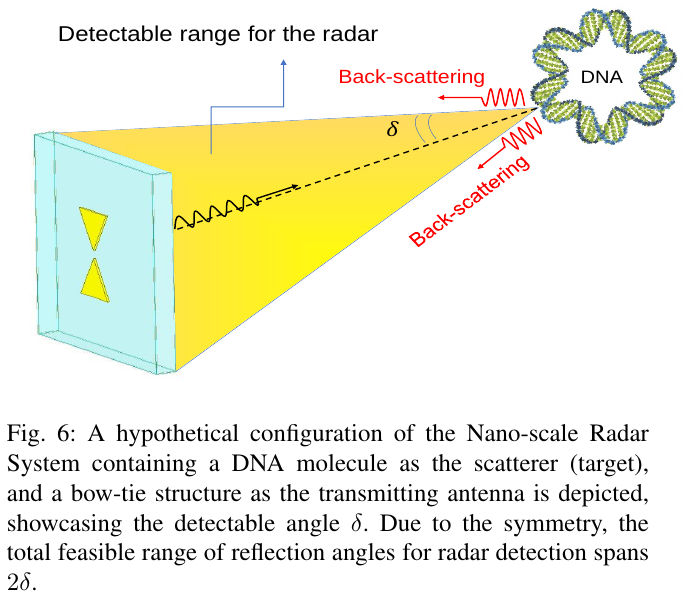
Optical nanoantennas are one of the most promising areas of activity of the current research in nanophotonics due to their ability to bridge the size and impedance mismatch between subwavelength emitters and free space radiation. They are of tremendous use for the development of novel optical sensors, solar cells, quantum communication systems, and for the emission enhancement and directionality control over a broad wavelength range. The starting point for design of an optical nanoantenna begins from scaling down their radio-frequency counterparts. One of the most versatile of antenna designs are arrayed antenna systems. In most cases, the elements of an array are identical, but this is not necessary, which provides with wide opportunities for control of radiation pattern. Nanoantennas and Nanoradars: The Future of Integrated Sensing and Communication at the Nanoscale (PDF) - https://arxiv.org/html/2401.07252v1 Abstract Nanoantennas, operating at optical frequencies, are atransformative technology with broad applications in 6G wirelesscommunication, IoT, smart cities, healthcare, and medical imaging. Researchers are exploring newtechnologies that can reveal the unique properties of terahertzfrequencies (0.1 to 10 THz) [1]. Among these transformativetechnologies, nanoantennas are proposed as promising and prac-tical structures with the potential to reshape wireless communi-cation, revolutionize the Internet of Things (IoT) and healthcare,and advance medical imaging [2]. These nanoscale structuresenable hyper data transmission rates and high capacity, makingthem ideal for addressing the burgeoning data demands ofthe 6G era [4]. Furthermore, the development of nanoanten-nas as a crucial building block of Nano-scale Radar systems(NRs) is critical. Nanoantennas play a significant role in signaltransmission and reception, enabling the tracking of spatialand physical/electrical properties of nanoparticles (targets) innano-channels. Moreover, the use of nanoantennas in the fieldof medicine has demonstrated exceptional potential in diversemedical applications including imaging, biosensing, diseasedetection, drug delivery, photodynamic therapy (PDT), real-timemonitoring, and photothermal therapy [228]–[237]. The foun-dation of nanoantennas lies in the principles of electromagnetictheory, expressed through the macroscopic and microscopicMaxwell’s equations [14], [22], [25], [27]. These fundamentalequations explain the propagation of electromagnetic waves,including those at terahertz frequencies and optical frequencies,providing insights into the intricate behavior of nanoantennasand their interactions with electromagnetic radiation [5], [23].Surface Plasmon Polaritons (SPPs) emerge as a pivotal aspectof nanoantenna research, facilitating enhanced light-matter in-teractions and confinement of terahertz waves [107] [20], [21],[24]. SPP wave propagation enables significant control overelectromagnetic fields, contributing to the high data rates andminiaturization capabilities of nanoantennas [90]. 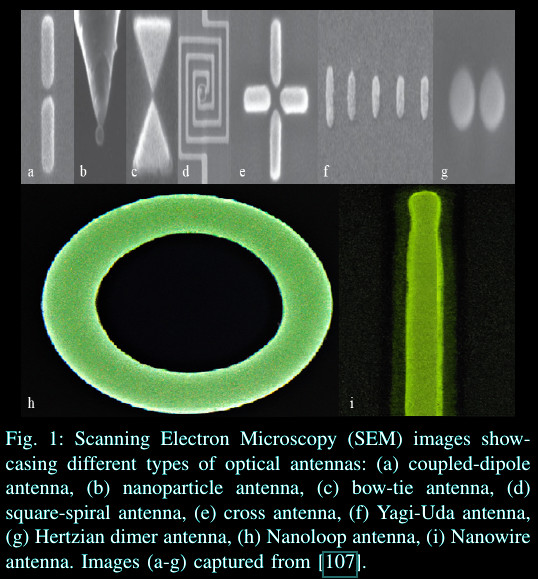
1) Radiation Pattern: The radiation pattern provides a visualrepresentation of an antenna’s radiation properties in terms ofits spatial coordination. 2) Directivity: Every antenna design aims to selectivelytransmit or receive propagations in specific directions whileminimizing the influence of waves coming from otherorientations. NANOANTENNAS AND TERAHERTZ RADIATION Nanoantennas are primarily designed to operate within the terahertz range, enabling communication rates on the orderof terabits per second. The nanoantenna serves as a crucialcomponent responsible for the collection and absorption of elec-tromagnetic waves with wavelengths that are proportional to itsphysical dimensions. By precisely tuning the size and shape ofthe nanoantenna, it becomes capable of effectively capturing andinteracting with electromagnetic waves of specific wavelengths[113]. Typically, a nanoantenna comprises a ground plane, aresonant cavity, and the transmitter/receiver section, which isthe antenna itself. When electromagnetic waves with a specificfrequency encounter the metal surface, they initiate the gener-ation of Surface Plasmons (SPs) at the same frequency as theincident waves. The generated Alternating Current (AC) must beconverted into a Direct Current (DC) to power an external load,as suggested by the transmission-line model. In other words, theabsorbed incident waves are subsequently reflected and concen-trated within the cavity using the ground plane section [109],[113]. Within the optical regime, the smalldimensions of optical nanostructures make wiring between theantenna and the feed port (or transmitter/receiver) challenging.In this scenario, the transmitter or receiver can take the formof molecules, quantum dots, or tunnel junctions, connecting tothe antenna through mechanisms involving energy or chargetransfer [107], [110]. The most important optical antennas thathave been investigated in the literature as shown in figure (1)are metallic nanowires and nanoloops [180]–[186], [212], [213],which form the main building blocks of other nanoantennasas well, coupled-dipole antennas [187]–[190], bow-tie antennas[195]–[200], hertzian dimer antennas [208], nanoparticle an-tennas [191]–[194], yagi-uda nanoantennas [201]–[207], crossantennas [209], [210], and square-spiral nanoantennas [211]. 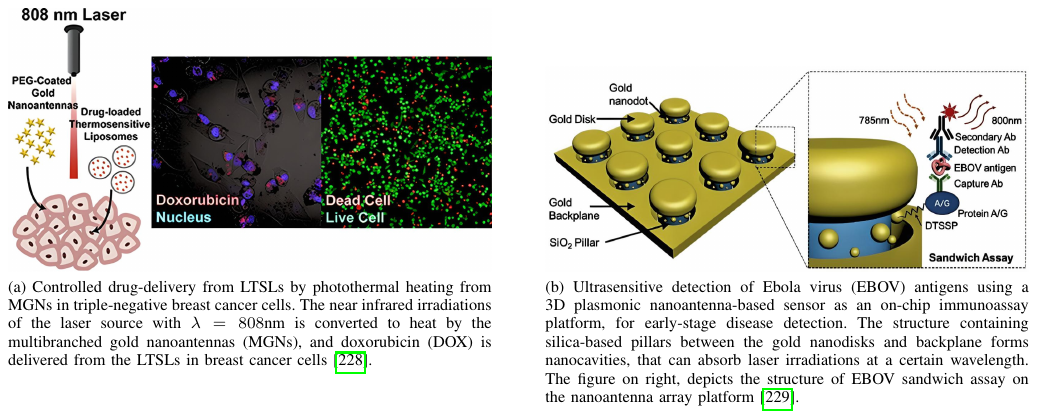
** LTSL (Low Temperature Sensitive Liposome) nanotechnology involves using small, lipid-based particles (liposomes) that release their contents when exposed to a specific temperature, often around 40-42°C. This technology is used for targeted drug delivery, particularly in cancer treatment, and can be combined with other techniques like hyperthermia or laser interstitial thermal therapy (LITT) for enhanced effectiveness. 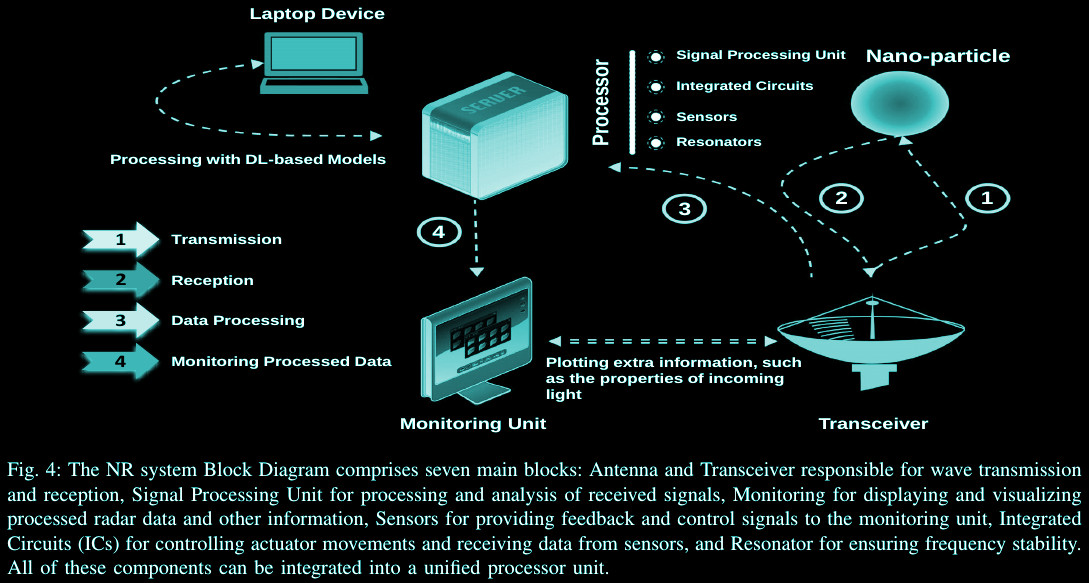
 Nanoantenna-Enhanced Light-Emitting Diodes: Fundamental and Recent Progress Nanoantenna-Enhanced Light-Emitting Diodes: Fundamental and Recent Progress
|