| .:: Human Augmentation ::. |
...::: The Dawn of a New Paradigm :::... |
.:: Nature vs. Machine ::. |
.:: "The Human Platform" ::.
|
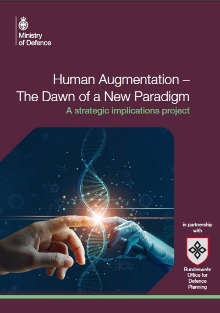 |
The MoD’s internal think-tank, the Development, Concepts and Doctrine Centre (DCDC) along with the German Bundeswehr Office for Defence Planning (BODP) has published a disturbing new report urging greater investigation of – and investment in – human augmentation for military purposes. The following is a brief summary of the 100+ page document with short comment at the end.
‘Human Augmentation – The Dawn of a New Paradigm’ argues that humans are the ‘weakest link’ in modern warfare, and that there is a need to exploit scientific advances to improve human capabilities. |
“Increasing use of autonomous and unmanned systems – from the tactical to the strategic level – could significantly increase the combat effect that an individual can bring to bear, but to realise this potential, the interfaces between people and machines will need to be significantly enhanced.
Human augmentation will play an important part in enabling this interface.”
|
Suggested human augmentation to explore for military purposes includes the use of brain interfaces, pharmaceuticals and gene therapy. Humans, argues the report, should be seen as a ‘platform’ in the same way as vehicles, aircraft and ships, with three elements of ‘the human platform’ to be developed: the physical, the psychological and the social.
source

|
| .:: Optogenetics ::. |
...::: What is Optogenetics? :::... |
..:: Cell Activity - On / Off ::.. |
..:: Optogenetics is Neuroengineering ::.. |
|
Optogenetics is taking a genetic code of neurons in the brain and implanting a new code DNA for it. What happens then is the new DNA combines with the host DNA in the brain which then produces new proteins called opsins, those are responsive to light. In Optogenetics, scientists are able to stimulate one specific brain cell without affecting any surrounding cells. |
Optogenetics uses light to have cells turn on or off with precision, not affecting surrounding cells. This is down to an individual cell or region of cell level. optogenetics can be used to control specific behaviors in animals like blocking fear or pain, it can also show the contributions those individual neurons have towards the behaviors. |
Technology with optogenetics works with steps in a process. The first step being genes extracted from single-celled organisms such as algae and are adapted for studying behaviors in animals, namely mice. Those single genes are known as microbial opsins, they produce proteins. In most cases viruses have to be injected into the DNA of the neurons being analyzed with opsin protein production can take place. Those proteins are light-sensitive ion channels, they produce the electrical current in cells by moving charged ions across the cell membrane. That is the response to light. |
| ...::: --...:..//.:...-- :::... |
..:: Opsin Genes - Genetic Tool Cell Targeting ::.. |
..:: Opsins ::.. |
..:: Plasmonics & Optogenetics ::.. |

|
The second step in this process is genetic tools target the opsin genes in certain cells, this ensures opsin are made in specific cells. This means that untargeted cells will be unresponsive and not react to the light, whereas the targeted cells will. The third step involves advanced optics, which are used to aim pulses of light at specific cells. This is usually done when the subject is doing something of their interest. Once the light pulses, it stimulates the opsin genes, that produces an electrical current in the targeted cells. From this, researchers can determine if specific kinds of electrical activity produce a behavior they are looking for, and how it works. |
Humans possess nine different opsins. Three opsins are expressed in cone photoreceptor cells, which determine the three colours in our vision: red, green and blue. A rhodopsin, which functions under dim light conditions, is expressed in rod photoreceptor cells.
|
Commonly used electrical stimulation can effectively modulate neural activity; however, single-cell type modulation is limited due to the heterogeneity of brain tissue. Additionally, unwanted signals from cells other than the targeted one are induced due to the leakage of the current to neighboring cells. Optogenetics as labeled optical strategy can overcome these shortcomings. Optical modalities based on fluorescent reporters to monitor and control the function of groups of cells with light, often in the intact animal, rely on the introduction of exogenous light-responsive biological compounds, ion channels, or ion pumps.
-- Plasmonics for Neuroengineering-- Plasmonic sensing, imaging, and stimulation techniques for neuron... |
| ..:: Light Fidelity ::.. |
..:: What is Light Fidelity? ::.. |
..:: A Light Transmission Medium ::.. |
..:: Subject :: Figure 3 ::.. |

|
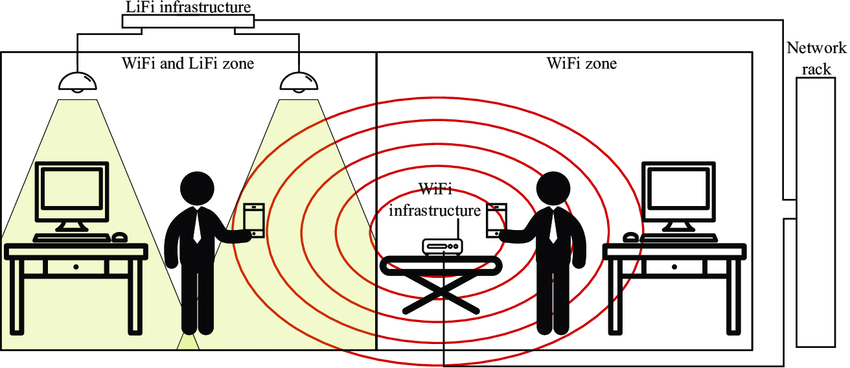
Li-Fi is a technology for transmitting data. It uses visible light and ultraviolet light to fulfill the communication process.This technique is useful for transmitting data over wireless connections in a restricted area. In addition, it proves to be a better tool in comparison to Wi-Fi. It provides safety over the network, high data speed, and more efficiency. This means that data can be transmitted through the light which is a very practical solution to the current data transmission problems. |
The term Li-Fi refers to rapid changes in the brightness of the light emitted by an LED that are invisible to the human eye. Li-Fi is of great interest today because it uses a wide range of frequencies and wavelengths, from infrared to visible light and even ultraviolet, including gigabit communication speeds for short, medium and long distances to transfer data. |
 |
| ..:: BMRB ::.. |
: Biological Magnetic Resonance Data Bank : |
..:: Founded in 1988 ::.. |
..:: Materials and Methods ::.. |
 |
Abstract 
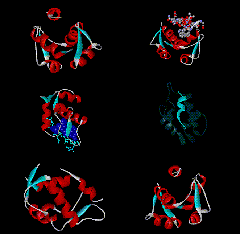
The Biological Magnetic Resonance Data Bank (BMRB, https://bmrb.io) is the international open data repository for biomolecular nuclear magnetic resonance (NMR) data. Comprised of both empirical and derived data, BMRB has applications in the study of biomacromolecular structure and dynamics, biomolecular interactions, drug discovery, intrinsically disordered proteins, natural products, biomarkers, and metabolomics. |
Advances including GHz-class NMR instruments, national and trans-national NMR cyberinfrastructure, hybrid structural biology methods and machine learning are driving increases in the amount, type, and applications of NMR data in the biosciences. BMRB is a Core Archive and member of the World-wide Protein Data Bank (wwPDB). |
Data housed at the BMRB are deposited, archived, and disseminated in the NMR-STAR file format (11). NMR-STAR is a variant of the STAR file format. STAR supports both tabular data as well as key-value pairs and is the format in use by the PDB. STAR also provides for optional grouping and stacking of similar data elements in what are referred to as save frames. NMR-STAR uses IUPAC (15) atom nomenclature. BMRB also supports the NMR Exchange Format (NEF) (16), which is also a variant of the STAR format, and conforms to definitions from the Collaborative Computing Project for NMR (CCPN) data model (10). |
| ..:: Distributed Tracing ::.. |
..:: Distributed Tracing Architecture ::.. |
:: Info + Units :: |
Trace = Data/Execution Path -- Spans |
 |
Every time a user takes an action in an application, a request is executed by the architecture that may require dozens of different services to participate to produce a response. Red Hat OpenShift distributed tracing lets you perform distributed tracing, which records the path of a request through various microservices that make up an application.
Document
|
Distributed tracing is a technique that is used to tie the information about different units of work together — usually executed in different processes or hosts — to understand a whole chain of events in a distributed transaction. Developers can visualize call flows in large microservice architectures with distributed tracing. It is valuable for understanding serialization, parallelism, and sources of latency. |
Red Hat OpenShift distributed tracing records the execution of individual requests across the whole stack of microservices, and presents them as traces. A trace is a data/execution path through the system. An end-to-end trace is comprised of one or more spans. A span represents a logical unit of work in Red Hat OpenShift distributed tracing that has an operation name, the start time of the operation, and the duration, as well as potentially tags and logs. Spans may be nested and ordered to model causal relationships. |
| :: Node Communication :: |
..:: Inter-node Communication (INC) ::.. |
:: Heartbeat Connections :: |
:: Pooled Connections :: |

|
INC provides transactional communication between coordinator and secondary nodes.The topology view tab in Sybase Central shows the relationships between the nodes of a multiplex. INC links exist between the coordinator to the secondary nodes and from secondary nodes to the coordinator, but not between secondary nodes.
Secondary servers communicate with the coordinator via INC for executing DDL and read-write DML statements. The coordinator communicates with the secondary servers via inter-node communication when certain stored procedures are executed on the coordinator. Secondary servers never communicate with each other using INC. The INC link consists of heartbeat and pooled connections.
SOURCE
|
Every secondary node has a heartbeat connection, a dedicated connection to the coordinator node. This connection is established at the time of secondary node startup and remains active as long as the secondary node is active.
Both the coordinator and secondary node monitor the heartbeat connection. If this connection is broken, the node is declared offline. If the heartbeat is not reestablished within a given time period, the coordinator can automatically exclude the secondary server depending on setting of the option
|
Each secondary node maintains an INC connection pool. The connection pool manages connections from the secondary node to the coordinator node used by INC for transactional communication. The INC connection pool reduces communication overhead by re-using existing connections rather than opening new ones, and controls how many INC connections may be established by a secondary node to the coordinator at the same time.
Two database options govern the characteristics of the INC connections from the secondary servers:
- The maximum number of connections to be allowed to be open from a secondary node to the coordinator, MPX_MAX_CONNECTION_POOL_SIZE.
- The maximum number of unused connections to be kept alive when the connection is returned to the unused pool, MPX_MAX_UNUSED_POOL_SIZE.
|
| :: Patterns of INC :: |
:: Patterns of INC in Distributed Systems :: |
: Node RAM - Isolated Local Copies : |
:: Message Queue based Fanout exchange :: |
 |
In a distributed world, where your application runs in a multi-node setup there could be often requirements where the nodes need to talk to each other or pass messages among themselves.
Let’s take a pretty common scenario, where you have an in-memory cache on the nodes. (A node could be a bare metal server, a VM, a Kubernetes Pod anything, it’s just some compute power on which your service runs). |
Storing some data directly on the node’s RAM, such that all nodes are maintaining their isolated local copies of certain data. Now an API call is made to update that particular data, the node that received that API call accepted the request and made necessary updates in the Database. |
A fan-out exchange is like a message broadcast system. You send a message to the exchange and it then broadcasts the same message to multiple consumers. If you don’t know what a message exchange is, imagine it to be a point in the system, where all incoming messages reach and then get routed to their respective destinations depending on some rules. |
| :: Bio-Cyber Interface :: |
:: Bio-Cyber Interface Architecture and Model :: |
:: Brief Abstract :: |
..:: Molecular Communication ::.. |
 |
|
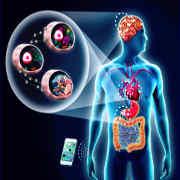
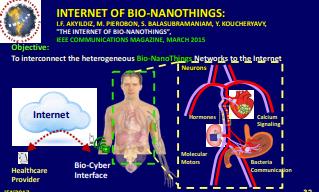
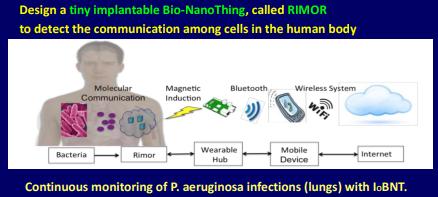
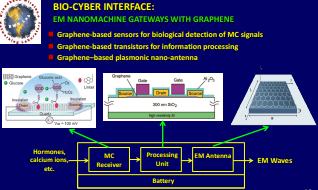
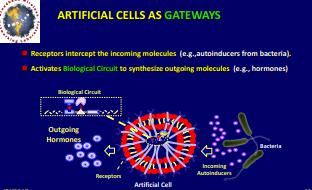
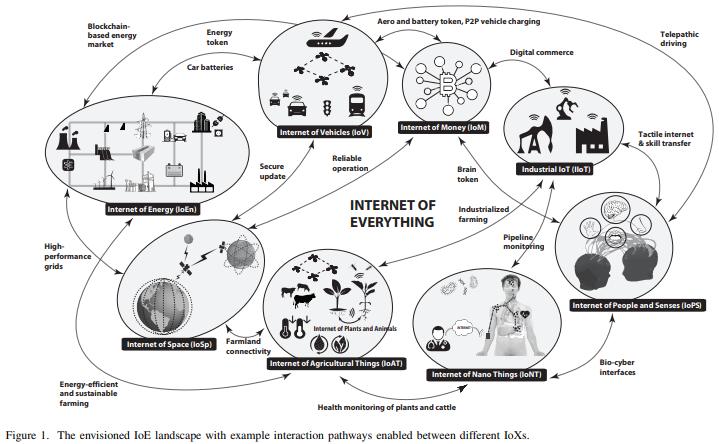
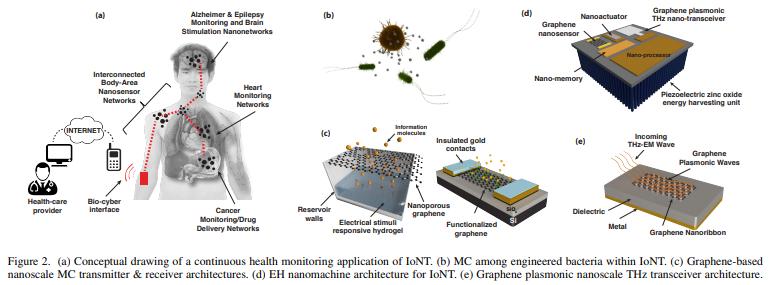
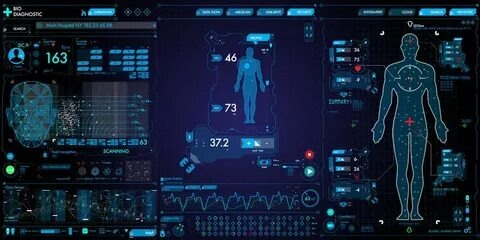
To address one of the major challenges of the IoBNT, we present an exemplary architecture and model of a bio-cyber interface for connecting the conventional electromagnetic-based Internet to the biochemical signaling-based bionanonetwork.
|
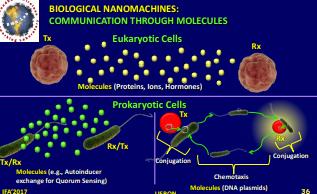
A branch of nanotechnology that has attracted great attention in recent time is molecular communication (MC) [1]. MC is a new communication paradigm that uses biochemical signals to achieve information exchange among naturally and artificially created bio-nano scale devices over short distances [2-5]. |
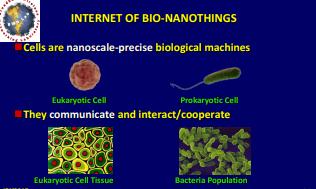
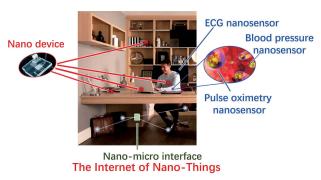
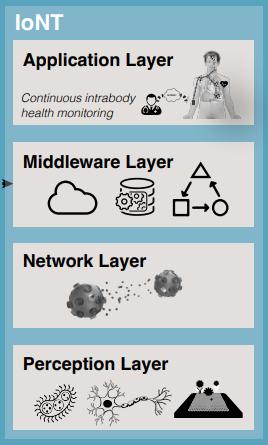
| The IoBNT, which projects the prospective application domain where the activities of very tiny, biocompatible, and non-intrusive devices operating in an in-body nanonetwork can be monitored and controlled through the Internet. |
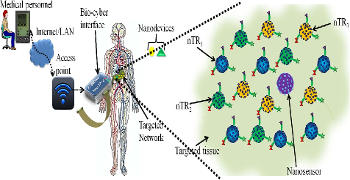 |
The bio-cyber interface is designed and modeled by employing biological concepts, such as the responsiveness of certain biomolecules to thermal and light stimuli, and the bioluminescence phenomenon of some biochemical reactions. The analysis in this paper focuses on the system that comprises the bio-cyber interface and the information propagation network of the blood vessel that leads to the in-body nanonetwork location. |
It has found potential application in the field of medicine, where subjects such as targeted drug delivery (TDD) [6-8] and disease diagnosis/monitoring/therapy [9] executed at the nanoscale level have been considered. |
| :: Digital Twin :: |
:: What is Digital Twin? :: |
:: What is Digital-Twin Technology? :: |
:: A Technology for Totalitarian Control :: |
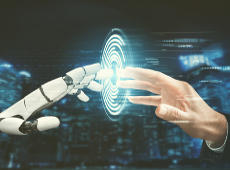 |
A digital twin is a digital model of an intended or actual real-world physical product, system, or process (a physical twin) that serves as a digital counterpart of it for purposes such as simulation, integration, testing, monitoring, and maintenance. A digital twin is set of adaptive models that emulate the behaviour of a physical system in a virtual system getting real time data to update itself along its life cycle. The digital twin replicates the physical system to predict failures and opportunities for changing, to prescribe real time actions for optimizing and/or mitigating unexpected events observing and evaluating the operating profile system. ------ Wikipedia |
A digital twin is a digital replica of a physical object, person, system, or process, contextualized in a digital version of its environment. Digital twins can help many kinds of organizations simulate real situations and their outcomes, ultimately allowing them to make better decisions. |
What would you do if you had a copy of yourself? A digital doppelgänger, identical to you in every way, in an accurate digital rendering of your home, workplace, neighborhood, or city? Even better: What if the digital version of you—your digital twin—was impervious to injury, pain, or embarrassment?
SOURCE
|
| ..:: Electromagnetics ::. |
:: Electromagnetic Communication :: |
-- Figure 12.3 -- |
  |
 |
One of the ways in which cells, tissues, and organisms communicate with each other via the biofield is through electromagnetic communication, and all forms of synthetic electromagnetic signals tend to interfere with such forms of biological communication in one way or another. One of the gravestand most imminent threats to life on Earth is not a function of the contrived threats concerning the non-existent crises of global warming but a function of the uncontrolled and improperly regulated introduction of all manner of synthetic forms of electromagnetism that are being pushed onto the world ecologies – especially so-called “smart” forms of such electromagnetism that are being |
introduced without the consent of those on whom they are impinging – by people who are suffering from a form of willful blindness that ignores the damage which they are inflicting on the world due to an apparently insatiable desire for money, control, and a lurid pleasure which isderived through inducing pain and injury in others.
- Reflections on the Devil's Dictionary |
|

|
“Bioelectromagnetism”
– There are two kinds ofelectromagnetism that are capable of affecting biological systems:natural and synthetic. Natural electromagnetism is produced bydynamics which occur within cells, tissues and organisms. This isknown as bioelectromagnetism. Synthetic electromagnetism isartificially produced outside of organisms and has the capacity tointerfere with, alter, suppress, and undermine natural biologicalprocesses by interacting with them.Some people refer to this latter phenomenon in whichsynthetically produced electromagnetism interacts with natural formsof bioelectromagnetism to be a form of bioelectromagnetism.However, the latter form of electromagnetism is being imposed (and isoften injurious to organisms), whereas the former modality ofelectromagnetism is indigenous to organisms and part of normal,healthy, biological functioning.
“Human Body Communication” (HBC)
– This is a form of electrical signal transfer that uses the human body as the medium of transmission and is known as ‘electro-quasistatic human body communication’. As such, the body is reduced to being a node within a network involving the transfer of electrical signals and data, and this would seem to indicate that a human being has become a means to someone else’s end-use of those signals and data.
|

|
“Telemetry”
– This encompasses a set of automated processes of communication in which data is collected, measured, assessed, and transmitted to a command and control center which, in turn, sets in motion a series of responses concerning that data. Initially, telemetry was handled through networks of wired connections, but technological advances have enabled wireless systems to process such data as well as subsequent responses. Furthermore, AI-equipped nanotechnology, together with, advances in meta-materials, biosensors, routing devices and protocols have made telemetry a largely invisible dynamic which has the capacity to imprison people within that dynamic. Nanoparticulates – including many metals (artificial and otherwise) -- in chemtrails, vaccines, pharmaceuticals, food, and water, together with energy and various molecules that are being siphoned off from the bodies of people being processed, are providing the primary materials for various forms of AI-nanotechnology to, without the consent of the host, set up shop and run all manner of automated telemetry programs. |
  |
   |
 
|
   |
 |
“Energy Harvesting” – Vampire Project – This is a technology that enables a network, system, corporation, institution, medical practitioner, or government agency to harvest energy from a human being’s biofield in order to electrically subsidize or power that: Network’s, system’s, corporation’s, institution’s, medical practitioner’s or government agency’s hacking of other facets of a person’s biological terrain. The notion of energy harvesting also refers to the capacity to use energy from human beings as a means of mining crypto-currency - - with, or without, the consent of the individual whose energy is being harvested. |
|
“Biodigital Convergence”
– a dynamic through which greed, the desire for control, and psychopathy come together in a harmonious fashion by imposing (forcefully if necessary) artificial, synthetic non- living digital technologies onto natural, organic living systems of life for purposes of creating hybrid entities that are imprinted with an imperative to eliminate or subjugate all non-hybrid entities.
|
 |
-- -- -- Beam Steering -- -- -- |
== Biosensors == |
-- Blockchain -- |

|
– a technique for re-directing radio frequencies, as well as optical and acoustic forces, toward unsuspecting targets by changing relative phases in the frequencies and forces that are chosen to better reflect the fluctuating interests, motives, attitudes, desires, values, politics, and fears of the operators.
“AI” -- a system of logic-like coding based on assumptions, biases, and arbitrary ideas concerning the nature of any given topic that enables computations to be made mindlessly at light-like speeds, and, in the process, generate obfuscating data as to whether one is dealing with properties of ‘garbage in’ and/or ‘garbage out.’ A technology that is designed to extinguish a person’s right to informed consent and sovereignty.
|
– This term refers to the ubiquitous set of nano- particles, atoms, molecules, particulates, chemicals, synthetic materials, and self-assembling complexes that have been intentionally sprayed, dumped, poured, injected, and placed in the air, water, foods, clothes, vaccines, and pharmaceuticals to which human beings are exposed. These materials are capable of receiving and sending all manner of data that is capable not only of compromising human privacy right down to the levels of nucleic acids and thoughts, but, as well, the foregoing processes are taking place without the informed consent of the individuals on which such entities are being imposed. Any biosensor that is on, or within, a human being, irrespective of its location, is a “wearable.” |
– A money-laundering system; a method for inducing human beings to become enrolled in: (1) A distributed, ledger system that: Cannot justify the systems of valuation which use such a ledger system; (2) a digital system which enables banks, governments, corporations, and individuals to be able to keep both laudatory and questionable aspects of their activities hidden; (3) a system that is incapable of existing independently of sources of energy that are needed to maintain it (if the grid goes does, then so does the ledger system); (4) a system which has the potential for enabling the harvesting of human energy as a way of anonymously mining crypto- value even if humans do not wish to be harvested in this fashion; and, (5) system that is as artificial a framework as fiat currency is with respect to the process of establishing a basis for the generation of “sound money” that cannot be manipulated (that is, bid up and down in value). |
| .: Microtubules :. |
..: Microtubules the seat of Consciousness ::.
|
Microtubules - Brain of the Neuron? |
EMF Transmitters and Receivers in the Brain
|
|
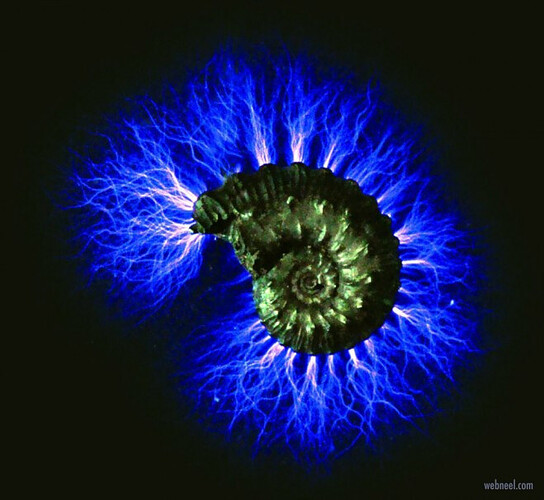
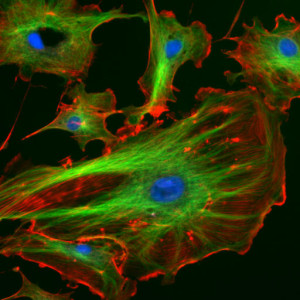
All cellular and neural communication in the body occurs via microtubules. This constant electrochemical dynamical activity creates a “field” in and around the body.Kirlian Photography records the EM field an organism creates in and around itself.This field is invisible to the unaided eye but it exists as a field regardless of an observer.Now imagine this field inside our brain created by our microtubule network and then think of a concept like ORCH OR (orchestrated objective reduction) at the qantum level that might create a conscious experience of such an orchestrated field in our “inner mind”. |
|
It has been known since the 19th century that the brain generates its own EM field, which can be detected by electrodes inserted to the brain. Its source is electrical dipoles within the neuronal membranes caused by the motion of ions in and out of those membranes during action potentials and synaptic potentials. The periodic discharge of neurons—firing or action potentials—generates EMF waves that propagate out of the neuron and into the surrounding inter-neuronal spaces where they overlap and combine to generate the brain’s global EM field that is routinely measured by brain scanning techniques such as electroencephalography (EEG) and magnetoencephalography (MEG). The human brain, therefore, possesses around 100 billion EMF transmitters. (source) |
  |
   |
  |
   |
| .: Capturing Consciousness :. |
..:: Patents ::.. |
.: Digital Immortality :. |
A SYSTEM TO ACHIEVE DIGITAL IMMORTALITY |
| This is a modality that will be used to capture a piece of your human consciousness by taking an optoelectrical image of it.

|
Method of Recording and Saving of Human Soul for Human Immortality and Installation for it
Biological Brain Microtubules Interfaced with Semiconductor Qubits
A system to achieve digital immortality
Human-like emulation enterprise system and method
|
The present disclosure provides a digital life system that includes personal information and memory collection logic to receive personal information and personal memory data from a first user, the personal information and memory collection logic to generate data tables based on the personal information and personal memory data; personal question and answer logic to generate responses to questions and statements submitted by a second user based on the data tables generated by the personal information and memory collection logic; and active talking logic to generate questions and statements directed towards the second user, without first receiving a question or statement from the second user, based on the data tables created by the personal information and memory collection logic. |
-- A SYSTEM TO ACHIEVE DIGITAL IMMORTALITY
BACKGROUND
"When an old man dies, a library burns to the ground." To the individual human being, a digital copy of him/herself that can be preserved indefinitely not only can be a record of major events in his/her life, but also can be a record of thought process, dreams, personal preferences and other important information that cannot be recreated after a person dies. Such a digital copy can help friends and family better understand a person’s life, life choices, thinking, preference, emotions, and judgements, etc. In a larger context, such knowledge accumulation of common people and their lives, beliefs, thinking, and preferences may offer significant historical evidence of given places and given times." |
| .:: Optoelectronic Array of... |
Photodiodes Integrated with RRAMs... |
for Energy-Efficient... |
In-Sensor Computing ::. |
 |
ABSTRACT:
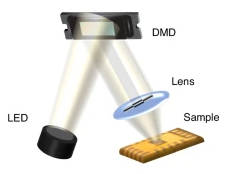
The rapid development of internet of things (IoT) urgently needs edge miniaturized computing devices with high efficiency and low-power consumption. In-sensor computing has emerged as a promising technology to enable in-situ data processing within the sensor array. Here, we report an optoelectronic array for in-sensor computing by integrating photodiodes (PDs) with resistive random-access memories (RRAMs). The PD-RRAM unit cell exhibits reconfigurable optoelectronic output and photo-responsivity by programming RRAMs into different resistance states. Furthermore, a 3 × 3 PD-RRAM array is fabricated to demonstrate optical image recognition, achieving a universal architecture with ultralow latency and low power consumption. This study highlights the great potential of the PD-RRAM optoelectronic array as an energy-efficient in-sensor computing primitive for future IoT applications.
|
The memristor array enables parallel in-memory computing on the output from the photoelectric sensor array17,18,19,20,21,22, thus simplifying PE circuits. Besides, some photonic synaptic devices made of detect-and-memorize (DAM) materials have been proposed for in-sensor computing, exhibiting multi-level conductance states and long-term plasticity (LTP) under various light conditions6,23,24,25,26,27,28,29,30,31,32,33,34. In addition, optoelectronic sensors that integrate sensing, storage, and processing functions have attracted much attention due to acting as an artificial neural network (ANN) for IoT applications1,10,35,36,37. In short, to better deliver the potential of the IoT, multifunctional integrated devices and low-power consumption systems are desired1. |
...architecture that integrates photodiodes (PDs) with resistive random-access memories (RRAMs) to implement in-sensor computing for image recognition. Hundreds of silicon PDs integrated with RRAMs are fabricated on a chip, and the PD-RRAM unit cell exhibits multi-level photovoltaic responses as controlled by RRAMs that have non-volatile and multiresistance state characteristics. These characteristics make the PD-RRAM cell to be a highly reliable and selfpowered unit with adjustable photo-responsivity. Multiple individual cells are then wired into the PD-RRAM array, whose capability to perform multiply-accumulate computation (MAC) between optical images and weights is experimentally verified. The PD-RRAM array is further used to implement real-time letter recognition by physical networks with high accuracy. In summary, the architecture is presented to achieve pattern recognition and image pre-processing, which reduces the amount of image data from sources and improves the efficiency of the optoelectronic signal conversion. This type of architecture provides a real-time machine vision approach for the IoT, featuring high integration, ultralow latency, and low power consumption. (PDF) |











 Signal Information Output