Welcome to Lady Sylvia's More About Victorian Calling Cards Page

Life's Little Joys

Divider


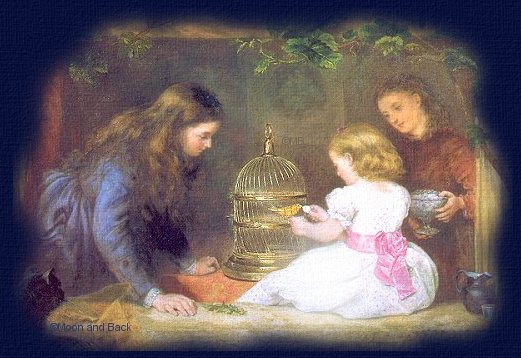
Little Girl

Sharing love together
Such peaceful boundary
Holding you within my heart
This joy that's heavenly

Hearts of love created
Compassion that is clear
Peaceful love is singing
Heart's song we'll always hear

Animated Icon

Time that we have gathered
With memories we share
Each one of us a joyful part
Of love that's so aware

Though we may be different
These things in life we know
No matter what our difference
Each heart of love will flow

Animated Icon

Peace will enter softly
Within our life designed
Kindness love and goodness
The joys in love that bind

Days of special pleasure
Each one of them deserved
For years to come life's treasure
Love's memory preserved.

~ Francine Pucillo ~
© Used with permission.
Read more of her wonderful poetry here.

Twin Stars

Share the Joy with a family member or a friend!


Divider

More About Calling Cards

In Victorian circles the leaving of a calling card formed part of a social etiquette, which had a whole variety of meanings. This fashionable habit soon spread through Europe, and indeed to the far reaches of the British Empire. Over a century ago, during the Victorian era, one of the favorite pastimes was collecting small, illustrated advertising cards that we now call trade cards. These trade cards evolved from cards of the late 1700s used by tradesmen to advertise their services. Although examples from the early 1800s exist, it was not until the spread of color lithography in the 1870s that trade cards became plentiful. By the 1880s, trade cards had become a major way of advertising America's products and services, and a trip to the store usually brought back some of these attractive, brightly colored cards to be pasted into a scrapbook -- as the children are doing in the Chase's Liquid Glue trade card shown here. In the late 1800s claims made for patent medicines were not regulated by law, and trade cards advertising these medicines usually promised miraculous results.

"It is bad form to write "regrets" or "accepts" on a card. A note of reply must be written in acknowledgement of an invitation... It is unreasonable to fancy that one's acquaintance is not desired because a call has not been returned promptly. There are many reasons for delayed calls. Illness in the family, absence from town, many occupations, may prevent the best-intentioned persons from making calls..."

"If an acquaintance calls after a long delay it is a duty to welcome her cordially... to hasten to accept any explanation she may offer and not to allude to it again..."

"YOUTH'S EDUCATOR FOR HOME AND SOCIETY" published in 1896 is intended to be as a manual of correct deportment, not only for young people just entering society, but for the many older ones who have so often felt the want of proper information upon this subject. The author, L. W. Walter,  wanted it to make be simple, practical and reliable, omitting the technique of etiquette and confining ourselves to the forms and usage's of true gentlemen and ladies. Read on - I am sure you will find this quite interesting... and possibly wish this was still in effect today!

Divider

Gentlemen's Calls

There are certain fixed rules laid down by society which apply to a gentleman in a small place with the same force as in a large city. Cowper says: "Man in society is like a flower Blown in its native bed. ''Tis there alone His faculties expanded in full bloom Shine out - there only reach their proper use".

An Aid To a Gentleman

Not every man can tell whether he is at fault on small points of etiquette, and therefore such will be grateful to those who settle these matters for them. A gentleman feels different in regard to the code of calling, lest he trespass upon some established rule which he should have known, and which will be a guide for his conduct.

Calling on a Lady

A gentleman cannot consider himself privileged to call upon a lady upon the strength of an introduction alone. He may desire very much to do so, but waits to be invited. If the invitation does not come, and he is anxious to prosecute the acquaintance, he may leave his card at her residence. If he is acceptable, the young lady's mother will send him an invitation to visit the family, or ask his presence at some entertainment to be given at their home. After that, it is plain sailing, and the gentleman can feel that he has a right to call occasionally. If his card receives no acknowledgment, he may conclude that for some reasons best known to themselves, they do not wish to extend their acquaintance. And in this case, he must wait when next they meet in public, for a recognition at their hands, as would any stranger.

Do Not Accept Careless Invitations

If a lady carelessly invites a gentleman to call, without specifying the particular time, he may deem it no invitation at all, as she is more than likely to be out or engaged, should he avail himself of such an off-hand permission, But if she states the time when he may call he should be prompt in keeping his engagement. If anything prevents his coming he should dispatch a messenger with a note explaining his absence. Carelessness of this sort has checked many a friendship.

The First Call

On making a first call he must have a card for each lady of the household. When there are several sisters in a family, and the mother is living, two cards will answer - one for the mother, and one for the daughters. The cards which a gentleman uses often are indications of his character. They are to be as simple as possible. The following will serve as a model, and is to be either written or engraved - preferably the latter, as all gentlemen do not write a legible hand:


MR. ALLEN HAGUE, 634
Belmont Avenue.

The prefix "Mr." should not be used, if the card is written by its owner, but in an engraved one, it is adopted. The card must be of the finest texture, and lusterless.

Hour For Calling

A gentleman whose time is his own can call between 2 and 5 P.M. But as business engrosses nearly all our gentlemen, from 8 to half-past 8 in the evening is the proper time to make a social call. If he calls before that hour he may interfere with some previous engagement she may have, and will surely displease his hostess by his eagerness.

Divider

A Formal Call

Informal calls a gentleman asks to see all the ladies of the family. If he calls upon a young lady who is visiting people whom he has never met, he should send in a card for the hostess at the same time that he sends in one for the young lady. The lady of the house should enter the room before his departure, to give him the assurance that any friend of her guest is welcome, to her house.

Ask For Some Member of The Family

A gentleman should in all cases inquire for the mother or chaperon of any young lady whom he calls on, and if she appears he should address his conversation to her principally. But if she makes a practice of entering the parlor and remains there during his entire call, no matter how often he comes, he should conceal his annoyance under a well-bred manner. But the wisest way would be to take the hint thus afforded, and act upon it.

Custom Abroad

In Europe the constant presence of an elder lady during a gentleman's visits would be deemed only a necessary observance of etiquette, but the customs of our land are totally different. All invitations sent to a gentleman of any sort are promptly accepted or declined.

Calling Once A Year

A gentleman never should neglect to make a yearly call, when friends have returned from a summer vacation. If he does not attend to this duty, he need not feel hurt if he is left out of the invitations for the entertainment's of his lady friends the coming season. A gentleman can make an informal call on intimate friends at any hour which does not encroach upon their convenience. Don't go so often, however, that they enjoy your absence.

New Year's Calls

These calls are observed with varying degrees of ardor. One year they are general, the next we hear that they are not observed. But when they are not made the pretext for forcing oneself upon people who are almost strangers, it seems a most delightful custom. There is necessarily, more latitude permitted in calling on that day, but still it is a good old custom.

Call Only Where Welcome

The gentleman who calls on the first day of the New Year confines his calls to those houses where he is sure of a welcome, and to those. ladies who are acquaintances of the ladies of his own family. He may also venture to accept an invitation given him by another gentleman.

Make Your Call Brief

A call on this day should be limited to ten or fifteen minutes, for the hostess presumably has an extensive list of friends to entertain, and cannot devote much time to any particular ones. If she does not recognize a stranger who is introduced to her at such a time, when meeting him again, he must not feel aggrieved.

Gentlemen's Toilet

The dress of a gentleman making New Year's calls should be a morning costume of dark coat, vest and tie, and dark or light pants. Dress suits are for evening calls. His gloves should be of a sober tint.

Declining Offered Refreshments

He has a right to decline refreshments. He should never accept wine or spirituous liquors, however hospitably they may be pressed upon him. He cannot afford to risk his reputation as a gentleman by, using liquors promiscuously at every house at which he calls, knowing that the result would be intoxication.

Taking A Friend With Him

A gentleman should never take the liberty to invite another gentleman to call on a lady (save on New Year's Day) without first asking her permission. In making a ceremonious call, the hat and cane are retained in the hand, but an umbrella is left in the hall. If you chance to call when a lady is just going out, make your stay brief, and say that you will call on another time.

Carrying Card-Cases

Card cases are used only by ladies. Gentlemen carry their cards loose in their pockets, or in those leather memorandum books now so popular.

Feminine Card Holder


Divider

View My Guestbook!Sign My Guestbook!

Divider

Divider

Victorian Cards Etiquette Page #1 Lady Sylvia's Victorian Parlor Index Page
Send me an e-mail!
Lady Sylvia's Victorian Parlor Site Map Page Queen Victoria's Page

Divider


Please choose where you want to go from the
drop down menu below and enjoy your visit!


The background set displayed here is a unique creation of my extremely talented friend and web graphic designer Beverly Zuerlein from Moon And Back Graphics. Bev's artwork is just breath taking! She has so many varieties of sets to transform your site into a glamorous haven that you just have to go and see for yourself.

Thank you for your friendship Bev! I love you dearly!

Moon And Back Graphics

Divider

The outstanding poems through out Lady Sylvia's Victorian Parlor Pages are © Francine Pucillo and used with permission. Click on her banner below to visit her inspiring site and read more of her poetry.

Thank you so much for sharing your wonderful poetry with me Frannie! I love you too!

Poetry ~ Emotion

MIDI:
Midi is provided with permission by sequencer and performer Yuko Ohigashi. You are welcome to visit her wonderful site by clicking on her banner.  There she has CDs for sale, midis and MP3s! This is an original composition entitled "Prayer".

Yuko Ohigashi - Pianist and  Composer

Divider

This page created and maintained by Lady Sylvia Ann.
© 1997 - 2007.
All Rights Reserved.

Hosted by www.Geocities.ws

1