ANGELS
A Television History

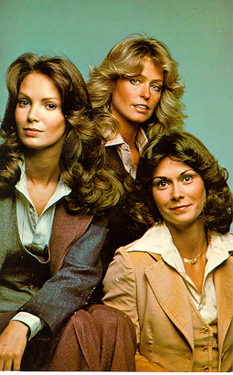 In the midst of all this trend programming, Aaron Spelling and
Leonard Goldberg were preparing their line up of Fall shows to
offer the ABC network. At that time most of the Spelling/Goldberg
productions were male oriented action shows such as The Rookies,
S.W.A.T. and Starsky & Hutch. It was virtually by accident
that Aaron Spelling, the creative force behind the production
company, stumbled onto the idea that became Charlie's Angels.
Spelling had promised to create a vehicle for Kate Jackson, who
had co-starred in Spelling's show The Rookies and was still under
contract when the series was abruptly cancelled. Wishing to create
a show to "cash in" on the new popularity of TV series
carried by women but still remaining within the male oriented
action genre so popular during the mid-seventies, Spelling laid
out the rough draft for a show about three police women working
together to fight crime which, at the time, he was calling The
Alley Cats. It was Kate Jackson who suggested the three police
women be transformed into private investigators who could not
advance in the male dominated police force because she thought
it would add depth and glamour to the show. It was also Jackson
who brainstormed the gimmick concerning the faceless boss giving
out assignments via intercom. And, again, it was also Jackson
who suggested the title change because she felt that a title such
as The Alley Cats was too stereotypical. Spotting a piece of baroque
artwork behind Spelling's desk accented with cherubs, Jackson
suggested the title Harry's Angels. Spelling thought this was
a much better title but reminded her that there was already a
popular series called Harry O. "Well, call him Charlie then,"
she retorted. "Who cares?".
In the midst of all this trend programming, Aaron Spelling and
Leonard Goldberg were preparing their line up of Fall shows to
offer the ABC network. At that time most of the Spelling/Goldberg
productions were male oriented action shows such as The Rookies,
S.W.A.T. and Starsky & Hutch. It was virtually by accident
that Aaron Spelling, the creative force behind the production
company, stumbled onto the idea that became Charlie's Angels.
Spelling had promised to create a vehicle for Kate Jackson, who
had co-starred in Spelling's show The Rookies and was still under
contract when the series was abruptly cancelled. Wishing to create
a show to "cash in" on the new popularity of TV series
carried by women but still remaining within the male oriented
action genre so popular during the mid-seventies, Spelling laid
out the rough draft for a show about three police women working
together to fight crime which, at the time, he was calling The
Alley Cats. It was Kate Jackson who suggested the three police
women be transformed into private investigators who could not
advance in the male dominated police force because she thought
it would add depth and glamour to the show. It was also Jackson
who brainstormed the gimmick concerning the faceless boss giving
out assignments via intercom. And, again, it was also Jackson
who suggested the title change because she felt that a title such
as The Alley Cats was too stereotypical. Spotting a piece of baroque
artwork behind Spelling's desk accented with cherubs, Jackson
suggested the title Harry's Angels. Spelling thought this was
a much better title but reminded her that there was already a
popular series called Harry O. "Well, call him Charlie then,"
she retorted. "Who cares?".
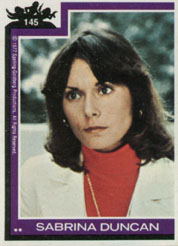 Who
cares indeed! In retrospect we now know that Charlie's Angels
became the most marketed television show of the seventies, earning
several million dollars in merchandise sales. It also skyrocketed
the three original Angels, as well as replacement angel Cheryl
Ladd, into the legendary annals of pop culture history, especially
toothy Farrah Fawcett who made 17 million dollars between the
series premiere and the end of 1979. And it changed television
programming for the remainder of the decade because after the
unforeseen success of Charlie's Angels the networks were more
willing to bank on slightly experimental shows, especially if
the golden tag of Spelling/Goldberg Productions was associated
with it. (Such prime examples include Love Boat and Fantasy Island.)
Who
cares indeed! In retrospect we now know that Charlie's Angels
became the most marketed television show of the seventies, earning
several million dollars in merchandise sales. It also skyrocketed
the three original Angels, as well as replacement angel Cheryl
Ladd, into the legendary annals of pop culture history, especially
toothy Farrah Fawcett who made 17 million dollars between the
series premiere and the end of 1979. And it changed television
programming for the remainder of the decade because after the
unforeseen success of Charlie's Angels the networks were more
willing to bank on slightly experimental shows, especially if
the golden tag of Spelling/Goldberg Productions was associated
with it. (Such prime examples include Love Boat and Fantasy Island.)
As a side note, Spelling gave Robert Wagner, of future Hart To Hart fame, 45% of Charlie's Angels prior to the series' premiere to settle another contract debt. At the time Mr. Wagner is reported to have denounced the series as the worst idea he had ever heard. He must have been very pleased that the show sparked such a phenomenon.