
| MDG1 | MDG2 | MDG3 | MDG4 | MDG5 | MDG6 | MDG7 | MDG8 |
India has taken an aggressive step toward HIV/AIDS control by implementing the third phase of its National AIDS Control Programme (NACP), which is designed to reverse the spread of HIV/AIDS by 2012. Its thrust areas include treatment of sexually transmitted infections, voluntary counseling and testing, and condom promotion. (NACO) has collaborated with Hindustan Latex Limited (HLL) on a Condom Vending Machine (CVM) Project. Under this initiative, it has been proposed to set up 11,025 vending machines in 42 districts in the six high prevalence states and 24 districts of the four EAG states. In a spearheading effort, The National AIDS Control Organization (NACO) collaborated with UNICEF to scale up the School Based Adolescence Programme across 144,409 schools, with the objective to reach out to some 33 million students. For ensuring blood safety, over 1230 blood banks have been modernized till date. As of November 2009 there are a total of 230 anti-retroviral treatment (ART) centers with a total of 313,161 patients receiving free ART.
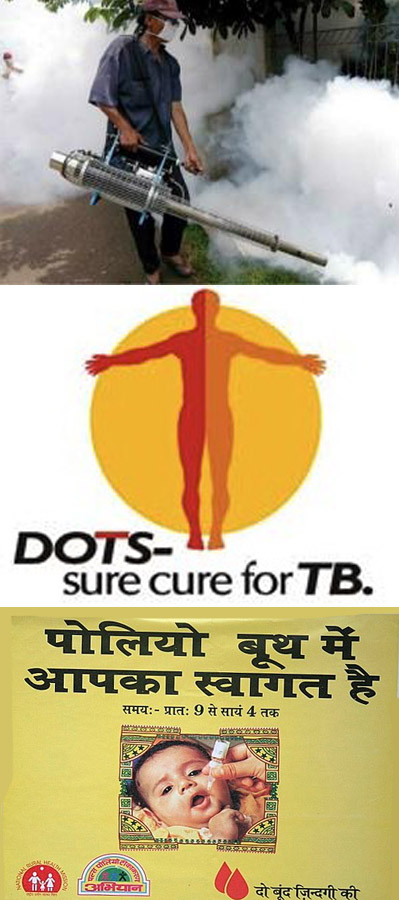
Over the years, malaria has been showing a declining trend from high incidence levels. The National Vector Borne Disease Control Programme (NVBDCP) frames technical policies and guidelines for the control of malaria in the country.
India accounts for nearly one fifth of the global burden of tuberculosis, which amounts to 1.9 million cases. A recent matter of concern is the emergence of multidrug resistant tuberculosis, its prevalence ranging from 3% among new cases to 12% among retreatment cases.The RNTCP implementing the Directly Observed Treatment Short course (DOTS) strategy was launched in India in the year 1997 phase II (2006-2011) of RNTCP which is in line with the new WHO stop TB strategy for TB control. Special emphasis has been given toward the management of MDR-TB.