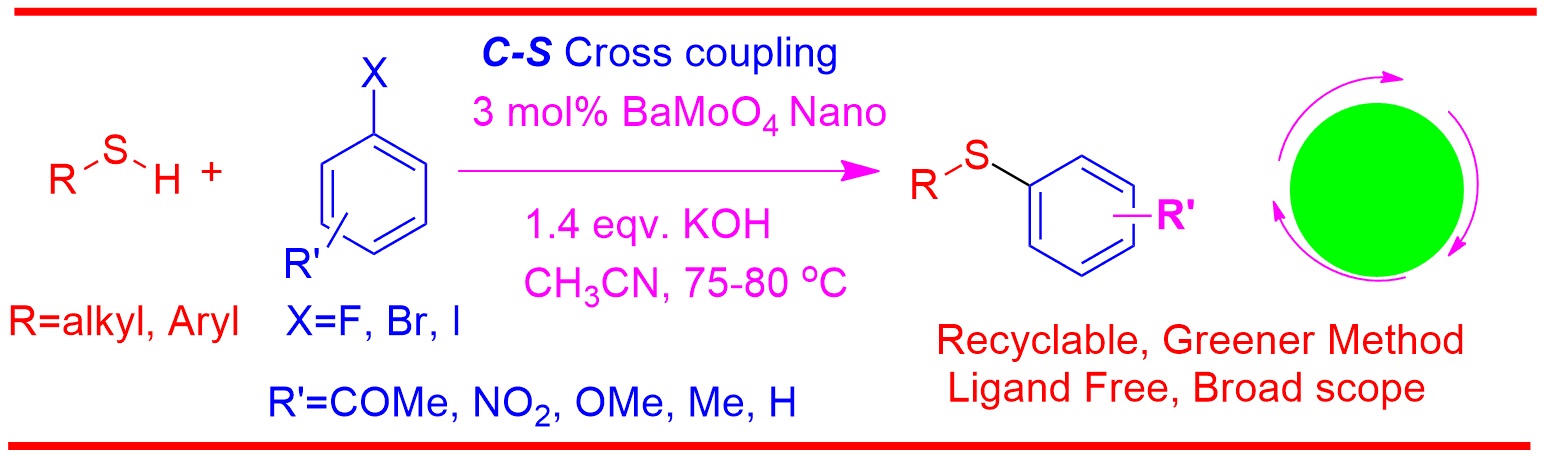
1: Bimetallic BaMoO4 Nanoparticle for C-S Cross-Coupling of Thiols with Haloarene New J. Chem 2020, 44, 2500-2504
Subhalaxmi Panda, Pradyota Kumar Behera, Santosh Kumar Sahu, Reba Panigrahi, Bamakanta Garnaik and Laxmidhar Rout,
https://doi.org/10.1039/C9NJ05581A
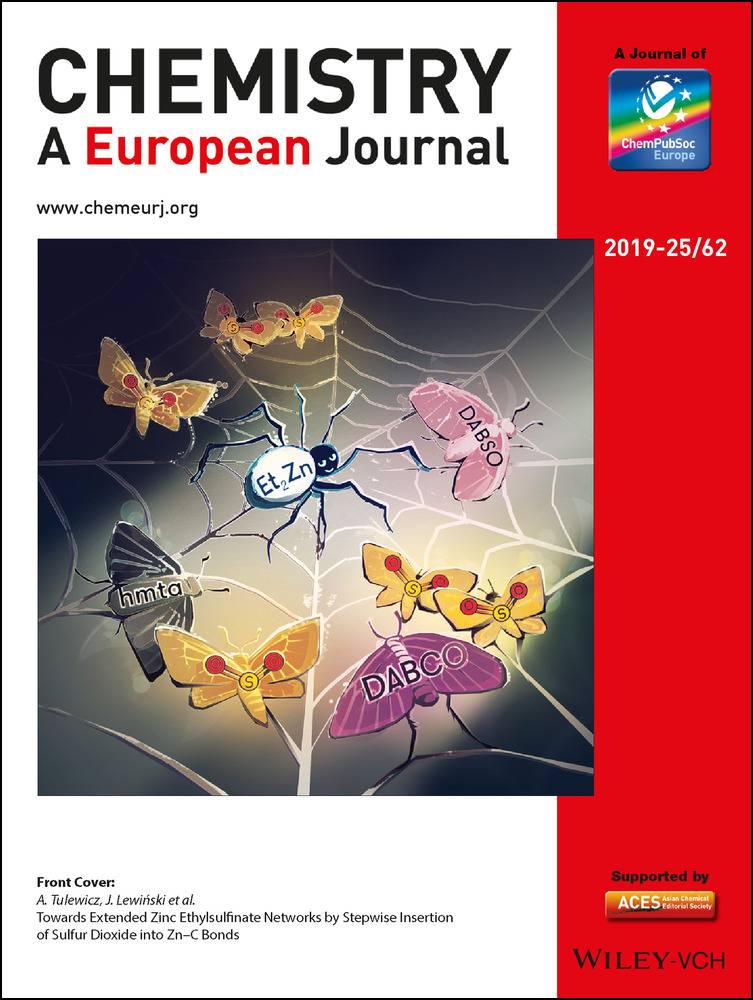
2: CuMoO4 Bimetallic Nanoparticles, An Efficient Catalyst for Room Temperature C-S Cross-coupling of Thiols and Haloarenes, Chemistry Eur. J.2020, 24, 620-624
Reba Panigrahi, Santosh Kumar Sahu, Pradyota Kumar Behera, Subhalaxmi Panda, and Prof. Laxmidhar Rout,
https://o/doi/10.1002/chem.201904801

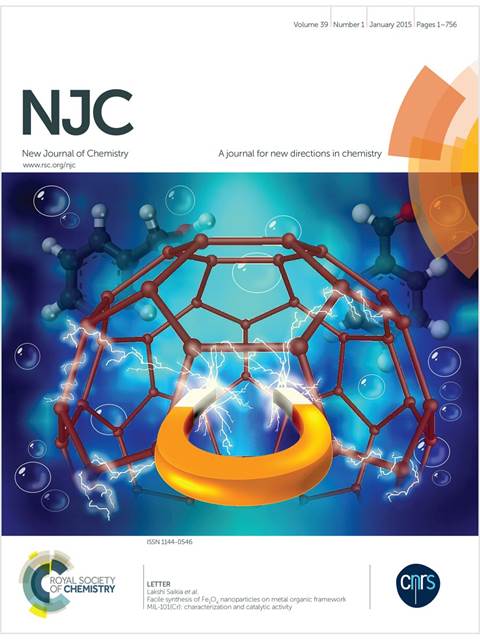
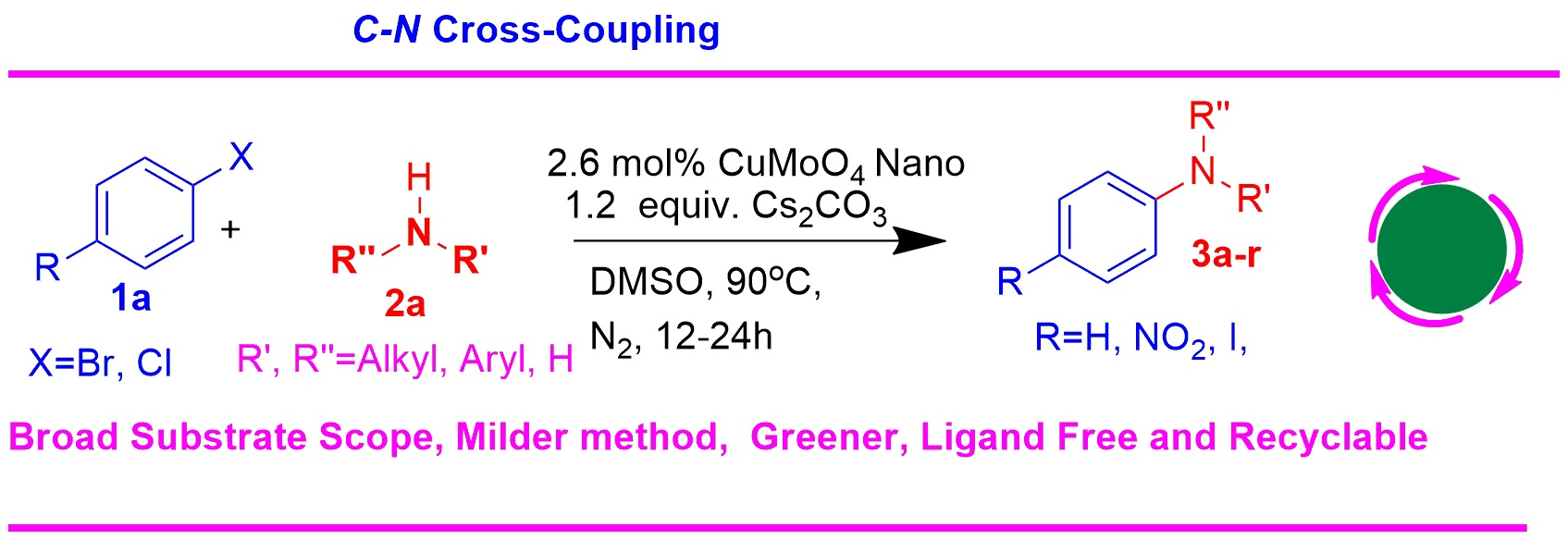
3: Recyclable Bimetallic CuMoO4 Nanoparticle for C-N Cross-Coupling Reaction Under Mild Condition New J. Chem 2019, 43, 19274
Reba Panigrahi, Subhalaxmi Panda, Pradyota Kumar Behera, Santosh Kumar Sahu and Dr. Laxmidhar Rout
https://doi.org/10.1039/C9NJ04436A
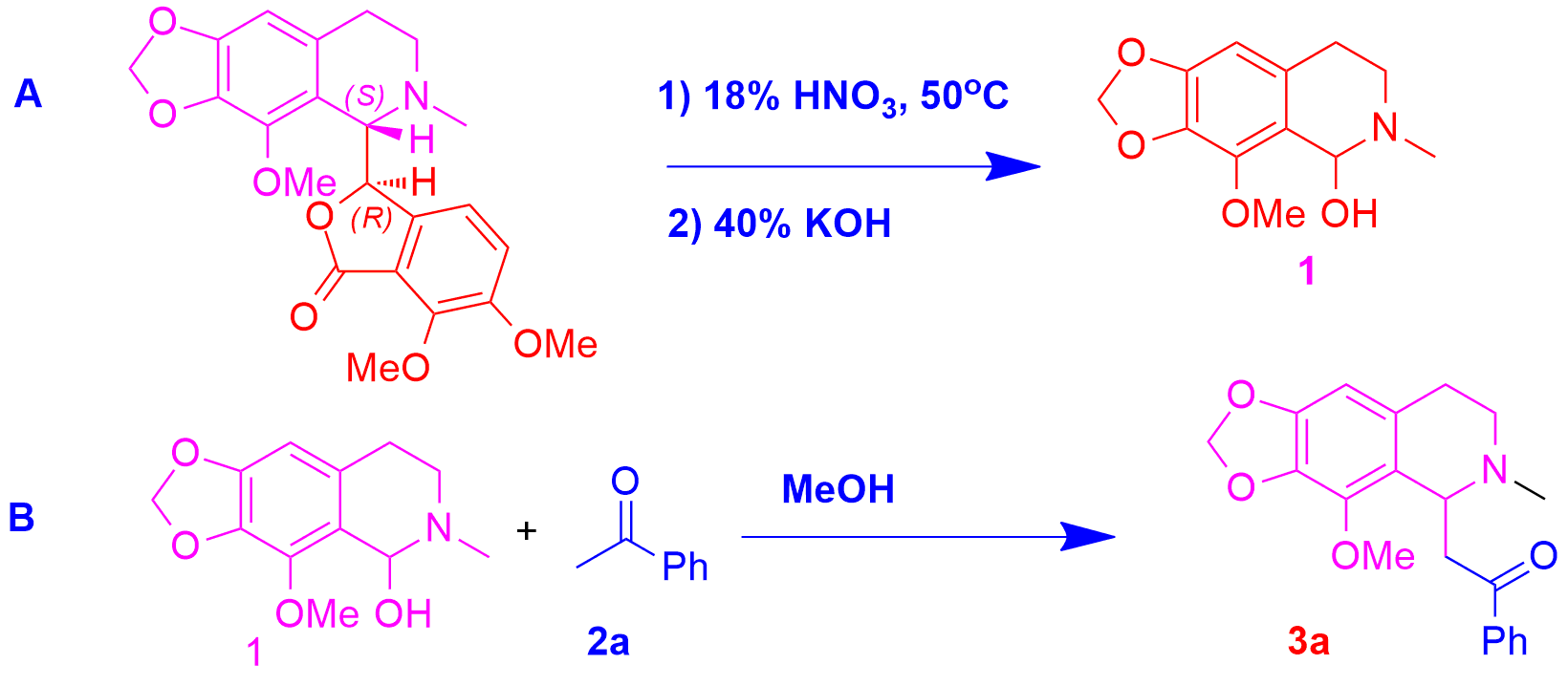
4: Synthesis of Acyl Derivatives of Cotarnine, Organic Synthesis Database Online, (Editor: A. S. Kendee, and J. S. Freeman) Volume 95
Dr. Laxmidhar Rout, B. B. Parida, G. Phaomei, B.Emmanuel, and Prof. A. K. Sahoo,
5: Synthesis of Acyl Derivatives of Cotarnine, Org. Syn, 2018, 95, 455. DOI: 10.15227/orgsyn.095.0455
Dr. Laxmidhar Rout, B. B. Parida, G. Phaomei, B.Emmanuel, and Prof.A. K. Sahoo,
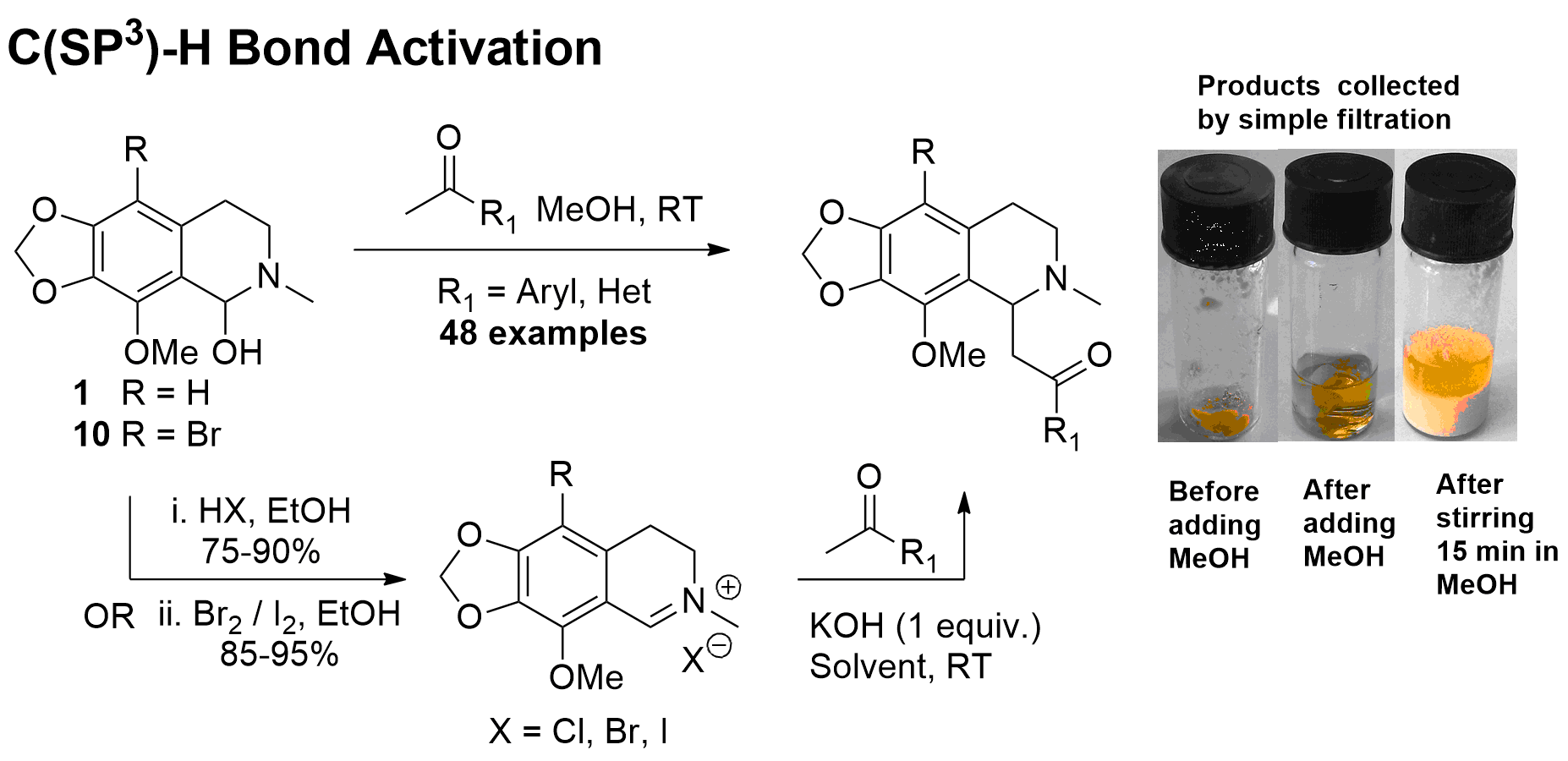
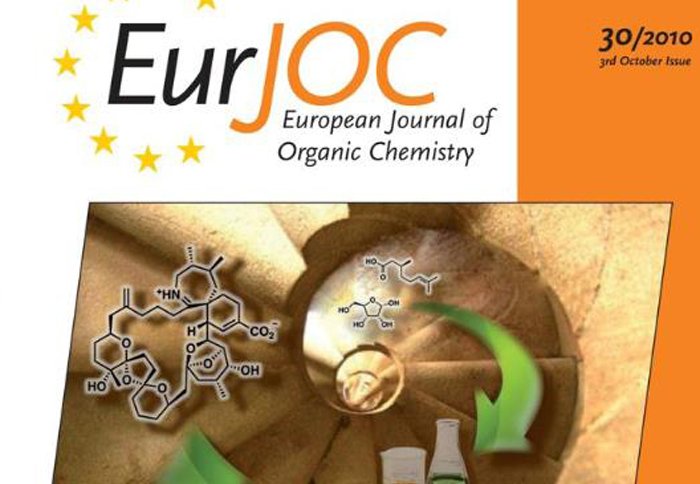
6: Metal Free Activation of C(SP3)-H Bond, Practical and Rapid Synthesis of Privileged 1-Substituted-1,2,3,4-Tetrahydroisoquinolines, Eur JOC 2017, 35, 5275-5292
S. K. Choudhury, P. Rout, B. B. Parida, J-C. Florent, L. Johannes, G. Phaomei, E. Bertounesque, Prof. Laxmidhar Rout
https://doi.org/10.1002/ejoc.201700471
7: Metal-Free Activation of a C(sp)−H Bond of Aryl Acetylenes , Chem. - A Europ. J. 2016, 22, 14812–14815,
Prof. Laxmidhar Rout, Dr. Bibhuti Bhusan Parida, Dr. Jean-Claude Florent, Dr. Ludger Johannes, Santosh Kumar Choudhury, Dr. Ganngam Phaomei, Prof. Joe Scanlon and Dr. Emmanuel Bertounesque
https://doi.org/10.1002/chem.201603003

Virgin C−H bonds: The first example for activating acetylenic protons under base- and metal-free conditions is reported. This includes a general method for synthesizing propargylic derivatives of cotarnine. An array of tetrahydroisoquinolines alkaloids was synthesized by C−C bond formation between cotarnine and aryl acetylenes at room temperature. A DFT-based mechanism is proposed for the reaction.
S. H. Jungbauer, S.M. Walter, S. Schinder, L. Rout, F. Kniep and S. M. Huber
https://doi.org/10.1039/C4CC03124E
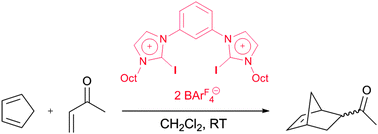
Halogen bond Catalysis: Using a prototypical Diels–Alder reaction as benchmark, we show that dicationic halogen-bond donors are capable of activating a neutral organic substrate. By variouscomparison experiments, the action of traces of acid or of other structural features of the halogen-bond donor not related to halogen bonding are excluded with high certainty.
S. H. Jungbauer, F. Kniep, S.M. Walter, S. Schinder, L. Rout, and S. M. Huber
https://doi.org//10.1055/s-0033-1338981
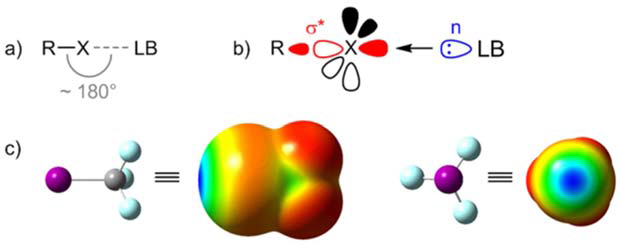
What is Halogen Bond, A Review: Although halogen bonds share many similarities with hydrogen bonds, they have so far found virtually no application in organic synthesis. This account summarizes our efforts to use multidentate halogen-bond donors (halogen-based Lewis acids) in formal halide abstraction reactions. Following a first proof-of-principle study, we recently reported the first halogen-bond-based organocatalytic carbon–carbon bond-forming reaction.
10: 5-Iodo-1,2,3-triazolium-based multidentate halogen-bond donors as activating reagents, Chem. Comm,2012, 48, 9299.
F. Kniep, L. Rout, S.M. Walter, H. K. V. Bensch, S. H. Jungbauer, E. Herdtweck and S. M. Huber.
https://doi.org/10.1039/C2CC34392D
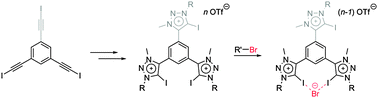
Abstract: Bi- and tridentate polycationic halogen bond donors based on 5-iodo-1,2,3-triazolium groups have been synthesized by 1,3-dipolar cycloaddition reactions. These halogen-based Lewis acids have been evaluated as activators in a halide-abstraction benchmark reaction.
11: Isothermal Calorimetric Titrations on Charge-Assisted Halogen Bonds: Role of Entropy, Counterions, Solvent, and Temperature J. Am. Chem. Soc. 2012, 134, 8507-8512.
Sebastian M. Walter, Florian Kniep, Laxmidhar Rout, Franz P. Schmidtchen, Eberhardt Herdtweck, Stefan M. Huber.
https://doi.org/10.1021/ja2119207
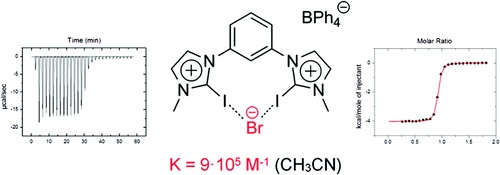
Abstrcat: We have conducted isothermal calorimetric titrations to investigate the halogen-bond strength of cationic bidentate halogen-bond donors toward halides, using bis(iodoimidazolium) compounds as probes. These data are intended to aid the rational design of halogen-bond donors as well as the development of halogen-bond-based applications in solution. In all cases examined, the entropic contribution to the overall free energy of binding was found to be very important. The binding affinities showed little dependency on the weakly coordinating counteranions of the halogen-bond donors but became slightly stronger with higher temperatures. We also found a marked influence of different solvents on the interaction strength. The highest binding constant detected in this study was 3.3 × 10⁶ M–1.
12: Synthesis of a-Arylphosphonates Using Copper-Catalyzed a-Arylation and Deacylative a-Arylation of b-Ketophosphonates. Adv. Synth. Catal. 2011, 353, 3340.
L. Rout, S. Regati and C. G. Zhao, https://doi.org/10.1002/adsc.201100605
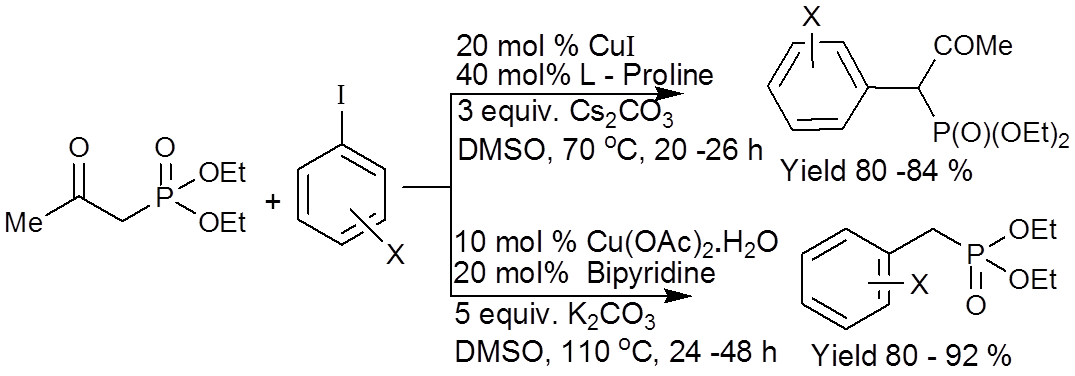
Abstract: Efficient methods for the direct arylation and deacylative arylation of β-ketophosphonates with iodoarenes in presence of a copper(I) or a copper(II) salt as the catalysts have been developed. The corresponding α-arylphosphonates were obtained in high yields. A tentative mechanism for the deacylative arylation reaction was proposed on the basis of the experimental data.
13: Organocatalytic Highly Enantioselective Synthesis of b-Formyl-a-hydroxyphosphonates; Adv. Synth. Catal. 2011, 353, 1729.
S. Perera, V. K. Naganaboina, L.Wang, B. Zhang, Q. Guo, L. Rout and C.-G. Zhao. https://doi.org/10.1002/adsc.201000835
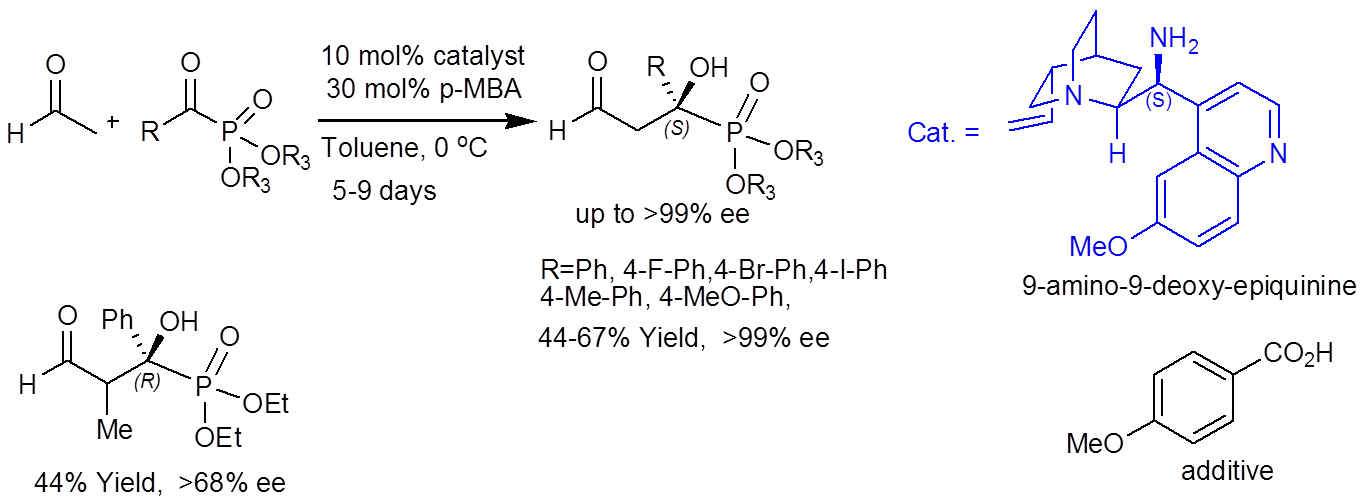
Abstrcat: The cross-aldol reaction between enolizable aldehydes and α-ketophosphonates was achieved for the first time by using 9-amino-9-deoxy-epi-quinine as the catalyst. β-Formyl-α-hydroxyphosphonates were obtained in high to excellent enantioselectivities. The reaction works especially well with acetaldehyde, which is a tough substrate for organocatalyzed cross-aldol reactions. The products were demonstrated to have anticancer activities.
14: Allene Carboxylates as Dipolarophiles in Rh‐Catalyzed Carbonyl Ylide Cycloadditions. Chem. Eur. J. 2009, 15, 12926.
L. Rout and A. M. Harned., https://doi.org/10.1002/chem.200902208
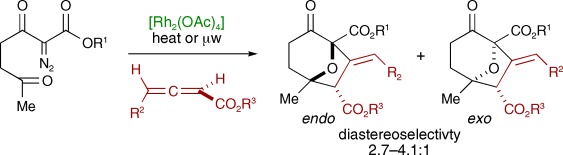
Abstract: Face-to-face: Allene carboxylates can serve as efficient dipolarophiles for Rh-catalyzed carbonyl ylide cycloadditions (see scheme). The endo and exo products arise from cycloaddition on the same face of the allene, but opposite faces of the dipole. This facial selectivity results in the formation of two of the four possible diastereomers.
15: CuO Nanoparticles Catalyzed C−N, C−O, and C−S Cross-Coupling Reactions: Scope and Mechanism., J. Org. Chem. 2009, 74, 1971.
S. Jammi, S. Sakthivel, L. Rout, T. Mukherjee, S. Mandal, R. Mitra, P. Saha and T. Punniyamurthy, https://doi.org/10.1021/jo8024253

Abstract: CuO nanoparticles have been studied for C−N, C−O, and C−S bond formations via cross-coupling reactions of nitrogen, oxygen, and sulfur nucleophiles with aryl halides. Amides, amines, imidazoles, phenols, alcohols and thiols undergo reactions with aryl iodides in the presence of a base such as KOH, Cs2CO3, and K2CO3 at moderate temperature. The procedure is simple, general, ligand-free, and efficient to afford the cross-coupled products in high yield.

16: Synthesis, Structure, and Application of Self-Assembled Copper(II) Aqua Complex by H-Bonding for Acceleration of the Nitroaldol Reaction in Water; Chem. Asian. J. 2009, 4, 314.
S. Jammi, Md A. Ali, S. Sakthivel, L. Rout, and T. Punniyamurthy . https://doi.org/10.1002/asia.200800339
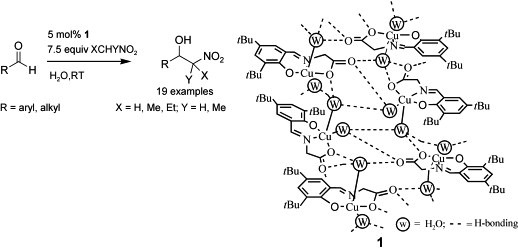
Abstract: Simple addition: Copper(II) aqua complex 1 can be prepared in a one-pot synthesis and is self-assembled by H-bond interactions. Complex 1 is shown to accelerate the nitroaldol reaction on water, which is a heterogeneous process, requiring no additive or base, and 1 can be recycled without loss of activity. opper(II) aqua complex 1 has been prepared in a one-pot synthesis. The single crystal X-ray analysis showed that the complex is self-assembled through aqua ligands by H-bond interactions and the copper(II) atoms are pentacoordinated with square pyramidal geometry. Complex 1 has been studied for the acceleration of the nitroalodol reaction on water. It is a clean technological process and the catalyst can be recycled without loss of activity.
17. Efficient Ligand-Free Nickel-Catalyzed C-S Cross-Coupling of Thiols with Aryl Iodides. Tetrahedron. Lett. 2008, 49,1484.
S. Jammi, P. Barua, L. Rout, P. Saha and T. Punniyamurthy, https://doi.org/10.1016/j.tetlet.2007.12.118

Abstract: NiCl2·6H2O efficiently catalyzes the C–S bond formation by the cross-coupling of aryl iodides with thiols in tetrabutylammonium bromide (TBAB) in excellent yield. The reaction functions in air and the NiLn-TBAB can be recovered and recycled without the loss of activity.
18: Efficient Copper(I) Catalyzed C-S Cross-Coupling of Thiols with Aryl Halides in Water; Eur. J. Org. Chem. 2008, 640.
L. Rout, P. Saha and T. Punniyamurthy, https://doi.org/10.1002/ejoc.200700978
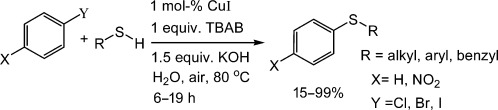
Abstrcat: CuI efficiently catalyzes the C–S cross coupling of thiols with aryl halides in the presence of tetrabutylammonium bromide in water. The reactions with aryl thiols that have electron-withdrawing and -donating substituents are comparable and afford C–S cross-coupling products in high yield. (© Wiley-VCH Verlag GmbH & Co. KGaA, 69451 Weinheim, Germany, 2008)
19: Cadmium(II) Catalyzed C-N Cross-Coupling of Amines with Aryl Iodides. Adv. Synth. Catal. 2008, 350, 395.
L. Rout, S. Jammi and T. Punniyamurthy, https://doi.org/10.1002/adsc.200700480
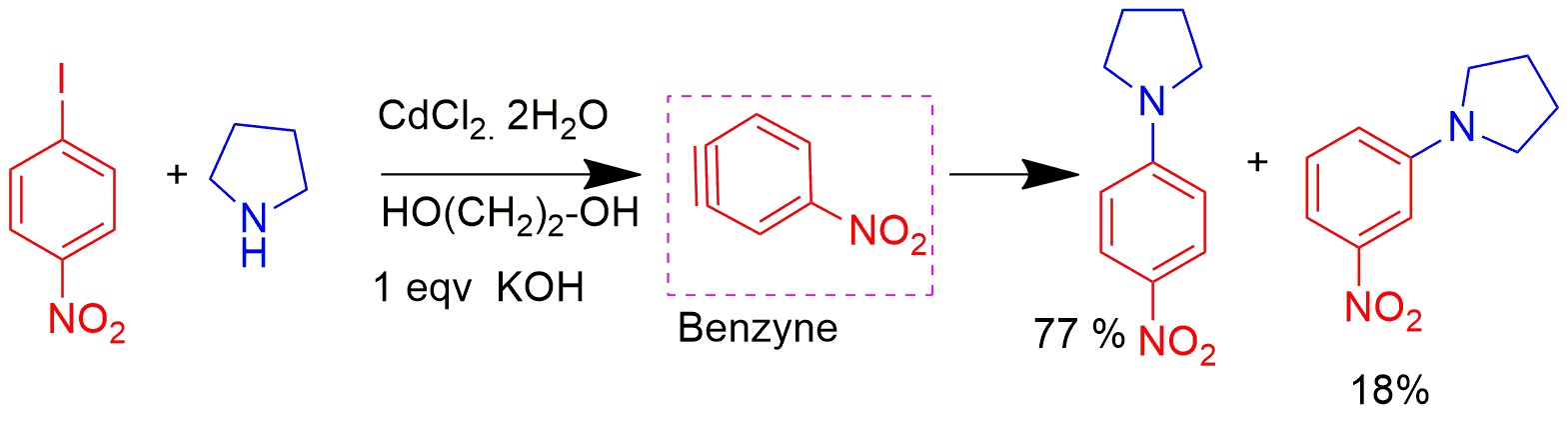
Abstrcat: Cadmium diacetate dihydrate [Cd(OAc)2⋅2 H2O] in combination with ethylene glycol catalyzes efficiently the C![[BOND]](http://onlinelibrarystatic.wiley.com/undisplayable_characters/00f8ff.gif) N cross-coupling of amines with aryl iodides by a benzyne mechanism. Alkyl, aryl and heterocyclic amines are compatible with this system affording the aminated products in high to excellent yield.
N cross-coupling of amines with aryl iodides by a benzyne mechanism. Alkyl, aryl and heterocyclic amines are compatible with this system affording the aminated products in high to excellent yield.
20: Efficient CuO Nanoparticle Catalyzed C-S Cross Coupling of Thiols with Iodobenzene; Angew. Chem. Int. Ed. Eng 2007, 46, 5583.
L. Rout, T. K. Sen and T. Punniyamurthy, https://doi.org/10.1002/anie.200701282
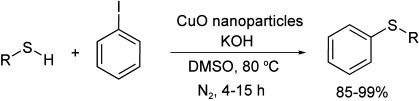
Abstract: Cheap but good: Readily available CuO nanoparticles are not only less expensive than other catalysts used for the CS cross-coupling of thiols with aryl halides, but they are also effective at a moderate temperature and low concentration. The title reaction proceeds with a variety of alkyl and aryl thiols to give the corresponding sulfides in high yields.
21: Novel CuO Nanoparticle Catalyzed C-N Cross-Coupling of Amines with Iodobenzene.; Org. Lett. 2007, 9, 3397.
L. Rout, S. Jammi and T. Punniyamurthy, https://doi.org/10.1021/ol0713887
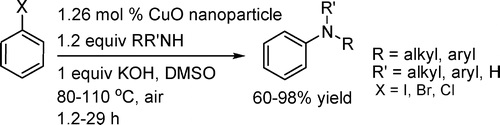
Abstrcat: CuO nanoparticles catalyze the C−N cross coupling of amines with iodobenzene in excellent yields. The reaction is simple and efficient and operates under air with ligand free conditions. The catalyst is recyclable without loss of activity.

S. Jammi, L. Rout and T. Punniyamurthy, https://doi.org/10.1016/j.tetasy.2007.09.004

Abstract : The synthesis of chiral polymers 1 bonded alternatively with salen and 1,4-dialkoxy-2,6-diethynylbenzene was accomplished. These polymers are recyclable and catalyze the Et2Zn addition to aldehydes with good enantioselectivity.