
Indian cuisine comprises a wide variety of regional and traditional cuisines native to the Indian subcontinent. Given the range of diversity in soil type, climate, culture, ethnic groups, and occupations, these cuisines vary substantially from each other and use locally available spices, herbs, vegetables, and fruits. Indian food is also heavily influenced by religious, in particular Hindu, and cultural choices and traditions. Also, Middle Eastern and Central Asian influences have occurred on North Indian cuisine from the years of Mughal rule. Indian cuisine is still evolving, as a result of the nation's cultural interactions with other societies.
Historical incidents such as foreign invasions, trade relations, and colonialism have played a role in introducing certain foods to the country. For instance, potato, a staple of the diet in some regions of India, was brought to India by the Portuguese, who also introduced chillies and breadfruit. Indian cuisine has shaped the history of international relations; the spice trade between India and Europe was the primary catalyst for Europe's Age of Discovery.Spices were bought from India and traded around Europe and Asia. Indian cuisine has influenced other cuisines across the world, especially those from Europe, the Middle East, North Africa, sub-Saharan Africa, Southeast Asia, the British Isles, Fiji, and the Caribbean.
| Example | Description | Picture |
| Chapati |
Bread. Whole wheat flour and basically eat with dhal and chicken curry |
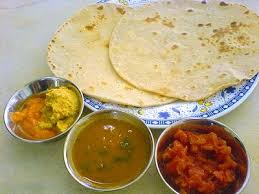 |
| Chicken Tikka masala | Chicken marinated in a Yogurt tomato sauce. Creamy texture | 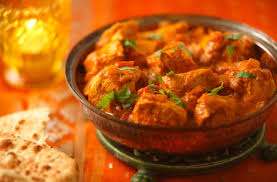 |
| Dal |
Assorted types of lentils, such as toor, urad, chana, masoor dal | 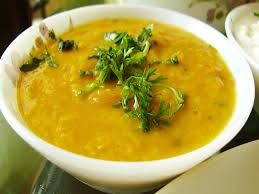 |
| Naan |
Tandoor-baked soft flatbread. Refined wheat flour.More delicious eat with chicken tandoori |
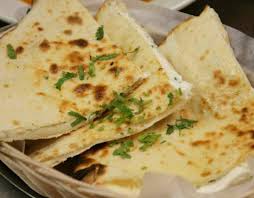 |
| Tandoori Chicken | Tandoori chicken as a dish originated in the Punjab before the independence of India and Pakistan. | 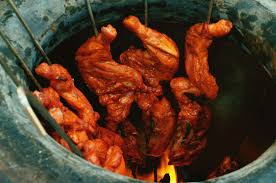 |
History
Indian cuisine reflects an 8,000-year history of various groups and cultures interacting with the subcontinent, leading to diversity of flavours and regional cuisines found in modern-day India. Later, trade with British and Portuguese influence added to the already diverse Indian cuisine.
Antiquity
Early diet in India mainly consisted of legumes, vegetables, fruits, grains, dairy products, and honey. Staple foods eaten today include a variety of lentils (dal), whole-wheat flour (aṭṭa), rice, and pearl millet (bājra), which has been cultivated in the Indian subcontinent since 6200 BCE. Over time, segments of the population embraced vegetarianism during Śramaṇa movement while an equitable climate permitted a variety of fruits, vegetables, and grains to be grown throughout the year. A food classification system that categorised any item as saatvic, raajsic, or taamsic developed in Yoga tradition.The Bhagavad Gita proscribes certain dietary practices (chapter 17, verses 8–10).Consumption of beef is taboo, due to cows being considered sacred in Hinduism. Beef is generally not eaten by Hindus in India except for Kerala and the north east.
Middle Ages to the 16th centuries
During the Middle Ages, several Indian dynasties were predominant, including the Gupta dynasty. Travelling to India during this time introduced new cooking methods and products to the region, including tea. India was later invaded by tribes from Central Asian cultures, which led to the emergence of Mughlai cuisine, a mix of Indian and Central Asian cuisine. Hallmarks include seasonings such as saffron.