VIDEOS INTERFACE Films, movies, documentaries, etc. Motion picture technology, the means for the production and showing of motion pictures.
Signal Information Output
Line / Phones
Videos Channel
Menu 3.1
FILM REELS
Film stock is an analog medium that is used for recording motion pictures or animation. Film reels are made from a combination of plastic and a gelatin emulsion made out of silver halide crystals. When film is being recorded, the lens of the camera shines light on the film, and the light causes the silver crystals to darken.
-- Welcome --
.
.
.
.
.
.
..
.
.
..
.
.
.
.
.
..
.
.
.
.
.
.
.
.
.
.
.
.
.
.
+
-- Reception --
-- Showcase --
-- The Corridor --
+ + +
Showcase Features
Open 24 hours a day
Monday - Wednesday
Thursday - Friday
Saturday - Sunday
Holiday Specials
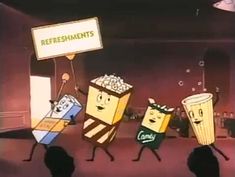
Popcorn - Arcades
= Refreshments Department
.
.
.
.
.
.
.
.
.
.
.
.
.
.
.
.
.
.
.
.
.
.
.
.
.
.
.
.
.
.
.
.
.
.
.
.
+ 8, 16, 32, 128 bit
The standard length of a theatrical film reel is 1000 ft. Back in the old days, when you went to a movie theater, movies were actually shown by running really long film reels through a projector. Each one of those film reels were about 1000 ft long. If my math is right, that means each reel of film is almost ¼ of a mile long. Speaking of... The average run-time of a standard reel was about 11 minutes. If you were thinking that a single reel of film was long enough for a whole movie, think again. In reality, a reel of film only actually contains about 11 minutes of a movie with sound. That’s assuming that the frame rate is 24 fps. If we do some math again, the upcoming Avengers movie would have required about 18 reels of film for a single movie.
Most films were shipped as two-reelers. Two-reelers is basically exactly what it sounds like. Instead of using a single, standard, 1000’ reel of film, two-reelers doubled the amount to save on shipping costs. Since reels are already pretty big, and watching a single movie would require a projectionist to switch reels in the middle of movies, reducing transitions by half cut down on potential human error which helped improve the viewer experience. Don’t ask what Tyler Durden did in the reel transitions... An average movie would weigh about 60 lbs. That’s right. Every single movie that used to be shown in theaters weighed around 60 pounds in total. According to my research, each 1,000’ of film weighs around 5 lbs. Since movies average around an hour and a half each (90 minutes), and 1,000’ of film is good for 11 minutes of sound film, that means most films use around 9 film reels. 9 times 5 is 45 lbs. Add in the extra weight of the reels themselves, and voila! 60 lbs. Sound A fundamental limitation of film stock as a recording medium is that it reacts to light, but not sound. This is why the first films were literally silent (and exhibitors often provided live musical accompaniment to compensate). Sound films later became possible after engineers developed techniques like sound-on-disc to synchronize playback of a separate soundtrack and then sound-on-film to print the soundtrack on the film itself.
Color films Experiments with color films were made as early as the late 19th century, but practical color film was not commercially viable until 1908, and for amateur use when Kodak introduced Kodachrome for 16 mm in 1935 and 8 mm in 1936. Commercially successful color processes used special cameras loaded with black-and-white separation stocks rather than color negative. Kinemacolor (1908–1914), Technicolor processes 1 through 4 (1917–1954), and Cinecolor used one, two or three strips of monochrome film stock sensitized to certain primary colors or exposed behind color filters in special cameras. Technicolor introduced a color reversal stock, called Monopack, for location shooting in 1941; it was ultimately a 35 mm version of Kodachrome that could be used in standard motion picture cameras. Eastman Kodak introduced their first 35mm color negative stock, Eastman Color Negative film 5247, in 1950. A higher quality version in 1952, Eastman Color Negative film 5248, was quickly adopted by Hollywood for color motion picture production, replacing both the expensive three-strip Technicolor process and Monopack.





 Signal Information Output