| PROJECT | DESCRIPTION | PCB | STATUS | REMARKS |
|---|
| HF-6030 | Main board (ATMEGA8, version 3) | TPD55000 | u | UC-256 |
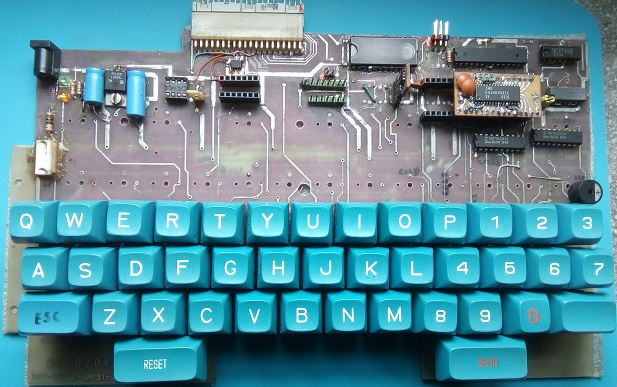
| HF-60250 | Keyboard circuit | TPD55000 | u | 74154, 7493 |
| HF-1534 | EEPROM module 24C128 (16KB) | TPD13490 | u f z | DRIVE2, main board fixed drive, deleted and replaced by HF-1539 |
| HF-1539 | EEPROM module 24C64 (8KB) | TPD13490 | u | DRIVE2, main board fixed drive |
| HF-1469#1 | EEPROM module 24C32 (4KB), HF-10032 standard | TPD42236 | u | option: DRIVE3, mobile drive |
| HF-1469#2 | EEPROM module 24C32 (4KB), HF-10032 standard | TPD42236 | u | option: DRIVE3, mobile drive |
| HF-1471 | EEPROM module 24C256 (32KB), HF-10032 standard | TPD42236 | u | option: DRIVE3, mobile drive |
| HF-17852 | Converter UART - RS232 | TPD57852 | u | option: for connecting PC and THN |
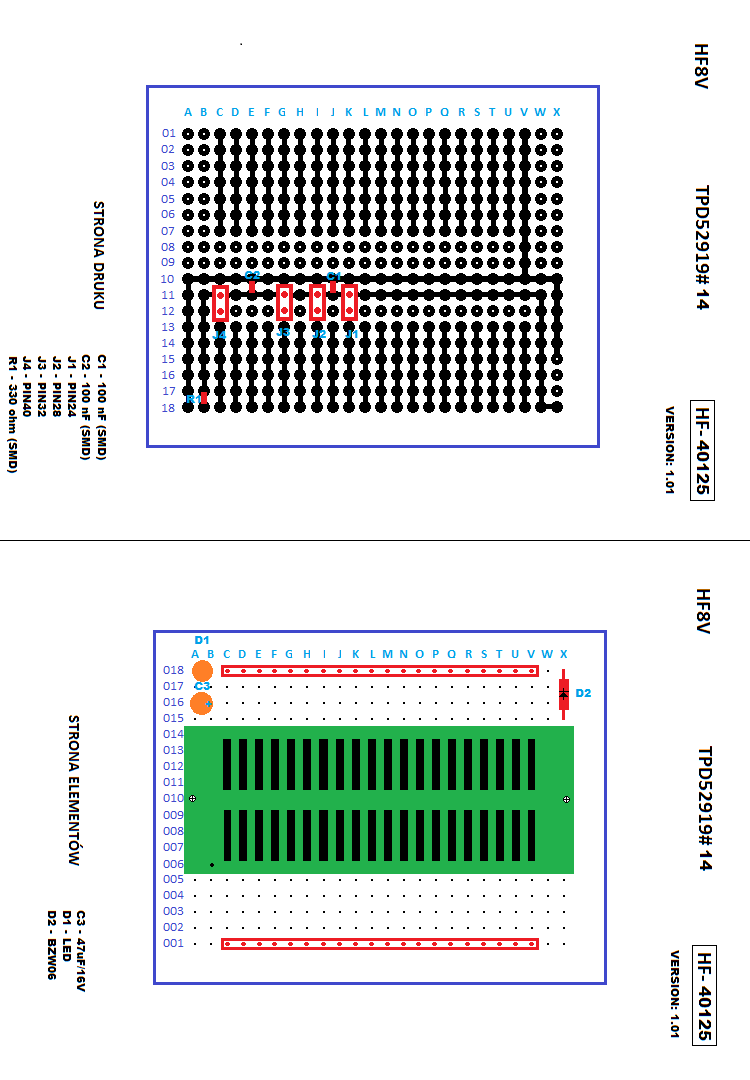
| HF-40125 | Reconfigurable ZIF DIP40 socket for programmer | TPD52919#14 | u | option: memory and uC programmer |
| HF-6423 | RAM module 64KB, HF-10031 standard | TPD42612 | u | option: DRIVE6, RAM DRIVE, converter HF-64123 must be used |
| HF-64107 | NVRAM module U634H256 (32KB), HF-10031 standard | TPD14130 | u | option: DRIVE4, mobile drive |
| HF-64111 | EEPROM module 25CSM04 (512KB), HF-10082 standard | TPD42236 | u | option: DRIVE5, mobile drive |
| HF-64123 | Converter HF-10031 <-> HF-10064 standard | TPD19951 | u | option: for HF-6423 module |
| HF-7020 | Cable RS-232 | -------- | u | obsolete (used in version 1 and 2) |
| HF-7021 | Cable data | -------- | u | obsolete (used in version 1 and 2) |
| HF-70130 | Cable power supply | -------- | u | obsolete (used in earlier subversions of version 3) |
| HF-70195 | Cable UART | -------- | u | option for connecting UART to HF-17852 |